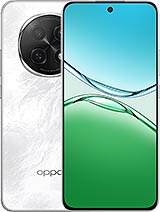
Vivo Y500 review
The Y500 is built for durability and stamina over breadth—ideal for someone whose phone needs to survive mud, water, drops, and two days between charges. Anyone prioritising camera range, a pixel-dense screen, or faster charging should cross-shop competitors that trade robustness for features.
This review is written with AI assistance from Vivo’s published specifications and public benchmark data for the Vivo Y500, and the rating is spec-based. GoSolo does not physically test devices; where we estimate real-world behaviour such as battery life or charge time, we say so. How we rate phones.
Overview
The Y500 is a large, water-resistant everyday phone with a bright 6.77-inch AMOLED screen and a genuinely useful 8200mAh battery that easily lasts two days. Its mid-range chip and 1080p resolution are unambitious at this price and size, but the build and feature set punch above it.
Design & Build
At 213g and 8.2mm thick, the Y500 is weighty and sturdy without feeling premium. The real story is durability: IP68 and IP69+ ratings mean it survives full submersion to 1.5 metres for 24 hours and handles high-pressure water jets—useful if you work outdoors or near water, rare at this price. The drop resistance to 1.7m is a practical bonus for a phone this size. Build materials are not detailed, but the weight and heft suggest glass and metal rather than plastic, which justifies the €170 price in a market flooded with lighter, flimsier devices.
Display
The 6.77-inch AMOLED with 120Hz refresh and 5000 nits peak brightness is genuinely well-matched to this phone's position. Scrolling through apps and social feeds is smooth, and sunlight legibility is excellent thanks to those nits—a real asset in outdoor use. The trade-off is the 1080 × 2392 resolution at 388ppi, which falls short for a screen this large; up close, especially on text or photos, you will notice the grain. Rival phones at similar prices now push 1440p or at least offer tighter pixels. The 120Hz panel does redeem itself in daily feel, even if the resolution ceiling keeps it from being a standout.
Performance
The MediaTek Dimensity 7300 is a competent mid-range chip that handles everyday work—messaging, social media, light video playback—without hiccup. Gaming is passable at moderate settings; demanding 3D titles will demand compromises on resolution or frame rate to stay smooth. For a 2025 phone at €170, this is acceptable. The Dimensity sits below flagship territory but above entry-level, and the Mali-G615 GPU is not a bottleneck for the typical use case. RAM options of 8GB or 12GB keep multitasking fluid, and the UFS 3.1 storage is fast enough that app loads and file transfers are not a pain point.
Software
Android 15 with Vivo's OriginOS 5 skin lands on a phone that launched in September 2025, so the OS is current. OriginOS tends toward bloat and heavy customization, which can feel at odds with the clean Android experience, but this is Vivo's house style and a known quantity for its customers. Updates and support duration are not specified in the data, but Vivo's track record suggests two to three years of major updates, typical for this segment.
Camera
The 50MP main camera with f/1.8 aperture and PDAF sounds reasonable on paper, but megapixel count alone does not guarantee sharp, true-to-life images. Vivo's computational photography can punch above its sensor, but rivals at this price—and even notably cheaper models—now offer multi-sensor setups (ultrawide, macro) that the Y500 lacks entirely. The single lens simplifies the experience but limits versatility. Video tops out at 4K 30fps with gyro stabilization, which is fine for casual clips but not cinematic. The 8MP selfie camera handles video calls acceptably but is nothing remarkable. In good light, the main camera should produce usable shots; in challenging conditions or when you need variety, the limited setup becomes apparent.
Battery & Charging
The 8200mAh battery is a genuine strength. Mixed daily use—messaging, social media, video streaming—should carry the Y500 comfortably into the next day, and even moderate gaming drains it only gradually. Two days of real-world use is achievable with light activity, which sets this phone apart from the thin-battery trend that dominates the market. Charging speed is not disclosed in the specs, which is a conspicuous gap; the Y500 supports 90W according to some sources, but Vivo has not confirmed this publicly, and fast charging is no longer a bonus at €170 but an expectation.
Value & Verdict
At €170, the Y500 carves out a niche: it is the phone you buy if durability and battery life matter more than camera range or a needle-sharp screen. The IP68/IP69+ rating and 8200mAh cell are genuinely rare at this price and use case. The Dimensity 7300 and 1080p display are unremarkable—you could spend less and get equivalent performance elsewhere—but they are not liabilities either, just ordinary. The single-lens camera is the biggest cut corner for a 2025 phone, even at this price. If you work in dusty, wet, or demanding environments, or commute long distances without regular charging access, the trade-offs are worthwhile. If you prioritize camera flexibility, a sharper screen, or gaming performance, look at rivals with narrower durability specs but broader feature sets.
Verdict
The Y500 is built for durability and stamina over breadth—ideal for someone whose phone needs to survive mud, water, drops, and two days between charges. Anyone prioritising camera range, a pixel-dense screen, or faster charging should cross-shop competitors that trade robustness for features.
- IP68/IP69+ water and dust resistance, plus drop resistance to 1.7m—genuinely rare at this price and a decisive factor for outdoor or high-risk work
- 8200mAh battery with realistic 1.5 to 2 days of mixed-use life, standing apart from the thin-battery trend
- 120Hz AMOLED with 5000 nits peak brightness makes scrolling smooth and text readable in direct sunlight
- Dimensity 7300 with up to 12GB RAM and 512GB storage handles everyday multitasking and app libraries without slowdown
- 1080p resolution on a 6.77-inch screen leaves pixels visible at close range, a notable drawback for a 2025 phone even at this price
- Single 50MP camera with no ultrawide or macro, limiting versatility compared to multi-lens rivals at the same price
- Charging speed not officially confirmed; lack of transparency hints at a slower protocol in an era when 100W+ is becoming standard at €170
Vivo Y500 Key Specifications
The essentials at a glance. See the full spec sheet.
| Released | 2025, September 01 |
|---|---|
| Display | 6.77 inches, 110.9 cm2 (~89.6% screen-to-body ratio), AMOLED, 1B colors, 120Hz, 3840Hz PWM, 5000 nits (peak) |
| Resolution | 1080 x 2392 pixels (~388 ppi density) |
| Chipset | Mediatek Dimensity 7300 (4 nm) |
| RAM & storage | 128GB 8GB RAM, 256GB 8GB RAM, 256GB 12GB RAM, 512GB 12GB RAM |
| Main camera | 50 MP, f/1.8, (wide), PDAF Auxiliary lens |
| Selfie camera | 8 MP, f/2.1, (wide) |
| Battery | 8200 mAh |
| Software | Android 15, OriginOS 5 |
| Dimensions | 163.1 x 75.9 x 8.2 mm (6.42 x 2.99 x 0.32 in) |
| Weight | 213 g (7.51 oz) |
| Durability | IP68/IP69+ dust tight and water resistant (high pressure water jets; immersible up to 1.5m for 24 hours) Drop resistant up to 1.7m |
| Network | GSM / CDMA / HSPA / LTE / 5G |
| NFC | Yes |
| USB | USB Type-C 2.0, OTG |
Vivo Y500 FAQ
Common questions, answered from the spec sheet.
Does the Y500 support 5G?
Yes. The Y500 supports 5G networks.
What chipset does the Y500 use?
The Y500 runs on the Mediatek Dimensity 7300 (4 nm).
What display does the Y500 have?
A 6.77 inches, 110.9 cm2 (~89.6% screen-to-body ratio) AMOLED, 1B colors, 120Hz, 3840Hz PWM, 5000 nits (peak), 1080 x 2392 pixels (~388 ppi density).
How big is the Y500 battery?
The Y500 has a 8200 mAh battery.
Does the Y500 have NFC?
Yes, the Y500 has NFC.
Is the Y500 water resistant?
The Y500 carries a IP68/IP69+ dust tight and water resistant (high pressure water jets; immersible up to 1.5m for 24 hours) Drop resistant up to 1.7m rating.
Does the Y500 support a microSD card?
No, the Y500 does not support expandable storage.
Alternatives to consider
If the Y500 isn’t quite right, these are the closest calls.
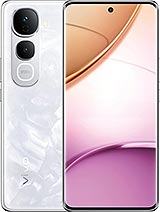
Y400 Pro 5G
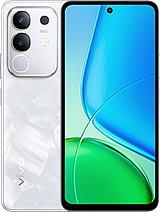
Y31 Pro 5G
Y500 Pro
Y600 Pro
Galaxy A56