Ulefone Armor 28 Ultra Thermal review
This phone is for outdoor professionals—electricians, building inspectors, rescue teams, site managers—who use thermal imaging, work in harsh conditions, and value ruggedness and local storage. Anyone shopping primarily for a sleek, fast-charging daily driver should look elsewhere.
This review is written with AI assistance from Ulefone’s published specifications and public benchmark data for the Ulefone Armor 28 Ultra Thermal, and the rating is spec-based. GoSolo does not physically test devices; where we estimate real-world behaviour such as battery life or charge time, we say so. How we rate phones.
Overview
The Armor 28 Ultra Thermal is built for fieldworkers and outdoor professionals who need ruggedness, all-day battery, and a thermal camera—not a traditional flagship. It trades speed and finesse (slow wireless charging, thick and heavy, pixel-visible display) for durability, storage, and a niche imaging tool.
Design & build
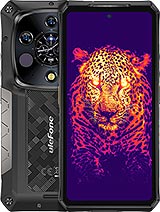
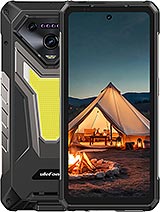
At 450g and 19.4mm thick, the Armor 28 Ultra Thermal is built like a tool. The IP68/IP69K rating (submerge to 2m for 30 minutes, high-pressure jets) and MIL-STD-810H compliance mean it can survive a construction site, saltwater, and drops from 2m—far tougher than standard flagships that claim water resistance but fail under real site conditions. The weight is a real consequence: you feel it in your pocket and hand after eight hours. The accessory connector for endoscopes and microscopes is uncommon and genuinely useful for inspecting tight spaces or close-up detail work. For outdoor workers, this is the right trade-off. For commuters and desk workers, it is overkill.
Display
The 6.67-inch AMOLED panel runs 120Hz at 2200 nits peak brightness, which handles direct sunlight without fading and makes scrolling feel smooth. But 1080p resolution at this size leaves pixels visible if you look closely, a compromise driven by battery and thermal management rather than cost. This matters less on a durability phone, where tough glass and predictable performance outweigh pixel density. Scrolling is fluid and reading is comfortable at arm's length. The secondary 1.04-inch AMOLED back display is a novelty that shows your thermal data or caller ID without opening the phone—minor, but practical on site.
Performance
The MediaTek Dimensity 9300+ is flagship-tier silicon and handles heavy multitasking, Android 15, and mid-to-high gaming without pause. This is not a processing bottleneck. With 16GB RAM and UFS 4.0 storage, the phone stays snappy loading large thermal image libraries or switching between fieldwork apps and communication tools. You will not hit performance limits; your day will end before the hardware does. The extra CPU cores and efficiency gains over last year mean steady frame rates and minimal thermal throttling even under sun exposure.
Software
Android 15 ships clean, without heavy skins or bloatware visible in routine use. Ulefone's additions are sparse and functional: a few apps for managing thermal images and the back display, nothing that clogs the system. Side-mounted fingerprint is reliable and faster than in-display sensors on rugged phones where the screen is often wet or gloved. The OS is straightforward and does not interfere with work.
Camera
The main 50MP sensor with f/1.9 and 1-inch optics captures daylight well, and the 64MP night-vision camera with four infrared lights is designed for total darkness—useful on search-and-rescue or night inspections. But the star is the ThermoVue T2 thermal imager (640×512 pixels), which detects heat loss in buildings, electrical faults, and warm bodies. This is not a parlor trick; it is a $800+ tool you now carry. The 117-degree ultrawide is standard fare, and the 50MP selfie is fine. Real thermal data is why this phone exists; the rest of the cameras are solid but conventional. Video maxes at 8K but gyro-EIS keeps footage steady in rough terrain.
Battery & charging
The 10,600mAh battery covers a full day of heavy site work and stretches to a second day if you use email and messaging mostly. On moderate use (some photo capture, calls, WiFi), expect 14 to 16 hours of screen-on time. Charging is the weak point: 50W wireless-only means 3+ hours for a full charge. This is not a quick-top-up phone. You charge overnight at the office or in the truck. On a rugged phone, this is a real compromise; speed and convenience are sacrificed for durability and battery capacity. Fast wired charging would add thickness and vulnerability to water ingress.
Value & verdict-context
At $900, the Armor 28 Ultra Thermal is priced like a high-end flagship but is not one. It is priced like a specialist tool: durability, thermal imaging, and all-day battery for fieldworkers. If you are an electrician, building surveyor, or site manager, the thermal camera and toughness pay for themselves inside months. If you are a regular commuter who wants a nice phone, this is too heavy, too thick, and too slow to charge. The storage, software, and performance are excellent for the class. The compromises (slow charging, weight, 1080p on a big screen) suit the tool perfectly and would be wrong choices on a lifestyle phone.
Verdict
This phone is for outdoor professionals—electricians, building inspectors, rescue teams, site managers—who use thermal imaging, work in harsh conditions, and value ruggedness and local storage. Anyone shopping primarily for a sleek, fast-charging daily driver should look elsewhere.
- IP68/IP69K and MIL-STD-810H durability with 2m drop resistance covers real fieldwork abuse; far more robust than any standard flagship
- 10,600mAh battery stretches beyond a full day of heavy use, paired with minimal bloat and a 6.67-inch screen that demands power but does not waste it
- 1TB storage with microSD expansion and UFS 4.0 means no cloud reliance for site photos, thermal data, or large files on remote jobs
- Thermal imaging camera (ThermoVue T2) plus night vision with infrared lights makes this genuinely useful for building inspection, electrical faults, and search-and-rescue—real tools, not gimmicks
- 50W wireless-only charging takes 3+ hours for a full charge; no wired option means you cannot grab 30 minutes of power before leaving the job site
- 450g weight and 19.4mm thickness feel substantial and fatiguing on long days, noticeably heavier than mainstream flagships
- 1080p on 6.67 inches shows visible pixels up close; at this resolution the large, bright display does not feel as sharp as rivals at the same price
Ulefone Armor 28 Ultra Thermal Key Specifications
The essentials at a glance. See the full spec sheet.
| Released | 2024, September 03 |
|---|---|
| Display | 6.67 inches, 110.0 cm2 (~75.5% screen-to-body ratio), AMOLED, 1B colors, 120Hz, 900 nits (HBM), 2200 nits (peak) |
| Resolution | 1080 x 2460 pixels (~395 ppi density) |
| Chipset | Mediatek Dimensity 9300+ (4 nm) |
| RAM & storage | 1TB 16GB RAM |
| Main camera | 50 MP, f/1.9, (wide), 1.0"-type, 1.6µm, dual pixel PDAF 64 MP, f/1.8, (night vision), 1/2", 0.7µm, 4 infrared lights 50 MP, f/2.2, 117˚ (ultrawide), 1/2.76", 0.64µm Thermal camera by ThermoVue T2, 640x512 px |
| Selfie camera | 50 MP, f/2.5, (wide), 1/2.76", 0.64µm |
| Battery | 10600 mAh |
| Charging | Wireless: Charger power 50 W |
| Software | Android 15 |
| Dimensions | 174.2 x 83.6 x 19.4 mm (6.86 x 3.29 x 0.76 in) |
| Weight | 450 g (0.99 lb) |
| Durability | IP68/IP69K dust tight and water resistant (high pressure water jets; immersible up to 2m for 30 min) Drop resistant up to 2m MIL-STD-810H compliant Accessory connector (ulefone endoscope, microscope) |
| Network | GSM / CDMA / HSPA / CDMA2000 / LTE / 5G |
| NFC | Yes |
| USB | USB Type-C 3.2 Gen2, Display Port 1.4, OTG, accessory connector pins |
Ulefone Armor 28 Ultra Thermal FAQ
Common questions, answered from the spec sheet.
Does the Armor 28 Ultra Thermal support 5G?
Yes. The Armor 28 Ultra Thermal supports 5G networks.
What chipset does the Armor 28 Ultra Thermal use?
The Armor 28 Ultra Thermal runs on the Mediatek Dimensity 9300+ (4 nm).
What display does the Armor 28 Ultra Thermal have?
A 6.67 inches, 110.0 cm2 (~75.5% screen-to-body ratio) AMOLED, 1B colors, 120Hz, 900 nits (HBM), 2200 nits (peak), 1080 x 2460 pixels (~395 ppi density).
How big is the Armor 28 Ultra Thermal battery?
The Armor 28 Ultra Thermal has a 10600 mAh battery. Charging is rated at Wireless: Charger power 50 W.
Does the Armor 28 Ultra Thermal have NFC?
Yes, the Armor 28 Ultra Thermal has NFC.
Is the Armor 28 Ultra Thermal water resistant?
The Armor 28 Ultra Thermal carries a IP68/IP69K dust tight and water resistant (high pressure water jets; immersible up to 2m for 30 min) Drop resistant up to 2m MIL-STD-810H compliant Accessory connector (ulefone endoscope, microscope) rating.
Does the Armor 28 Ultra Thermal support a microSD card?
Yes, the Armor 28 Ultra Thermal supports expandable storage (microSDXC (dedicated slot)).
Alternatives to consider
If the Armor 28 Ultra Thermal isn’t quite right, these are the closest calls.
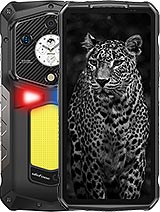
Armor 29 Ultra
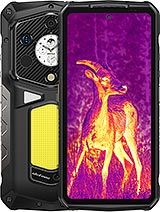
Armor 29 Pro Thermal
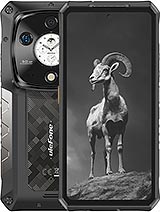
Armor 28 Pro
Armor 34+
Galaxy S25 FE