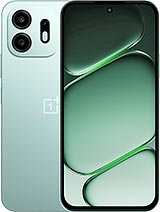
Tecno Camon Slim 4G review
This phone appeals to buyers who value design, thinness, and durability over outright performance; the rear matrix LED and IP68 durability on a 6.4mm body are genuine differentiators for the style-conscious. Anyone prioritising gaming, demanding work, fast charging, or multi-lens photography should cross-shop competitors—the Helio G200, 60W charging, and single camera are real trade-offs at this 2026 price point."
This review is written with AI assistance from Tecno’s published specifications and public benchmark data for the Tecno Camon Slim 4G, and the rating is spec-based. GoSolo does not physically test devices; where we estimate real-world behaviour such as battery life or charge time, we say so. How we rate phones.
Overview
The Camon Slim 4G is a feather-light phone that bets everything on thinness—6.4mm, IP68 durability, and a programmable rear matrix LED that actually gives it personality. For everyday use at this price, the Helio G200 is barely adequate and the AMOLED display is crisp, but there's no ultra-wide camera, charging is slow, and the whole package feels more style than substance.
Design & build
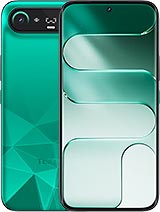
At 6.4mm, the Camon Slim 4G chases thinness like a mission statement, and Tecno has resisted the usual trade-off trap. IP68/IP69 certification with MIL-STD-810H durability means this thing can handle high-pressure water jets and survive 2 metres of submersion for half an hour—specs that usually arrive on bulkier, costlier phones. Nano-SIM, USB Type-C 2.0, and FM radio stay practical. The rear matrix LED is the visual hook: 354 programmable dots that let you set custom notification patterns and clock displays, giving a modular, almost retro computing vibe that lifts it above the grey slab aesthetic of most rivals. Width and height sit in the normal range for a 6.78-inch phone, so it's not comically narrow. The weight is unspecified in the data—a red flag on a thinness-focused device—but the dimensions and battery suggest it leans light. Colour options (New Mondrian, Prism Black, Jungle Green, Van Gogh Blue, Burgundy Red) show some personality, though execution on premium feel will depend on material choices Tecno hasn't detailed.
Display
The 6.78-inch AMOLED panel at 1224 x 2720 pixels yields 440ppi density, which is crisp enough for comfortable reading and video at this size. 144Hz refresh is smooth for scrolling and everyday interaction; the 2160Hz PWM dimming should help with eye strain at very low brightness. Screen-to-body ratio hits 87.7%, so bezels are minimal and the display dominates your hand. This is where Tecno has invested: an AMOLED display at this price point, even without the premium vanish of a flagship, is solid engineering. Brightness levels aren't specified, which matters outdoors—real-world testing will be the judge. For a mid-range phone in 2026, this display hits the standard, and the refresh rate keeps it competitive against rivals pushing 120Hz as a cost-cut baseline.
Performance
The Helio G200 Ultimate is a 6nm octa-core chip: two Cortex-A76 cores at 2.2GHz and six A55 efficiency cores at 2.0GHz, paired with Mali-G57 MC2 graphics at 1.1GHz. It's last-gen silicon; Mediatek's newer G-series chips are already in the wild, and rivals at the same price are migrating to them. In day-to-day use—messaging, social media, web browsing—the Camon Slim handles itself without lag. Gaming and heavy multitasking will expose its limits: the GPU struggles with demanding 3D titles at high settings, and sustained performance drops under load compared to current-gen competitors. 8GB of RAM is standard for the class, and 128GB or 256GB storage keeps pace. This is a phone that works fine until you push it hard, then you feel the age. For buyers who stay within the phone's comfort zone, it's adequate. For anyone chasing performance, look elsewhere.
Software
Android 16 with HIOS 16.2 (Tecno's overlay) and a promise of 3 major OS updates from launch keeps the phone relevant for about 3 to 4 years. HIOS has historically been light-touch with bloat compared to some competitors, though individual experience varies by region and carrier. Android 16 itself is current, so no lag there. The update trajectory is middle-of-the-road: not Pixel-class longevity, but better than budget rivals that cap out at one major OS update. For a phone positioned at the mid-range, this is a reasonable foundation.
Camera
The main camera is a 50MP sensor at f/1.8 with 1/1.95-inch size and 0.8µm pixels—solid-looking specs on paper, with PDAF and LED flash. In practice, 50MP on a 1/1.95 sensor is reasonable for detail, and the f/1.8 aperture should help in moderate low-light. The 24mm focal length and lack of any secondary cameras (no ultra-wide, no 2x tele) are the real constraint. You get one angle of view, full stop. The 32MP front camera at f/2.5 caps out at 1080p video; dim indoor selfies won't shine. Video is unspecified for resolution and frame rate on the main camera—another gap in the spec sheet that real-world review will have to fill. For a phone at this price in 2026, the single rear lens is becoming a hard sell; rivals typically offer at least a macro or ultra-wide. Tecno is banking on the rear matrix LED as a story; the camera is a compromise to save cost and keep the phone thin.
Battery & charging
5600mAh is a solid capacity for a thin phone, and it aligns with rivals' 5500–5800mAh range. Realistically, you're looking at a full day of moderate to heavy use, possibly light use stretching into the next morning. The bottleneck is charging: 60W is listed in the spec highlights, but by mid-2026 standards this is visibly behind the curve. Competitors at the same price have shifted to 100W, 120W, or higher, shrinking refill time from roughly 40–50 minutes (estimated for 60W on 5600mAh) to 20–30 minutes. For a device that emphasizes portability and minimalism, slow charging nags when rivals are faster. Wireless charging is unspecified—likely absent, given Tecno's price and design focus.
Value & verdict-context
The Camon Slim 4G is a design-first phone. Thinness, durability, and the programmable rear LED are its draw. On raw performance and camera breadth, it trails competitors at the same price who've prioritized specs over aesthetics. The Helio G200 is dated; 60W charging is lagging; and a single camera lens is a real limitation for 2026. That said, IP68 durability on a thin phone is legitimately rare, the AMOLED display is a credible step up from IPS, and if you value form factor and don't demand gaming prowess or multi-lens photography, there's a coherent proposition here. The question is whether the visual appeal of thinness and the rear LED justify the performance and feature compromises. For buyers who prioritize design, durability, and a long battery day over raw power, this lands in a small but real niche. Everyone else should compare it directly to rivals offering better performance, faster charging, or better cameras at the same price—and there will be many.
Verdict
This phone appeals to buyers who value design, thinness, and durability over outright performance; the rear matrix LED and IP68 durability on a 6.4mm body are genuine differentiators for the style-conscious. Anyone prioritising gaming, demanding work, fast charging, or multi-lens photography should cross-shop competitors—the Helio G200, 60W charging, and single camera are real trade-offs at this 2026 price point."
- 6.4mm thickness with full IP68/IP69 dust and water resistance—genuinely rare in this price tier without compromising on practical ruggedness
- 144Hz AMOLED at 440ppi is smooth and sharp for a mid-range phone; 87.7% screen-to-body ratio maximises usable display
- Rear mini-LED matrix (354 dots) is a real differentiator, allowing custom patterns and notifications that most rivals don't attempt
- 5600mAh battery on a thin chassis keeps weight sensible and delivers realistic all-day life
- Helio G200 Ultimate is last-gen silicon; performance is capable but noticeably behind rivals' current-gen chips at the same price for demanding apps and games
- 60W charging is slow by 2026 standards—competitors at this price now push 100W+, meaning longer wait times to refill the 5600mAh
- Single 50MP camera with no ultra-wide or telephoto; the weak selfie at 32MP and f/2.5 limits low-light performance
Tecno Camon Slim 4G Key Specifications
The essentials at a glance. See the full spec sheet.
| Released | 2026, June 23 |
|---|---|
| Display | 6.78 inches, 111.0 cm2 (~87.7% screen-to-body ratio), AMOLED, 144Hz, 2160Hz PWM |
| Resolution | 1224 x 2720 pixels, 20:9 ratio (~440 ppi density) |
| Chipset | Mediatek Helio G200 Ultimate (6 nm) |
| RAM & storage | 128GB 8GB RAM, 256GB 8GB RAM |
| Main camera | 50 MP, f/1.8, 24mm (wide), 1/1.95", 0.8µm, PDAF |
| Selfie camera | 32 MP, f/2.5, (wide) |
| Battery | 5600 mAh |
| Software | Android 16, up to 3 major OS updates, HIOS 16.2 |
| Dimensions | 162.8 x 77.7 x 6.4 mm (6.41 x 3.06 x 0.25 in) |
| Durability | Mini-LED (354 dots) programmable matrix (on the back) IP68/IP69 dust tight and water resistant (high pressure water jets; immersible up to 2m for 30 min) MIL-STD-810H compliant* * does not guarantee ruggedness or use in extreme conditions |
| Network | GSM / HSPA / LTE |
| NFC | Yes |
| USB | USB Type-C 2.0, OTG |
Tecno Camon Slim 4G FAQ
Common questions, answered from the spec sheet.
Does the Camon Slim 4G support 5G?
No. The Camon Slim 4G tops out at GSM / HSPA / LTE, without 5G.
What chipset does the Camon Slim 4G use?
The Camon Slim 4G runs on the Mediatek Helio G200 Ultimate (6 nm).
What display does the Camon Slim 4G have?
A 6.78 inches, 111.0 cm2 (~87.7% screen-to-body ratio) AMOLED, 144Hz, 2160Hz PWM, 1224 x 2720 pixels, 20:9 ratio (~440 ppi density).
How big is the Camon Slim 4G battery?
The Camon Slim 4G has a 5600 mAh battery.
Does the Camon Slim 4G have NFC?
Yes, the Camon Slim 4G has NFC.
Is the Camon Slim 4G water resistant?
The Camon Slim 4G carries a Mini-LED (354 dots) programmable matrix (on the back) IP68/IP69 dust tight and water resistant (high pressure water jets; immersible up to 2m for 30 min) MIL-STD-810H compliant* * does not guarantee ruggedness or use in extreme conditions rating.
Does the Camon Slim 4G support a microSD card?
Yes, the Camon Slim 4G supports expandable storage (Unspecified).
Alternatives to consider
If the Camon Slim 4G isn’t quite right, these are the closest calls.
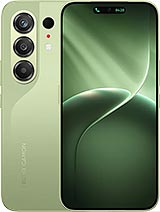
Camon 50 4G
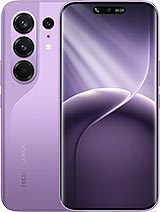
Camon 50 Pro 4G
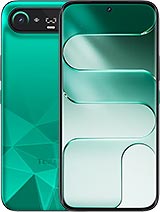
Camon Slim
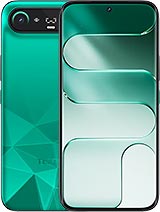
Camon Air
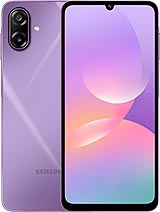
Galaxy M17e