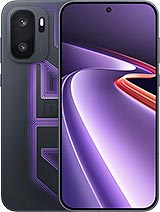
Huawei Pura 80 Pro review
The Pura 80 Pro shines in China, where it gets 5G, Wi-Fi 7, and native software. Outside that market, the lack of Google services and reduced connectivity are deal-breakers for most users, and the soft glass undermines its flagship pricing. If you're in mainland China or committed to HarmonyOS, the display and charging speed reward the investment; otherwise, look at Samsung or Apple flagships in the same bracket.
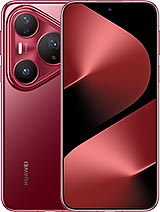
This review is written with AI assistance from Huawei’s published specifications and public benchmark data for the Huawei Pura 80 Pro, and the rating is spec-based. GoSolo does not physically test devices; where we estimate real-world behaviour such as battery life or charge time, we say so. How we rate phones.
Overview
The Pura 80 Pro is a slim, bright Chinese flagship built on the latest Kirin chip and 100W charging, but its geographical neutering outside mainland China—5G and Wi-Fi 7 are China-only, and no Google services—makes it an awkward sell outside that market. For the price, it's a solid camera and display device if you accept those constraints.
Design & Build
At 8.3mm thick and 219g, the Pura 80 Pro is pleasantly slim and pocketable—a genuine strength in an era when flagships keep thickening. The aluminum frame and glass sandwich feel refined, and IP68 waterproofing good to 2 meters for 30 minutes is solid. The catch: Kunlun Glass 2 scratches more easily than the Gorilla Glass found on rivals. Mohs level 4 means everyday pocket debris will mark the back. For a phone at this price, that's a step backward; you're paying flagship money for a more fragile screen. The build quality itself is respectable, but that glass choice is a false economy.
Display
The 6.8-inch LTPO OLED at 1276×2848 (459 ppi) runs at 120Hz and delivers 3000 nits peak brightness—enough to read text and watch video in direct sun without struggling. The high PWM rate (1440Hz) means flicker-sensitive users should see a cleaner image. The 20:9 aspect ratio is stretched, so some apps will have uneven padding, but for video and photos it feels natural. The 89.7% screen-to-body ratio is solid for a phone this size. Brightness and refresh are where this phone excels; this is the display you want if you spend time outdoors or value scrolling feel. The trade-off is that the tall, narrow frame and adaptive refresh down to 1Hz help battery life, but they also mean you're not getting the wide-viewing-angle stability of some older flat OLED designs—the curve is steeper.
Performance
The Kirin 9020 is Huawei's latest high-end chip, built on 7nm and paired with 16GB RAM and 512GB or 1TB storage. The octa-core setup (1×2.5GHz, 3×2.15GHz, 4×1.6GHz) is pitched as near-flagship performance. Multitasking and app switching are smooth, and the Maleoon 920 GPU is adequate for gaming at this resolution. Real-world gaming frame rates and thermal load data are hard to pin down from specs alone, but the design and config suggest this is a capable, not bleeding-edge performer. It should handle daily use and most games without lag, but don't expect sustained high-end gaming performance to rival a Snapdragon 8 Gen 3. Storage is generous with no microSD expansion—not a surprise at this tier, but worth noting if you shoot 4K video regularly.
Software
Here is where the Pura 80 Pro fractures. In China, it runs HarmonyOS 5.1; internationally, it ships EMUI. Both are Huawei's in-house Android alternatives, and neither includes Google Play Store access out of the box. If you rely on Gmail, Google Maps, YouTube, or any of Google's ecosystem, you face either sideloading or using local equivalents. For users outside China accustomed to Android, this is a significant friction point. HarmonyOS itself is maturing—the interface is clean and the customization is deep—but it is not Android, and that separation matters. Expect a learning curve and limited app availability compared to mainstream Android flagships.
Camera
The triple rear setup is balanced: a 50MP f/1.6 main sensor (1.0-inch type, dual-pixel PDAF, OIS), a 48MP f/2.1 telephoto with 4x optical zoom and OIS, and a 40MP f/2.2 ultrawide. That main sensor with f/1.6 and optical stabilization is the workhorse—it pulls light well in dim scenes and keeps handheld shots sharp. The 4x zoom via the 93mm telephoto is a genuine advantage over phones that rely on digital crop; framing subjects at distance doesn't degrade as much. The ultrawide is competent but f/2.2 and 40MP is standard, not exceptional. Selfie is 13MP ultrawide f/2.0, fine for group shots and video calls. The laser autofocus and color spectrum sensor add polish. Overall, this is a credible flagship camera system; it doesn't outclass rivals from Samsung or Apple on the sensor alone, but the zoom range and stabilization are strengths.
Battery & Charging
The 5700 mAh battery should deliver about a full day of mixed use for most people. 100W wired charging is impressive, reaching full in roughly 25 to 30 minutes; 80W wireless and reverse wired/wireless charging add convenience. These speeds are genuinely among the fastest available today and beat most rivals at the 970 EUR price point. The downside is that fast charging accelerates battery degradation over time, so longevity may not match phones with more conservative charging regimes. The LTPO display, which dips to 1Hz when idle, helps stretch runtime. For a large flagship OLED, this is respectable, if not exceptional; expect one full day before reaching for a charger.
Value & Verdict Context
At approximately 970 EUR, the Pura 80 Pro is positioned as a flagship. Its display, camera, and charging speed are genuinely strong, and the slim build is a welcome change from recent bloat. The problem is the ecosystem split: if you live in mainland China, this phone makes more sense, because you get 5G, Wi-Fi 7, and full HarmonyOS integration. Outside China, you're paying flagship money for a phone that runs a non-standard Android fork, lacks Google services by default, and has only LTE and Wi-Fi 6—a significant step down in network future-proofing. The fragile Kunlun Glass 2 on a 970 EUR flagship is also a red flag. For international buyers, this is a niche choice: strong if you are embedded in Huawei's ecosystem or willing to sideload Google services, but otherwise a hard sell compared to Samsung or Apple flagships at a similar price.
Verdict
The Pura 80 Pro shines in China, where it gets 5G, Wi-Fi 7, and native software. Outside that market, the lack of Google services and reduced connectivity are deal-breakers for most users, and the soft glass undermines its flagship pricing. If you're in mainland China or committed to HarmonyOS, the display and charging speed reward the investment; otherwise, look at Samsung or Apple flagships in the same bracket.
- 3000-nit peak brightness and 120Hz LTPO OLED make the 6.8-inch display genuinely usable in sunlight and fluid for scrolling.
- 50MP main camera with f/1.6 aperture, 4x optical zoom, and OIS handles both daylight shots and low-light scenes with optical stability that stands up against rivals in this tier.
- 100W wired and 80W wireless charging reach full capacity in well under 30 minutes, among the fastest in the market today.
- Slim 8.3mm profile and glass body feel mature; IP68 rating with dual SIM slots covers durability basics.
- 5G and Wi-Fi 7 locked to mainland China; international models drop to LTE and Wi-Fi 6, undercutting the future-proofing claim for most buyers outside China.
- Kunlun Glass 2 is Mohs level 4, scratching more easily than Corning Gorilla Glass and rival flagships—a real durability step down for a 970 EUR phone.
- No Google Play Store or familiar Android ecosystem outside China; reliance on HarmonyOS or carrier-locked EMUI is a hard barrier for users outside Asia.
Huawei Pura 80 Pro Key Specifications
The essentials at a glance. See the full spec sheet.
| Released | 2025, June 11 |
|---|---|
| Display | 6.8 inches, 111.3 cm2 (~89.7% screen-to-body ratio), LTPO OLED, 1B colors, HDR Vivid, 120Hz, 1440Hz PWM, 3000 nits (peak) |
| Resolution | 1276 x 2848 pixels, 20:9 ratio (~459 ppi density) |
| Chipset | Kirin 9020 (7 nm) |
| RAM & storage | 512GB 16GB RAM, 1TB 16GB RAM |
| Main camera | 50 MP, f/1.6-4.0, 23mm (wide), 1.0"-type, dual pixel PDAF, OIS 48 MP, f/2.1, 93mm (telephoto), PDAF (5cm - ∞), OIS, 4x optical zoom 40 MP, f/2.2, 13mm (ultrawide), AF |
| Selfie camera | 13 MP, f/2.0, (ultrawide), AF |
| Battery | 5700 mAh |
| Charging | 100W wired80W wireless18W reverse wiredReverse wireless |
| Software | EMUI (International), HarmonyOS 5.1 (China) |
| Dimensions | 163 x 76.1 x 8.3 mm (6.42 x 3.00 x 0.33 in) |
| Weight | 219 g (7.72 oz) |
| Build | Glass front, aluminum frame, glass back |
| Durability | IP68/IP69 dust tight and water resistant (high pressure water jets; immersible up to 2m for 30 min) |
| Network | GSM / CDMA / HSPA / CDMA2000 / LTE / 5G |
| NFC | Yes |
| USB | USB Type-C 3.1, OTG, DisplayPort 1.2 |
Huawei Pura 80 Pro FAQ
Common questions, answered from the spec sheet.
Does the Pura 80 Pro support 5G?
Yes. The Pura 80 Pro supports 5G networks.
What chipset does the Pura 80 Pro use?
The Pura 80 Pro runs on the Kirin 9020 (7 nm).
What display does the Pura 80 Pro have?
A 6.8 inches, 111.3 cm2 (~89.7% screen-to-body ratio) LTPO OLED, 1B colors, HDR Vivid, 120Hz, 1440Hz PWM, 3000 nits (peak), 1276 x 2848 pixels, 20:9 ratio (~459 ppi density).
How big is the Pura 80 Pro battery?
The Pura 80 Pro has a 5700 mAh battery. Charging is rated at 100W wired80W wireless18W reverse wiredReverse wireless.
Does the Pura 80 Pro have NFC?
Yes, the Pura 80 Pro has NFC.
Is the Pura 80 Pro water resistant?
The Pura 80 Pro carries a IP68/IP69 dust tight and water resistant (high pressure water jets; immersible up to 2m for 30 min) rating.
Does the Pura 80 Pro support a microSD card?
No, the Pura 80 Pro does not support expandable storage.
Does the Pura 80 Pro have a headphone jack?
No, the Pura 80 Pro does not have a 3.5mm headphone jack.
Alternatives to consider
If the Pura 80 Pro isn’t quite right, these are the closest calls.
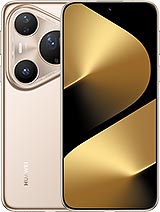
Pura 80 Ultra
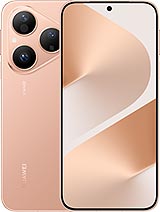
Pura 80
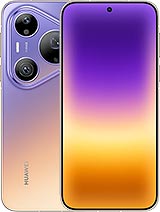
Pura 90s Pro Max
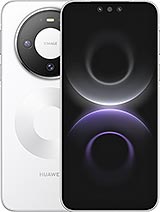
Mate 80
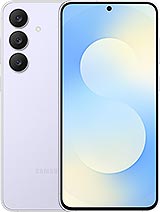
Galaxy S25 FE