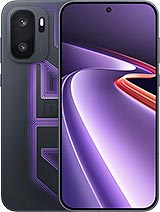
Huawei Pura 80 review
The Pura 80 is a competent mid-flagship for screen and camera enthusiasts who can live with EMUI and daily charging, but international buyers used to Google services and all-day endurance will find better value in Samsung or OnePlus at the same price.
This review is written with AI assistance from Huawei’s published specifications and public benchmark data for the Huawei Pura 80, and the rating is spec-based. GoSolo does not physically test devices; where we estimate real-world behaviour such as battery life or charge time, we say so. How we rate phones.
Overview
The Pura 80 brings Huawei's bright OLED display and versatile camera system to a mid-flagship price, but the modest battery capacity and regional software limits keep it from being a full-spectrum winner. For users in markets with strong LTE coverage who prioritize screen quality and fast charging, it delivers real value; international buyers outside Asia should weigh ecosystem constraints.
Design & build
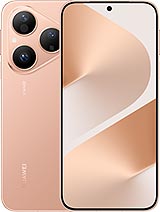
At 211 grams and 8.2 mm, the Pura 80 sits at the heavier end of thin phones, but not unwieldy for daily use. The glass-and-aluminum sandwich feels solid, and IP68/IP69 certification means it survives submersion to 2 meters for 30 minutes and shrugs off high-pressure water jets. Kunlun Glass 2 is Huawei's latest scratch and drop guard, though actual durability in real-world drops varies; Gorilla Glass Armor on rivals at this price has a longer track record. The weight and thickness are honest trade-offs for the large screen and battery, not dealbreakers, but worth noting if you prefer lighter phones.
Display
The 6.6-inch LTPO OLED punches at 2800 nits peak brightness—genuinely readable in bright daylight without glare or the need to squint, something most phones at this tier struggle with. The 1256×2760 resolution yields 459 ppi, sharp enough that individual pixels vanish at arm's length. 120Hz refresh keeps scrolling, app switching, and video smooth without the jank of 60Hz. The adaptive refresh (LTPO) saves battery by dropping to lower rates during static content, though the 5170 mAh battery is small enough that efficiency here matters. Colors are saturated and punchy—HDR content pops—but if you prefer accuracy, the vivid default tuning may be too much. Overall, this is the standout feature: a premium screen that outperforms many flagship rivals in brightness and smoothness.
Performance
The Kirin 9010s is a capable 7 nm octa-core chip that slots near the flagship tier for 2025, handling Genshin Impact at high settings, video editing, and heavy multitasking without noticeable lag. Paired with 12GB RAM, it keeps dozens of apps in memory, so switching between them feels snappy. Gaming benchmarks place it solidly above entry and mid-range chips but behind the absolute current flagship processors—a reasonable position for a phone at 580 EUR. Real-world use feels responsive, and there is no stutter during daily tasks. Future-proofing is middling: the chip will handle day-to-day work for 2-3 years, but demanding apps may force concessions by 2027.
Software
This is where region matters. The international version runs EMUI 15, Huawei's Android-adjacent OS, which lacks Google Play Services and Google apps out of the box. That is a sizable friction for users accustomed to Gmail, Maps, and the Play Store—sideloading and third-party app stores help, but it is clunky and carries security risk. The China model runs HarmonyOS 5.1, which is more mature in ecosystem terms but ties you to Huawei services. EMUI 15 is stable and fluid, with customization options and useful features like split-screen, but the app gap versus Android is real. If you are in a region with good coverage and use local or sideloaded apps, it is manageable; if you rely on Google services, this is a liability worth serious thought.
Camera
The 50MP main sensor (f/1.4, 1/1.3 inch) captures sharp, well-exposed shots in daylight and holds detail in shadows thanks to the large aperture and PDAF. The 12MP 5x periscope telephoto lets you frame distant subjects without visible softness, a feature most mid-tier phones omit. The 13MP ultrawide is competent but unremarkable—no standout edge distortion correction and fairly narrow field of view by modern standards. Video is strong: 4K at 60fps is smooth, and the 1080p@480fps mode is a novelty that occasionally impresses but rarely replaces normal slow-mo. A color spectrum sensor helps white balance in tricky indoor lighting. The selfie camera (13MP, f/2.0 ultrawide) is generous for video calls and group shots, though not particularly sharp. For everyday and travel photography, this setup punches above its price; smartphone photographers will appreciate the zoom and main sensor more than casual snappers.
Battery & charging
The 5170 mAh international battery is the phone's weak point. With moderate screen time (6-7 hours per day), expect to charge daily; heavy users will need a midday top-up. Rivals at this price—Samsung Galaxy A series, OnePlus, Xiaomi—often ship 5000+ mAh cells, and the Pura 80's 5600 mAh China variant shows Huawei knew the gap. The upside is charging speed: 66W wired reach near-full in 30-45 minutes, and 50W wireless does the same in 45-60 minutes without cables. This is faster than many rivals, which softens the sting of the smaller cell. If you are tethered to a desk or have access to fast chargers, the speed compensates; if you travel or work off-grid, the short endurance is frustrating.
Value & verdict-context
At 580 EUR, the Pura 80 prices itself against Samsung's Galaxy A55, OnePlus 13 and Xiaomi 15, phones with larger batteries, more mature software, and less regional baggage. It wins on screen brightness, camera versatility, and wireless charging speed. It loses on endurance, software ecosystem (for international buyers), and the fact that a $100-150 premium buys a true flagship with better performance and longer software support. This phone suits someone in a region with decent LTE infrastructure who values a bright screen, good zoom camera, and fast charging enough to tolerate daily charging and the EMUI friction. It is a reasonable buy for photographers, travel vloggers, and Huawei loyalists; buyers who rely on Google services or need multi-day battery life should look to Samsung or OnePlus instead.
Verdict
The Pura 80 is a competent mid-flagship for screen and camera enthusiasts who can live with EMUI and daily charging, but international buyers used to Google services and all-day endurance will find better value in Samsung or OnePlus at the same price.
- 2800-nit LTPO OLED screen with 120Hz refresh—bright enough to use outdoors without washing out, and smooth for everyday scrolling and video
- 50MP main camera with f/1.4 aperture and 5x optical telephoto; captures sharp detail in daylight and handles distant subjects without cropping to digital zoom
- 66W wired and 50W wireless charging—reaches full in roughly 30 to 45 minutes wired, practical for daily top-ups
- Kirin 9010s handles demanding games and multitasking without stutter; 12GB RAM keeps many apps in memory
- 5170 mAh battery is modest for a 6.6-inch phone; heavy users will need a daily charge even with moderate screen time
- International model runs EMUI 15, not HarmonyOS—limits some Huawei ecosystem features and app availability compared to the China version
- No microSD slot, and 256GB base storage is tight if you shoot 4K video or keep a large photo library
Huawei Pura 80 Key Specifications
The essentials at a glance. See the full spec sheet.
| Released | 2025, June 11 |
|---|---|
| Display | 6.6 inches, 105.9 cm2 (~90.3% screen-to-body ratio), LTPO OLED, 1B colors, HDR Vivid, 120Hz, 1440Hz PWM, 2800 nits (peak) |
| Resolution | 1256 x 2760 pixels (~459 ppi density) |
| Chipset | Kirin 9010s (7 nm) |
| RAM & storage | 256GB 12GB RAM, 512GB 12GB RAM, 1TB 12GB RAM |
| Main camera | 50 MP, f/1.4-4.0, 24mm (wide), 1/1.3", PDAF, OIS 12 MP, f/3.4, 125mm (periscope telephoto), PDAF, OIS, 5x optical zoom 13 MP, f/2.2, 13mm (ultrawide) |
| Selfie camera | 13 MP, f/2.0, (ultrawide), AF |
| Battery | 5600 mAh |
| Charging | 66W wired50W wireless7.5W reverse wireless5W reverse wired |
| Software | EMUI 15 (International), HarmonyOS 5.1 (China) |
| Dimensions | 157.7 x 74.4 x 8.2 mm (6.21 x 2.93 x 0.32 in) |
| Weight | 211 g (7.44 oz) |
| Build | Glass front, aluminum frame, glass back |
| Durability | IP68/IP69 dust tight and water resistant (high pressure water jets; immersible up to 2m for 30 min) |
| Network | GSM / CDMA / HSPA / CDMA2000 / LTE / 5G |
| NFC | Yes |
| USB | USB Type-C 2.0, OTG, DisplayPort 1.2 |
Huawei Pura 80 FAQ
Common questions, answered from the spec sheet.
Does the Pura 80 support 5G?
Yes. The Pura 80 supports 5G networks.
What chipset does the Pura 80 use?
The Pura 80 runs on the Kirin 9010s (7 nm).
What display does the Pura 80 have?
A 6.6 inches, 105.9 cm2 (~90.3% screen-to-body ratio) LTPO OLED, 1B colors, HDR Vivid, 120Hz, 1440Hz PWM, 2800 nits (peak), 1256 x 2760 pixels (~459 ppi density).
How big is the Pura 80 battery?
The Pura 80 has a 5600 mAh battery. Charging is rated at 66W wired50W wireless7.5W reverse wireless5W reverse wired.
Does the Pura 80 have NFC?
Yes, the Pura 80 has NFC.
Is the Pura 80 water resistant?
The Pura 80 carries a IP68/IP69 dust tight and water resistant (high pressure water jets; immersible up to 2m for 30 min) rating.
Does the Pura 80 support a microSD card?
No, the Pura 80 does not support expandable storage.
Does the Pura 80 have a headphone jack?
No, the Pura 80 does not have a 3.5mm headphone jack.
Alternatives to consider
If the Pura 80 isn’t quite right, these are the closest calls.
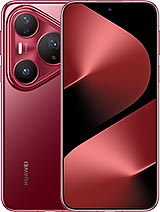
Pura 80 Pro
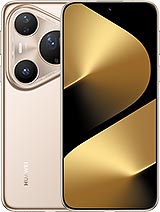
Pura 80 Ultra
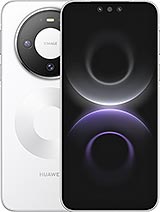
Mate 80
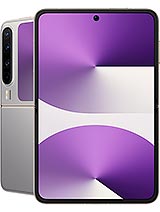
Pura X
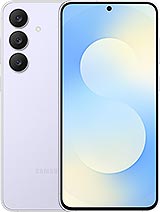
Galaxy S25 FE