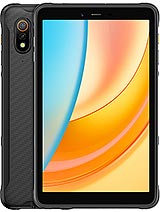
Huawei MatePad Air 2025 review
The MatePad Air 2025 suits productivity-first users who value portability, all-day battery, and a sharp, smooth display over app variety. If you rely on specific third-party software or prefer iPadOS polish, HarmonyOS will feel restrictive, and the narrower ecosystem makes this a harder sell outside China and select markets.
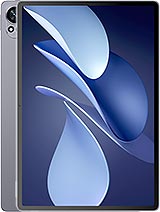
This review is written with AI assistance from Huawei’s published specifications and public benchmark data for the Huawei MatePad Air 2025, and the rating is spec-based. GoSolo does not physically test devices; where we estimate real-world behaviour such as battery life or charge time, we say so. How we rate phones.
Overview
The MatePad Air 2025 is a thin, light 12-inch tablet with a 144Hz display and all-day battery that excels for reading, note-taking, and document work. At €360, it is a practical choice for productivity on the go, though its performance ceiling and camera setup are tailored to tablets, not flagship ambitions.
Design & Build
Huawei has nailed the physical form factor. At 5.9mm thick and weighing just 555g, the MatePad Air is thin enough to slip into a messenger bag and light enough that you will not feel its weight after an hour of holding. The glass front and aluminum frame offer a premium feel without the bulk of competitors, and the 3:2 aspect ratio (slightly taller than 16:9) mirrors a notebook page, which matters if you are working on documents or taking notes. Magnetic stylus support is tidy, though the stylus itself is not included at this price. The design justifies the portability claim; this is a tablet you will actually carry, not one that stays on a desk.
Display
The 12-inch IPS LCD with 2800×1840 pixels and 144Hz refresh rate is where this tablet shines. At 279 ppi, sharpness is solid for text and images at typical reading distance; you won't see pixels during everyday use. The 144Hz scrolling matters here more than on a phone—flipping through documents, web pages, and PDFs feels noticeably smoother than a standard 60Hz tablet. The 1000-nit peak brightness reaches comfortable levels in direct sunlight, a rarity at this price tier, and HDR Vivid adds decent color pop for streaming content. The one trade-off: IPS LCD cannot match OLED contrast, and the color gamut, while adequate, will not impress photo editors used to iPad Pro standards. For productivity and media consumption, though, it is a straight win.
Performance & Software
The spec sheet omits the chipset name, a Huawei quirk that makes direct comparison difficult. However, 12GB RAM (on the higher-end configs) handles multitasking smoothly—opening multiple apps, browser tabs, and background processes does not stutter. The 256GB or 512GB storage options suit different needs, though neither is expandable, so choose carefully. HarmonyOS 5.0 is the sticking point. Huawei's homegrown OS works well for basics, but the app ecosystem lags behind iPadOS and stock Android in depth and breadth. Outside mainland China, finding regional banking apps, certain productivity tools, and niche software can be frustrating. If you live in Europe or elsewhere in the global south and need specific apps, test compatibility before committing. For reading, writing, web browsing, and light media, HarmonyOS is fine. For power users with heavy software demands, it is a bottleneck.
Camera
The 50MP rear wide-angle and 8MP ultrawide are overkill for a tablet and unlikely to see heavy use. Megapixel counts rarely translate to photo quality on tablets, and the f/1.8 aperture, while theoretically useful in low light, does not compensate for the inherent limits of tablet photography. Videos max out at 4K 30fps, which is standard but unremarkable. The 8MP front-facer for video calls is adequate but uninspired. Real talk: if you care about cameras, buy a phone. Tablets are not camera-first devices, and Huawei's camera spec here reads as marketing rather than substance.
Battery & Charging
The 10100mAh battery delivers roughly 10–12 hours of screen-on time under mixed use (reading, notes, video, web browsing), which covers a full working day without a midday charge. Heavy gaming or constant video calls will trim this by 2–3 hours, which is normal for tablets. One frustration: the spec sheet does not clearly state charging wattage. A 66W figure has surfaced elsewhere, but without official confirmation, it is hard to judge whether this tablet charges at the speed you would expect at this price. For context, iPad Air charges at 20W; if Huawei matches or exceeds that, it is a win; if it falls short, it is a weakness to clarify before purchase.
Connectivity
Wi-Fi 6E and 7 support are strong on paper, offering faster wireless speeds if your router supports them. Bluetooth 5.2 pairs reliably with accessories and headphones. The absence of cellular connectivity is standard for tablets at this price, so it is not a surprise, though it means you depend entirely on Wi-Fi or tethering. USB Type-C 3.1 with OTG support lets you attach external storage or peripherals. The magnetic accessory connector hints at Huawei's growing ecosystem of add-ons, though availability and pricing vary by region.
Value & Verdict
At roughly €360, the MatePad Air 2025 sits in the practical midrange. It competes against the iPad (10th gen) and similar-priced Android tablets, and it holds its own on hardware: the display is sharper, the build is thinner, and the battery easily matches a full day. The friction is software. If you are comfortable with HarmonyOS and can live without a deep app library, this tablet is a smart buy for reading, note-taking, document work, and media consumption. If you depend on specific third-party apps or prefer the polish of iPadOS, the limited ecosystem will frustrate you. The missing stylus in the box (sold separately) is also a surprise at this price point. For students, casual readers, and productivity-focused users in regions where HarmonyOS adoption is higher, this is a solid choice. For those locked into Apple or Android ecosystems, or who need software depth, look elsewhere.
Verdict
The MatePad Air 2025 suits productivity-first users who value portability, all-day battery, and a sharp, smooth display over app variety. If you rely on specific third-party software or prefer iPadOS polish, HarmonyOS will feel restrictive, and the narrower ecosystem makes this a harder sell outside China and select markets.
- 144Hz IPS LCD display with 1000-nit peak brightness makes scrolling smooth and sunlight readability solid for a midrange tablet
- At 5.9mm thick and 555g, it sits between a notebook and small laptop—genuinely portable without feeling fragile
- 10100mAh battery delivers a full working day (10–12 hours screen-on) of reading, notes, and casual video without needing power mid-afternoon
- Stylus support and 12GB RAM variant make multitasking and note-taking seamless for students and professionals
- HarmonyOS 5.0 and Huawei's app ecosystem remain narrower than iPadOS or Android, limiting third-party software for regional users outside China
- No charging wattage spec listed; unclear if it reaches the 66W suggested elsewhere, a gap at this price when iPad Air charges faster
- 50MP rear camera is oversized for typical tablet use; real-world photos will not match the megapixel count, and ultrawide at 8MP trails iPad Air equivalents
Huawei MatePad Air 2025 Key Specifications
The essentials at a glance. See the full spec sheet.
| Released | 2025, August 15 |
|---|---|
| Display | 12.0 inches, 426.4 cm2 (~86.3% screen-to-body ratio), IPS LCD, 144Hz, 1000 nits (peak), HDR Vivid |
| Resolution | 2800 x 1840 pixels, 3:2 ratio (~279 ppi density) |
| RAM & storage | 256GB 8GB RAM, 256GB 12GB RAM, 512GB 12GB RAM |
| Main camera | 50 MP, f/1.8, (wide), PDAF 8 MP, f/2.2, (ultrawide) |
| Selfie camera | 8 MP, f/2.2 |
| Battery | 10100 mAh |
| Software | HarmonyOS 5.0 |
| Dimensions | 270 x 183 x 5.9 mm (10.63 x 7.20 x 0.23 in) |
| Weight | 555 g (1.22 lb) |
| Build | Glass front, aluminum frame, aluminum back |
| Durability | Stylus support (magnetic) |
| Network | No cellular connectivity |
| NFC | No |
| USB | USB Type-C 3.1, OTG, magnetic accessory connector |
Huawei MatePad Air 2025 FAQ
Common questions, answered from the spec sheet.
Does the MatePad Air 2025 support 5G?
No. The MatePad Air 2025 tops out at No cellular connectivity, without 5G.
What display does the MatePad Air 2025 have?
A 12.0 inches, 426.4 cm2 (~86.3% screen-to-body ratio) IPS LCD, 144Hz, 1000 nits (peak), HDR Vivid, 2800 x 1840 pixels, 3:2 ratio (~279 ppi density).
How big is the MatePad Air 2025 battery?
The MatePad Air 2025 has a 10100 mAh battery.
Does the MatePad Air 2025 have NFC?
No, the MatePad Air 2025 does not list NFC support.
Is the MatePad Air 2025 water resistant?
The MatePad Air 2025 carries a Stylus support (magnetic) rating.
Does the MatePad Air 2025 support a microSD card?
No, the MatePad Air 2025 does not support expandable storage.
Alternatives to consider
If the MatePad Air 2025 isn’t quite right, these are the closest calls.
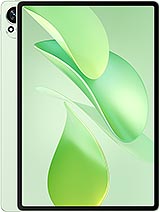
MatePad 12 X 2025
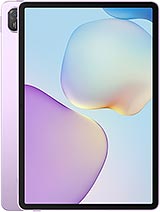
MatePad 11.5 S 2025
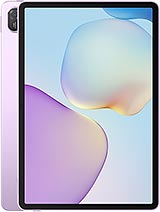
MatePad 11.5 2025
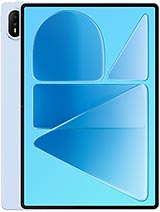
MatePad Air (2026)
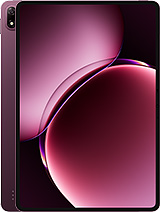
Pad 9 Pro Max