Honor Magic8 Pro Air review
The Magic8 Pro Air suits someone who actively dislikes heavy phones and values thinness as a daily-use feature, not just a spec. Skip it if charging speed matters to you, if you need assured long-term software updates, or if you're in a market with weak Honor support.

This review is written with AI assistance from Honor’s published specifications and public benchmark data for the Honor Magic8 Pro Air, and the rating is spec-based. GoSolo does not physically test devices; where we estimate real-world behaviour such as battery life or charge time, we say so. How we rate phones.
Overview
The Honor Magic8 Pro Air is a thin flagship that favors lightness and thinness over all else, at 6.1mm and 155g—nearly a featherweight in the high-end market. It delivers what you'd expect at this level: fast Dimensity 9500 processor, a bright OLED screen, solid cameras, and 5500 mAh battery, but charging speed is not disclosed in the specs, leaving a gap in the value story.
Design & build
At 6.1mm thick and 155g, the Magic8 Pro Air is among the lightest and thinnest flagship phones shipping today. That is the defining choice here. The glass-and-aluminum construction feels expected for the price tier, and IP68/IP69 certification covers dust and submersion to 1.5m for 30 minutes, which is solid. The trade-off is immediate: phones this thin tend to feel more delicate, and there is less room for a larger battery without compromise. The narrow 71.9mm width is genuinely usable, and the 6.31-inch display fits without the unwieldy reach of many rivals. For anyone tired of flagships that demand two hands or weigh down a pocket, this one lands differently.
Display
The 6.31-inch LTPO OLED runs at 120Hz with 4320Hz PWM dimming, Dolby Vision support, and peaks at 6000 nits brightness. In daylight, 1800 nits of high brightness mode is more than enough for outdoor legibility; the 6000-nit peak is useful for HDR content but not a day-to-day metric. Resolution is 1216 x 2640 at 461 ppi, which is sharp enough for a 6.31-inch screen—not as dense as some rivals, but the smaller footprint means you won't see pixels at normal viewing distance. The 19.5:9 aspect ratio leans tall, and the 90.2% screen-to-body ratio reflects a modern, minimal bezel design. Refresh rate matches the competition, and the LTPO adjustment means battery savings when you don't need 120Hz. This is a competent flagship display without surprises, and the brightness headroom is welcome for a thinner phone that might have thermal constraints.
Performance
The Mediatek Dimensity 9500 is a current-generation 3nm processor that lands squarely in the flagship tier alongside the Snapdragon 8 Elite. It will handle everything: gaming, app multitasking, video editing. The Arm G1-Ultra GPU is not a household name outside tech forums, but Mediatek's latest generation is competitive with Qualcomm's high-end in raw speed. RAM goes up to 16GB, and storage reaches 1TB—both overkill for most users but a signal of no near-term obsolescence. The real-world performance gap between this and last year's flagship is barely noticeable for general use; the physics of performance per watt at the high end have plateaued. What matters is that you won't hit a ceiling on this phone for at least three to four years.
Software
MagicOS 10 runs on Android 16, which is current. Honor's overlay sits on top of Android with customization and some AI-driven features (photo editing, call screening). If you prefer pure Android, MagicOS will feel like bloat; if you like control and options, some of it is useful. The real question is longevity: Honor's global software support is less certain than Samsung's or Google's, especially outside China. Updates and security patches matter more than launch software, and Honor's track record in global markets is mixed. For buyers in regions with spotty local support, this is a risk to factor in.
Camera
The main camera is a 50MP f/1.6 sensor at 23mm with 1/1.3-inch dimensions and multi-directional PDAF plus OIS. The periscope zoom is 64MP at 74mm (3.2x optical), and the ultrawide is 50MP at 112 degrees. On paper, this is a well-rounded triple setup. The 50MP main sensor with a large aperture and sensor size is excellent in low light, and the periscope design keeps the phone thin while offering genuine 3.2x zoom without digital quality loss. The 50MP ultrawide is practical for landscapes and interior shots, though it won't match the dynamic range of the main in all conditions. The 50MP selfie camera is a nice touch for video calls and self-portraits, but nobody buys a flagship for the front camera. Absence of macro or a second tele is no loss at this price—you already have zoom and wide coverage. This camera system is strong without being exceptional; it'll produce reliable photos in most light, but don't expect it to redefine low-light or zoom capabilities in its class.
Battery & charging
The 5500 mAh battery is generous for the weight and thinness—most 6mm-class phones compromise on capacity, so Honor didn't skimp. Real-world battery life will be about a full day with moderate use, perhaps 18-20 hours with heavy use on a single charge. The issue: the spec sheet provided does not disclose charging wattage, which is unusual and a red flag. At this price and in this market segment, rivals are shipping 100W+ charging as standard; silence on this point suggests the Magic8 Pro Air might be slower, and that is a genuine concern for a phone positioning itself as modern and competitive. Without knowing the charge speed, it's hard to assess true convenience.
Value & verdict
The Magic8 Pro Air targets a niche: buyers who prioritize thinness and lightness above all else. For that subset, it delivers. The Dimensity 9500, display, and camera system are all competent flagships, and the industrial design is genuinely impressive. The weight and thickness are differentiators that actually matter in daily use—phones this light feel markedly different in a pocket or in hand. The missing charging-speed spec and potential software support concerns are the real friction points. If you live in a region with reliable Honor service and you value a phone that doesn't feel heavy, this is a solid choice. If you need bulletproof long-term software support, fastest-class charging, or a conventional flagship, look to Samsung, Apple, or Google. The Magic8 Pro Air is not for everyone, but for the thin-phone enthusiast, it's a thoughtful execution.
Verdict
The Magic8 Pro Air suits someone who actively dislikes heavy phones and values thinness as a daily-use feature, not just a spec. Skip it if charging speed matters to you, if you need assured long-term software updates, or if you're in a market with weak Honor support.
- Exceptionally thin and light at 6.1mm and 155g, with no battery compromise—5500 mAh is generous for the form factor
- Dimensity 9500 and up to 16GB RAM ensure solid performance and longevity without future-proofing gimmickry
- Bright OLED display (6000 nits peak, 1800 HBM) and 120Hz refresh suit the thin design without thermal stress
- Periscope zoom design preserves thinness while delivering real 3.2x optical zoom; triple camera system covers wide, tele, and ultra-wide without gaps
- Charging wattage is not disclosed, suggesting it may lag rivals at this price tier—a critical omission for a 2026 flagship
- MagicOS adds complexity over vanilla Android, and Honor's global software support and security-patch cadence are less predictable than Samsung or Google
- Thinness prioritizes form over cooling: sustained gaming or video recording may throttle more than thicker rivals
Honor Magic8 Pro Air Key Specifications
The essentials at a glance. See the full spec sheet.
| Released | 2026, January 19 |
|---|---|
| Display | 6.31 inches, 97.6 cm2 (~90.2% screen-to-body ratio), LTPO OLED, 1B colors, 120Hz, 4320Hz PWM, Dolby Vision, HDR Vivid, 1800 nits (HBM), 6000 nits (peak) |
| Resolution | 1216 x 2640 pixels, 19.5:9 ratio (~461 ppi density) |
| Chipset | Mediatek Dimensity 9500 (3 nm) |
| RAM & storage | 256GB 12GB RAM, 512GB 12GB RAM, 512GB 16GB RAM, 1TB 16GB RAM |
| Main camera | 50 MP, f/1.6, 23mm (wide), 1/1.3", 1.2µm, multi-directional PDAF, OIS 64 MP, f/2.6, 74mm (periscope telephoto), 1/2", PDAF, OIS, 3.2x optical zoom 50 MP, f/2.2, 16mm, 112˚ (ultrawide) |
| Selfie camera | 50 MP, f/2.0, 21mm (wide), 1/2.93", 0.6µm |
| Battery | 5500 mAh |
| Software | Android 16, MagicOS 10 |
| Dimensions | 150.5 x 71.9 x 6.1 mm (5.93 x 2.83 x 0.24 in) |
| Weight | 155 g (5.47 oz) |
| Build | Glass front, aluminum frame |
| Durability | IP68/IP69 dust tight and water resistant (high pressure water jets; immersible up to 1.5m for 30 min) |
| Network | GSM / HSPA / LTE / 5G |
| NFC | Yes |
| USB | USB Type-C 2.0, OTG |
Honor Magic8 Pro Air FAQ
Common questions, answered from the spec sheet.
Does the Magic8 Pro Air support 5G?
Yes. The Magic8 Pro Air supports 5G networks.
What chipset does the Magic8 Pro Air use?
The Magic8 Pro Air runs on the Mediatek Dimensity 9500 (3 nm).
What display does the Magic8 Pro Air have?
A 6.31 inches, 97.6 cm2 (~90.2% screen-to-body ratio) LTPO OLED, 1B colors, 120Hz, 4320Hz PWM, Dolby Vision, HDR Vivid, 1800 nits (HBM), 6000 nits (peak), 1216 x 2640 pixels, 19.5:9 ratio (~461 ppi density).
How big is the Magic8 Pro Air battery?
The Magic8 Pro Air has a 5500 mAh battery.
Does the Magic8 Pro Air have NFC?
Yes, the Magic8 Pro Air has NFC.
Is the Magic8 Pro Air water resistant?
The Magic8 Pro Air carries a IP68/IP69 dust tight and water resistant (high pressure water jets; immersible up to 1.5m for 30 min) rating.
Does the Magic8 Pro Air support a microSD card?
No, the Magic8 Pro Air does not support expandable storage.
Alternatives to consider
If the Magic8 Pro Air isn’t quite right, these are the closest calls.

Honor Magic8 Pro Air
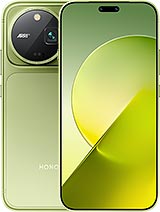
Magic9 Pro Max
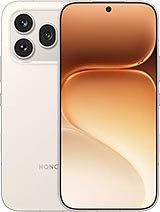
600 Pro
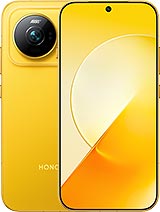
Magic9
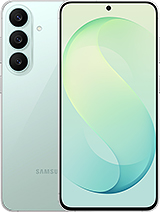
Galaxy S26 FE