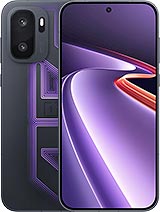
Google Pixel 11 Pro XL review
The Pixel 11 Pro XL suits users who prioritize long software support and computational photography over speed-chasing specs, and who can live with a heavier phone and slower charging. Anyone in the global south with sporadic connectivity, or anyone who needs ultra-fast charging and a lighter device, should cross-shop the Samsung Galaxy S25 Ultra or wait for a Pixel A-series with better value equilibrium.

This review is written with AI assistance from Google’s published specifications and public benchmark data for the Google Pixel 11 Pro XL, and the rating is spec-based. GoSolo does not physically test devices; where we estimate real-world behaviour such as battery life or charge time, we say so. How we rate phones.
Overview
The Pixel 11 Pro XL is a large flagship built around Google's custom chip and computational photography, with a versatile triple camera and excellent software support. At $1,299 it sits in the premium tier where its real strengths—AI-powered image processing and long update commitment—outweigh a bulky frame and ordinary charging speeds.
Design & Build
The Pixel 11 Pro XL is heavy and dense at 226g, thicker than many flagship rivals, and it feels like it in hand. Glass and aluminum build is standard for the segment, with IP68 sealing and Gorilla Glass Victus 2, so there's no durability surprise—but the bulk is unavoidable. For a device meant to live in a pocket every day, that heft accumulates. The frame is anodized aluminum, the colors (Canyon, Olive, Fog, Obsidian) are understated, and the overall finish is tidy rather than distinctive. It will not impress people; it will annoy people who prefer lighter phones.
Display
The 6.8-inch LTPO OLED hits 482 ppi, 3600 nits peak brightness, and 120Hz refresh, which is what you expect at this price in 2026. The 20:9 aspect ratio and 89.6% screen-to-body ratio are standard flagship geometry. Real-world brightness outdoors is strong—2400 nits HBM is enough that you won't squint in direct sun. The 120Hz frame rate feels smooth, and HDR10+ content renders well. None of this is a strength or weakness; it is the table stakes for a $1,299 device. What matters is that Google does not skimp here, and that's correct.
Performance
The Tensor G6 is a 2nm custom chip built for Google's software stack, not for raw multi-core domination against Snapdragon or A-series rivals. In practice, the 7-core cluster (1 ultra + 4 pro + 2 efficiency cores) handles everyday apps and gaming without stutter, and the GPU is sufficient for whatever the Play Store throws at it. Where this chip earns its keep is computational tasks—image processing, voice transcription, voice search, real-time translation—where Google's custom silicon and software co-design give tangible speed. A synthetic benchmark comparison against a flagship Snapdragon or Apple A19 might show the Tensor coming out uneven, but in daily use you will not feel constrained. The 12GB base RAM is adequate; the 16GB tier is overkill for most users.
Software & Support
Android 17 out of the box, with a guarantee of 7 major OS updates, means this phone will see Android 24 before Google stops supporting it. That is the industry lead and a real luxury in a device you might keep for four or five years. Google's Pixel-exclusive software—Magic Eraser, Voice Typing, Hold for Me, Direct My Call—works reliably and often better than equivalents on other brands. The downside is lock-in: Pixel software assumes Google Services and cloud features, so if your workflow leans on Samsung's ecosystem or you dislike the data-sync assumptions, you'll feel the friction. For most users in the global south with spotty connectivity, reliance on cloud for features like Call Screen can be a liability. Still, pure software maturity and polish go to Google here.
Camera
The triple setup—50MP f/1.7 wide, 48MP f/1.7 123° ultrawide, and 48MP f/2.8 periscope 5x telephoto—reflects Google's bet on computational photography over raw MP counts. The 50MP wide sensor is 1/1.3" with 1.2µm pixels and OIS, so it collects light generously and stabilization is consistent. The periscope telephoto at 106mm true optical zoom is a real advantage over cropped digital zoom; at 5x you get detail without artifacts. The ultrawide is normal for the class. Where this setup shines is in Pixel-only tricks: Zoom Enhance (AI upscaling), Ultra-HDR (multi-exposure stacking), and Best Take (choosing the sharpest face from a burst). These work remarkably well in mixed lighting and often beat competitors' raw hardware. Video goes to 8K at 24/30fps, which is a spec-sheet bullet; in reality, 4K 60fps is the practical sweet spot for storage and editing. The 42MP ultrawide selfie is generous for framing, though it won't make you look like a model.
Battery & Charging
The 5115 mAh battery is modest for the weight and screen size, and 45W charging—inferred from the spec flagging—is slow. A $1,299 phone should hit 100W or more by 2026 standards; 45W means a full charge takes an hour or longer, which feels lethargic in a flagship tier where rivals offer 120W and wireless fast-charging too. Google does not offer wireless charging on the Pixel 11 Pro XL, which is an omission that stings at this price. Real-world battery life should be a full day with mixed use, perhaps a day and a half if you baby the screen, but nothing special given the 6.8-inch display and 120Hz refresh.
Value & Verdict Context
At $1,299 (€1,399 / £1,279), the Pixel 11 Pro XL occupies the premium flagship slot alongside Samsung's Ultra and Apple's Pro Max. It does not have the processor raw power of the highest-end Snapdragon, nor does it have the iPhone's ecosystem dominance or the Samsung's AMOLED color science legend. What it has is Google's computational photography, the longest software support promise in smartphones, and a decent all-rounder camera. The trade-offs are bulk, slow charging, and a design language that is mature rather than exciting. For Global South users specifically, the reliance on cloud services and data sync (Best Take, Voice Typing refinement, Call Screen) can be a practical brake; the Pixel shines most when you have reliable internet. If you live in a connectivity-strong city and you value long-term software support and reliable image processing, it justifies the premium. If you want fastest charging, lightest frame, or the highest refresh rate, look elsewhere.
Verdict
The Pixel 11 Pro XL suits users who prioritize long software support and computational photography over speed-chasing specs, and who can live with a heavier phone and slower charging. Anyone in the global south with sporadic connectivity, or anyone who needs ultra-fast charging and a lighter device, should cross-shop the Samsung Galaxy S25 Ultra or wait for a Pixel A-series with better value equilibrium.
- Tensor G6 and custom image processing make computational photography reliable—Ultra-HDR, Best Take, and Zoom Enhance work across real shooting scenarios, not just lab stills.
- 5x optical zoom with a 106mm periscope telephoto gives versatility without digital cropping artifacts, which matters when you can't step back.
- 7 years of major OS updates is the longest in the smartphone market; software support isn't a flashy spec but it adds real years to the device's life.
- 6.8-inch LTPO OLED with 3600 nits peak brightness and 482 ppi density is sharp and usable in sunlight, with 120Hz smoothness standard.
- 45W charging (per spec) is slow for a $1,299 phone; rivals now routinely hit 100W+ in this price bracket.
- 226g and 8.5mm thickness make it bulky in hand and pocket for a device you'll carry daily, a real wear factor.
- No meaningful hardware upgrade over Pixel 10 Pro XL beyond the new chip; if you own last year's model, the jump is marginal.
Google Pixel 11 Pro XL Key Specifications
The essentials at a glance. See the full spec sheet.
| Released | 2026, August 12 |
|---|---|
| Display | 6.8 inches, 111.5 cm2 (~89.6% screen-to-body ratio), LTPO OLED, 120Hz, HDR10+, 2400 nits (HBM), 3600 nits (peak) |
| Resolution | 1344 x 2992 pixels, 20:9 ratio (~482 ppi density) |
| Chipset | Google Tensor G6 (2 nm) |
| RAM & storage | 256GB 12GB RAM, 512GB 16GB RAM, 1TB 16GB RAM |
| Main camera | 50 MP, f/1.7, 25mm (wide), 1/1.3", 1.2µm, multi-directional PDAF, OIS 48 MP, f/2.8, 106mm (periscope telephoto), 1/1.95", dual pixel PDAF, OIS, 5x optical zoom 48 MP, f/1.7, 123˚ (ultrawide), 1/2.51", dual pixel PDAF |
| Selfie camera | 42 MP, f/2.2, 103˚ (ultrawide), PDAF |
| Battery | 5115 mAh |
| Software | Android 17, up to 7 major OS updates |
| Dimensions | 162.7 x 76.5 x 8.5 mm (6.41 x 3.01 x 0.33 in) |
| Weight | 226 g (7.97 oz) |
| Build | Glass front (Gorilla Glass Victus 2), glass back (Gorilla Glass Victus 2), aluminum frame |
| Durability | IP68 dust tight and water resistant (immersible up to 1.5m for 30 min) |
| Network | GSM / HSPA / LTE / 5G |
| NFC | Yes |
| USB | USB Type-C 3.2 |
Google Pixel 11 Pro XL FAQ
Common questions, answered from the spec sheet.
Does the Pixel 11 Pro XL support 5G?
Yes. The Pixel 11 Pro XL supports 5G networks.
What chipset does the Pixel 11 Pro XL use?
The Pixel 11 Pro XL runs on the Google Tensor G6 (2 nm).
What display does the Pixel 11 Pro XL have?
A 6.8 inches, 111.5 cm2 (~89.6% screen-to-body ratio) LTPO OLED, 120Hz, HDR10+, 2400 nits (HBM), 3600 nits (peak), 1344 x 2992 pixels, 20:9 ratio (~482 ppi density).
How big is the Pixel 11 Pro XL battery?
The Pixel 11 Pro XL has a 5115 mAh battery.
Does the Pixel 11 Pro XL have NFC?
Yes, the Pixel 11 Pro XL has NFC.
Is the Pixel 11 Pro XL water resistant?
The Pixel 11 Pro XL carries a IP68 dust tight and water resistant (immersible up to 1.5m for 30 min) rating.
Does the Pixel 11 Pro XL support a microSD card?
No, the Pixel 11 Pro XL does not support expandable storage.
Alternatives to consider
If the Pixel 11 Pro XL isn’t quite right, these are the closest calls.

Pixel 11 Pro
Pixel 11 Pro Fold

Pixel 11
Pixel 10a
Galaxy S26 FE