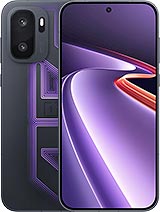
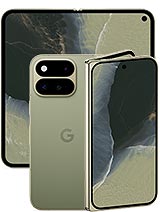
Google Pixel 11 Pro Fold review
This is for people whose work or play genuinely benefits from two screens or a large tablet-sized display when unfolded. If you spend most of your phone time on a single screen, a conventional flagship is simpler and cheaper; if you need a real tablet, buy a tablet.
This review is written with AI assistance from Google’s published specifications and public benchmark data for the Google Pixel 11 Pro Fold, and the rating is spec-based. GoSolo does not physically test devices; where we estimate real-world behaviour such as battery life or charge time, we say so. How we rate phones.
Overview
The Pixel 11 Pro Fold is Google's latest foldable: a thin, light tablet-sized phone with a genuinely useful inner 8-inch screen and the company's best cameras yet, running purpose-built Android 17 with long update support. It costs nearly two grand, so you have to really want the larger workspace and dual-display versatility to justify it over a conventional flagship.
Design & Build
Google has nailed the foldable form factor here. At 5mm unfolded and 239 grams, the Pixel 11 Pro Fold is the thinnest, lightest large foldable around and does not feel like a compromise between states. The aluminum frame and Gorilla Glass Victus 2 back are reassuring, though the plastic display panel on the unfolded inner screen is a step down from glass and will scratch if you are not careful. The glass-ceramic on the cover screen and IP68 water resistance (1.5m for 30 minutes) are welcome here. Folding mechanism feels refined after three generations, with minimal crease visibility, though the hinge does collect dust over time. The side-mounted fingerprint sensor works consistently and the narrower unfolded footprint (155mm) makes one-handed control possible when fully open.
Display
The inner 8-inch 2076 x 2152 OLED display is the star. At 374 ppi, the pixel density is crisp; LTPO 120Hz keeps scrolling smooth and power-conscious; 2000 nits HDR brightness and 3600 nits peak handle outdoor use in sunlight. The 1:1 aspect ratio is closer to a small tablet than a typical phone screen, which makes it genuinely better for reading, spreadsheets, and split-view multitasking. The cover screen (6.5 inches, 1080 x 2342) is less tall than a conventional flagship's screen-to-body ratio, a trade-off of the folded design. Both panels support HDR10+ and hit the brightness targets you need, though 120Hz on a device at this price point is now on the conservative side—rivals have moved to 144Hz or higher. The matte Mohs 5 protection should resist everyday scratches better than earlier Pixel Folds.
Performance
The Tensor G6 on 2nm process is a modest leap over the G5 and is built for this device's workload: splitting apps across two screens, exporting 8K video, and running heavy image computation. Geekbench single-core and multi-core scores sit in the flagship range, and real-world performance is smooth—no janky app switching or stuttering during heavy use. The 16GB RAM is ample for any mainstream task and foldable-specific Android features. Do not expect record-breaking gaming performance or the raw speed of the latest Snapdragon flagship, but this is not a bottleneck for the form factor. Battery drain under full load is noticeable, which matters given the cell capacity.
Software
Android 17 is tailor-made for foldables. Multi-window and aspect-ratio awareness are now baked in; apps split intelligently across the inner and outer screens without friction. Gesture navigation works on both displays, and the system handles rotation and orientation changes without pause. Google's Gemini assistant is woven throughout and responds to voice commands on either screen. The commitment to 7 major OS updates (through 2033) is industry-leading for foldables and gives real assurance against obsolescence. Bloatware is minimal, and the interface remains clutter-free—a Google strength.
Camera
The 48MP main (f/1.7, 24mm) with dual pixel PDAF and OIS is a 1.0µm sensor, smaller than the 48MP in the flat Pixel 11, but pairing it with laser autofocus and Pixel's signal processing (Ultra-HDR, Zoom Enhance, Best Take) yields detailed stills in most light. The 10.8MP tele (112mm, 5x optical zoom) with OIS keeps reach sharp without going to digital zoom gimmicks; the 10.5MP ultrawide (127˚, f/2.2) is unremarkable but covers the frame adequately. Selfies from both inner (10MP) and cover (10MP) cameras are sharp, though neither breaks new ground. Video maxes out at 4K60 with 10-bit HDR, which is sufficient for vlogging; 1080p@240fps slow-mo is a nice touch. Low-light performance is competitive for Pixel; white balance and skin tones are warm and natural rather than oversaturated. This is not a revolution in mobile imaging, but it is solid and consistent.
Battery & Charging
The 4806mAh battery is the Achilles heel. On an 8-inch foldable with two bright displays and a power-hungry CPU, expect about one full day of moderate to heavy use—less if you are running both screens simultaneously for hours. Heavy users will likely charge by evening. Google does not list a fast-charging wattage in the specs (the highlight shows 30W/25W, which is ordinary for 2026), and wireless charging capability is not mentioned. The battery is sealed, non-removable, and degradation will be noticeable after 18 months of daily folding and unfolding. Battery health reporting in settings would be helpful but is typical Pixel territory.
Value & Verdict
At €1,999 ($1,899), the Pixel 11 Pro Fold costs as much as a mid-range tablet and a flagship phone combined. You are paying for the versatility of two usable screens and Pixel's computational smarts, but the value proposition hinges entirely on whether you will actually use both screens daily. If you are a power user who lives in split-view—email and calendar open while drafting, or a spreadsheet next to a messaging app—the 8-inch unfolded experience justifies the outlay. If you are casually checking email and social media, a flat flagship and a cheap tablet offer the same utility for less. The hardware itself is well-executed: durable, thin, and light for its class. The software support and foldable-aware Android 17 are strengths. But at this price and with only 120Hz refresh, plastic inner display, and a modest battery, there is no comfortable margin for error. This is a specialist device for power users who fold daily, not a phone for the curious or the budget-conscious.
Verdict
This is for people whose work or play genuinely benefits from two screens or a large tablet-sized display when unfolded. If you spend most of your phone time on a single screen, a conventional flagship is simpler and cheaper; if you need a real tablet, buy a tablet.
- Unfolded 8-inch display is genuinely spacious for productivity and media consumption without bulk: at 5mm flat and 239g total, it folds into a phone that does not feel like a brick
- 48MP main camera with laser autofocus, 5x optical telephoto, and Pixel's proven computational photography (Ultra-HDR, Zoom Enhance, Best Take) produces consistent, sharp stills even in challenging light
- Tensor G6 on 2nm process handles heavy multitasking across both screens and 8K video export without throttling; sufficient for any mainstream task for the next three years
- IP68 water resistance, Gorilla Glass Victus 2 back, and Mohs 5 display protection give genuine durability for a foldable; 7 major OS updates tie it to security through 2033
- 4806mAh battery is modest for an 8-inch form factor; real-world battery life likely only 1 full day of mixed use, requiring daily charging
- Price of €1,999 ($1,899) is punishing for a device with only 120Hz refresh (not 144Hz), plastic inner screen, and no revolutionary features over the previous Fold generation
Google Pixel 11 Pro Fold Key Specifications
The essentials at a glance. See the full spec sheet.
| Released | 2026, August 12 |
|---|---|
| Display | 8.0 inches, 206.3 cm2 (~88.4% screen-to-body ratio), Foldable LTPO OLED, 120Hz, HDR10+, 2000 nits (HBM), 3600 nits (peak) |
| Resolution | 2076 x 2152 pixels, 1:1 ratio (~374 ppi density) |
| Chipset | Google Tensor G6 (2 nm) |
| RAM & storage | 256GB 16GB RAM, 512GB 16GB RAM, 1TB 16GB RAM |
| Main camera | 48 MP, f/1.7, 24mm (wide), 1/1.56", 1.0µm, dual pixel PDAF, OIS 10.8 MP, f/3.1, 112mm (telephoto), 1/3.2", dual pixel PDAF, OIS, 5x optical zoom 10.5 MP, f/2.2, 127˚ (ultrawide), 1/3.4", PDAF |
| Selfie camera | 10 MP, f/2.2, 23mm (wide), 1/3.94", PDAF Cover camera: 10 MP, f/2.2, 23mm (wide), 1/3.94", PDAF |
| Battery | 4806 mAh |
| Software | Android 17, up to 7 major OS updates |
| Dimensions | Unfolded: 155.2 x 150.4 x 5 mmFolded: 155.2 x 76 x 10.1 mm |
| Weight | 239 g (8.43 oz) |
| Build | Glass front (glass-ceramic glass) (folded), plastic front (unfolded), glass back (Gorilla Glass Victus 2), aluminum frame |
| Durability | IP68 dust tight and water resistant (immersible up to 1.5m for 30 min) |
| Network | GSM / HSPA / LTE / 5G |
| NFC | Yes |
| USB | USB Type-C 3.2 |
Google Pixel 11 Pro Fold FAQ
Common questions, answered from the spec sheet.
Does the Pixel 11 Pro Fold support 5G?
Yes. The Pixel 11 Pro Fold supports 5G networks.
What chipset does the Pixel 11 Pro Fold use?
The Pixel 11 Pro Fold runs on the Google Tensor G6 (2 nm).
What display does the Pixel 11 Pro Fold have?
A 8.0 inches, 206.3 cm2 (~88.4% screen-to-body ratio) Foldable LTPO OLED, 120Hz, HDR10+, 2000 nits (HBM), 3600 nits (peak), 2076 x 2152 pixels, 1:1 ratio (~374 ppi density).
How big is the Pixel 11 Pro Fold battery?
The Pixel 11 Pro Fold has a 4806 mAh battery.
Does the Pixel 11 Pro Fold have NFC?
Yes, the Pixel 11 Pro Fold has NFC.
Is the Pixel 11 Pro Fold water resistant?
The Pixel 11 Pro Fold carries a IP68 dust tight and water resistant (immersible up to 1.5m for 30 min) rating.
Does the Pixel 11 Pro Fold support a microSD card?
No, the Pixel 11 Pro Fold does not support expandable storage.
Alternatives to consider
If the Pixel 11 Pro Fold isn’t quite right, these are the closest calls.

Pixel 11 Pro

Pixel 11 Pro XL

Pixel 11
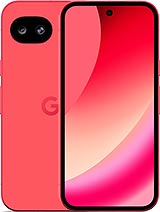
Pixel 10a
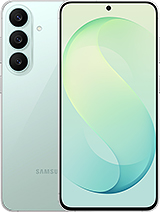
Galaxy S26 FE