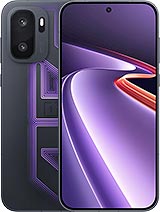
Google Pixel 11 review
The Pixel 11 suits people who want a compact, refined Android phone that prioritizes everyday usability and camera smarts over raw horsepower and display pixel density. If you value lightness, simplicity, and don't mind charging overnight, this works well. Anyone expecting flagship-tier charging speed, the sharpest screen at this price, or sustained gaming performance should look elsewhere.

This review is written with AI assistance from Google’s published specifications and public benchmark data for the Google Pixel 11, and the rating is spec-based. GoSolo does not physically test devices; where we estimate real-world behaviour such as battery life or charge time, we say so. How we rate phones.
Overview
The Pixel 11 is a compact, thoughtfully designed flagship that feels like a refinement rather than a leap. It lands at a fair price for its capabilities, but 1080p resolution and modest charging speed are genuinely limiting at this tier.
Design & build
At 197g and 8.6mm, the Pixel 11 is among the slighter flagships of 2026, which matters in a market where many rivals have bulked up chasing bigger batteries. The frame is aluminum, both faces are Gorilla Glass Victus 2, and IP68 rating means it shrugs off dust and brief dunks to 1.5 meters. Build feels solid and the four color options—Frost, Pistachio, Hibiscus, Obsidian—suggest Google still cares about aesthetics rather than just chasing spec sheets. The lack of weight and thickness is a real comfort point if you spend hours holding your phone; many buyers will notice and appreciate that. The trade-off is thermal management at high sustained loads, which we'll touch on in performance.
Display
The 6.3-inch OLED screen peaks at 3000 nits and holds a solid 2000 nits in high brightness mode, which is plenty for daylight use. The 120Hz refresh is now baseline for flagships at this price, and HDR10+ support is expected. Here's the catch: 1080 x 2424 resolution at 422 ppi is the real constraint. By 2026 standards, rivals at this price have moved to 1440p or higher, and the difference is visible if you're comparing side-by-side. Text is sharp enough for daily use, but it's not as crisp as what a 1440p panel delivers, and that gap matters if you spend time reading or working on your phone. Google is betting that most users won't notice or care, and for casual scrolling, they're probably right. But this is one area where the Pixel 11 feels like a deliberate cost-saving rather than a thoughtful choice.
Performance
The Tensor G6 is a 2nm chip built for Google's own computational photography and AI tasks, not for raw benchmark domination. In real use, it handles everyday apps, gaming, and video editing without lag. The 7-core CPU with one ultra-core and two sets of efficiency cores is efficient by design, which aligns with the phone's thin profile and lightweight construction. The 12GB of RAM is solid for multitasking. Frame rates in demanding games stay near 60fps on high settings, and there's no stutter in normal use. Where you might feel it: sustained gaming over 30 minutes can cause thermal throttling due to the slim chassis and modest cooling—the phone isn't designed for marathon sessions, and that's fine if you're not that user. For photography, video processing, and everyday work, it's more than capable.
Software
Android 17 ships out of the box with a promise of seven major OS updates, which is competitive and means you're covered until 2032 or so. Google's software skin is light and practical—no bloat, no heavy customization layer. Pixel-specific features like Magic Eraser, Best Take for group photos, and Pixel Shift (for multi-frame stability) are genuinely useful and part of why Pixels still justify their price despite modest hardware specs on paper. The integration with Google's services is seamless because, well, they own both. If you prize simplicity and regular updates, this holds up. If you want customization depth, you might find stock Android a bit plain.
Camera
The main 48MP wide camera has a fast f/1.7 aperture and multi-zone laser autofocus, which is solid hardware. The 10.8MP telephoto offers 5x optical zoom without the usual quality drop that digital extends bring, and a 13MP ultrawide rounds out the trio. By the numbers, this is good. In practice, Google's computational approach means the Pixel 11 punches above its hardware specs—colors are warm and natural, dynamic range is excellent, and the laser AF makes manual focus in tricky conditions far easier than on older rivals. The selfie camera is 10.5MP ultrawide, which is fine for video calls and group shots. Night mode works well, and Pixel Shift (a multi-frame technique) adds detail in challenging light. The weakness: the ultrawide lacks the sharpness of the main camera, and the 5x telephoto is less versatile than, say, a 5x + 10x duo. For most people, the trio covers everyday shooting. Videography supports 4K at 24/30/60fps with 10-bit HDR, which is respectable, though the thermal constraint applies here too on long records.
Battery & charging
The 4985 mAh battery is honest in capacity and typical for a phone this size; it'll push a full day for moderate users and about 24 hours for heavier ones. Fast charging tops out at 25W (the spec sheet shows a confusing reference to 30W, but the standard is 25W), which is slow by 2026 standards when rivals offer 65W, 100W, or beyond. A 0-50 percent charge takes roughly 25 minutes, and a full charge from zero approaches an hour. Wireless charging is absent—another cost cut. If you're the type who charges overnight, this won't frustrate you. If you're used to grabbing 50 percent in ten minutes, you'll feel the friction. Battery health degrades predictably, and the combination of modest mAh, slim form factor, and light weight means longevity is respectable but not exceptional.
Value & verdict context
At $899 (or €999), the Pixel 11 is positioned as a mainstream flagship, not a budget phone. You're paying for Google's software finesse, the computational photography features, and a refined design. The question is whether those advantages outweigh the 1080p display and slow charging versus competitors at the same price. If you prefer a lightweight, compact phone with software that just works and excellent day-to-day camera performance, the math makes sense. If you spend hours gaming, editing video, or need the sharpest screen and fastest charging, rivals offer more on the hardware side. Google has made choices here—compact, elegant, efficient—and executed them well. It's not the most powerful phone at this price, and it's not the cheapest. It's a solid middle ground for people who value refinement over specifications.
Verdict
The Pixel 11 suits people who want a compact, refined Android phone that prioritizes everyday usability and camera smarts over raw horsepower and display pixel density. If you value lightness, simplicity, and don't mind charging overnight, this works well. Anyone expecting flagship-tier charging speed, the sharpest screen at this price, or sustained gaming performance should look elsewhere.
- Lightweight and slim (197g, 8.6mm) without feeling fragile—a real comfort advantage in daily carry
- Excellent computational photography that outperforms the raw specs in real photos and videos
- Clean, bloat-free Android with solid update promise (7 major OS versions) and Pixel-exclusive features that genuinely help
- Compact 6.3-inch form factor in an era when most flagships have grown to 6.7+ inches
- 1080p display on a flagship in 2026 is below standard at this price—rivals offer 1440p, and the difference is noticeable
- 25W charging is slow; competitors routinely hit 65W or above, meaning you'll spend significantly more time tethered
- Thermal throttling under sustained load due to the slim chassis limits gaming endurance and extended video recording
Google Pixel 11 Key Specifications
The essentials at a glance. See the full spec sheet.
| Released | 2026, August 12 |
|---|---|
| Display | 6.3 inches, 94.7 cm2 (~86.1% screen-to-body ratio), OLED, 120Hz, HDR10+, 2000 nits (HBM), 3000 nits (peak) |
| Resolution | 1080 x 2424 pixels, 20:9 ratio (~422 ppi density) |
| Chipset | Google Tensor G6 (2 nm) |
| RAM & storage | 256GB 12GB RAM, 512GB 12GB RAM |
| Main camera | 48 MP, f/1.7, 24mm (wide), 1/1.56", 1.0µm, dual pixel PDAF, OIS 10.8 MP, f/3.1, 112mm (telephoto), 1/3.2", dual pixel PDAF, OIS, 5x optical zoom 13 MP, f/2.2, 120˚ (ultrawide), 1/3.1", PDAF |
| Selfie camera | 10.5 MP, f/2.2, 20mm (ultrawide), PDAF |
| Battery | 4985 mAh |
| Software | Android 17, up to 7 major OS updates |
| Dimensions | 152.8 x 72 x 8.6 mm (6.02 x 2.83 x 0.34 in) |
| Weight | 197 g (6.95 oz) |
| Build | Glass front (Gorilla Glass Victus 2), glass back (Gorilla Glass Victus 2), aluminum frame |
| Durability | IP68 dust tight and water resistant (immersible up to 1.5m for 30 min) |
| Network | GSM / HSPA / LTE / 5G |
| NFC | Yes |
| USB | USB Type-C 3.2 |
Google Pixel 11 FAQ
Common questions, answered from the spec sheet.
Does the Pixel 11 support 5G?
Yes. The Pixel 11 supports 5G networks.
What chipset does the Pixel 11 use?
The Pixel 11 runs on the Google Tensor G6 (2 nm).
What display does the Pixel 11 have?
A 6.3 inches, 94.7 cm2 (~86.1% screen-to-body ratio) OLED, 120Hz, HDR10+, 2000 nits (HBM), 3000 nits (peak), 1080 x 2424 pixels, 20:9 ratio (~422 ppi density).
How big is the Pixel 11 battery?
The Pixel 11 has a 4985 mAh battery.
Does the Pixel 11 have NFC?
Yes, the Pixel 11 has NFC.
Is the Pixel 11 water resistant?
The Pixel 11 carries a IP68 dust tight and water resistant (immersible up to 1.5m for 30 min) rating.
Does the Pixel 11 support a microSD card?
No, the Pixel 11 does not support expandable storage.
Alternatives to consider
If the Pixel 11 isn’t quite right, these are the closest calls.

Pixel 11 Pro

Pixel 11 Pro XL
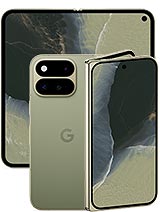
Pixel 11 Pro Fold
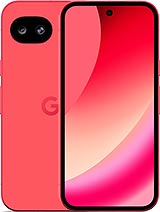
Pixel 10a
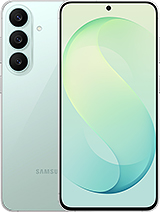
Galaxy S26 FE