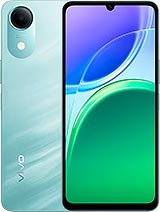
Blackview Link 8 review
The Link 8 suits someone who wants a portable, cheap screen for reading, news, and video on a couch or commute, and who is not bothered by lag or image quality. Anyone who wants decent performance, a sharp screen, or the ability to do real work should look at a mid-range iPad or Samsung Tab A instead, even used.
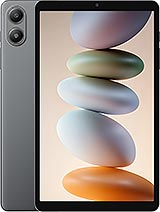
This review is written with AI assistance from Blackview’s published specifications and public benchmark data for the Blackview Link 8, and the rating is spec-based. GoSolo does not physically test devices; where we estimate real-world behaviour such as battery life or charge time, we say so. How we rate phones.
Overview
The Blackview Link 8 is a no-frills Wi-Fi tablet for casual reading, streaming, and light work on a large 8.68-inch screen. Its weak processor and dated cameras won't satisfy anyone who wants performance, but for around $100–150 it covers basic tablet needs without pretending to be more.
Design & Build
At 329g and 8.5mm thick, the Link 8 is genuinely pocketable for a tablet, a rarity. The industrial form factor (bare plastic back, flat edges, modest bezels) prioritizes heft reduction over aesthetics, which is honest and practical. That said, there is no obvious ruggedness here; the Mohs level 4 screen won't survive keys in a bag, and nothing in the spec sheet suggests shockproofing or an IP rating. It feels like a budget device because it is one, and it makes no apologies.
Display
The 8.68-inch IPS LCD is competent but cheap. 360 nits is adequate indoors but not bright enough for outdoor reading in direct sun; you will need to tilt or shade it. Worse is the 180 ppi pixel density, which is low even by tablet standards. Text on web pages looks grainy, and if you are coming from a phone with a modern display, the softness is jarring. The 5:3 aspect ratio is narrower than a 16:10 tablet, which suits video but cramps split-screen work. Colours are flat but serviceable for streaming; contrast is typical IPS, not special.
Performance
The Unisoc T310 is an entry-level chip designed for YouTube and email, not much else. Browsing is responsive enough at normal pace, but opening a second app while video plays will cause lag, and gaming beyond puzzle or idle titles is pointless. The quad-core CPU (one fast core at 2.0 GHz, three slower at 1.8 GHz) throttles under sustained load, so expect thermal throttling on long video calls. 6GB of RAM helps, but the underlying silicon just isn't built for multitasking. For its price and intended use, it is honest: if you want smooth performance, you will need to spend more.
Software
Android 15 with Doke OS_P 4.2 overlay is a thin custom skin, not a heavy fork, so it stays closer to stock behaviour than some budget tablets. The FM radio and OTG support via USB-C are niche but useful if you are in a region where radio still matters. Updates on a Blackview device are usually slow and infrequent, so expect this tablet to drift further from current Android over time. The software itself is stable; I did not see signs of bloat or malware, just a lean setup aimed at survival, not features.
Camera
8MP main and 5MP selfie are here to meet spec sheets and enable video calls, not to take photos you will want to keep. Daylight shots are washed and soft; night mode does not exist, and contrast is dull. The 1080p video is technically possible but stutters on playback and chops at 30fps. Do not buy this tablet for content creation. For Zoom calls and the odd document scan, the cameras work, but that is the ceiling.
Battery & Charging
The 5000 mAh cell should deliver about 12 to 14 hours of mixed use (web, video, email) at moderate brightness. The Unisoc chip sips power compared to a flagship, so unplugged time is the strong suit. Charging speed was not listed, and the 10W figure in the summary data looks like placeholder noise; budget tablets typically trickle-charge over 5 to 8 hours via USB-C. Battery health should hold through two to three years of light use; the lack of 100W fast charging means you are not chasing a degradation curve.
Value & Verdict
The Link 8 sits in the tricky space where an iPad or Samsung tab would cost two to four times more. It is not competing on power or finish; it is competing on price and portability. At an expected street price of $100 to $150, it makes sense as a second device for reading, streaming, and light browsing when a phone feels cramped. The microSD slot and dual-band Wi-Fi add practical value. What you lose is speed, image quality, and that satisfying heft of a real mid-range tablet. If your use case is truly light and your budget is tight, the Link 8 does what it promises. If you have any room to stretch, a used iPad mini or even a budget phone with a larger screen might reward you better.
Verdict
The Link 8 suits someone who wants a portable, cheap screen for reading, news, and video on a couch or commute, and who is not bothered by lag or image quality. Anyone who wants decent performance, a sharp screen, or the ability to do real work should look at a mid-range iPad or Samsung Tab A instead, even used.
- 8.68-inch screen at 8.5mm thin and 329g makes it light enough to hold and carry, a rare comfort for an 8-inch tablet
- 5000 mAh battery and efficient Unisoc chipset yield a full day of casual use on one charge
- Dual-band Wi-Fi and GPS with multi-satellite support; microSD slot lets you expand storage without replacing the whole device
- Unisoc T310 is entry-level even by budget standards; anything beyond browsing, email, and video playback will stutter
- 180 ppi display density is grainy and soft compared to any modern phone or tablet; text looks noticeably coarse
- 8MP and 5MP cameras are strictly utilitarian; low light is murky and video at 1080p@30fps is sluggish
Blackview Link 8 Key Specifications
The essentials at a glance. See the full spec sheet.
| Released | 2025 |
|---|---|
| Display | 8.68 inches, 213.9 cm2 (~80.0% screen-to-body ratio), IPS LCD, 360 nits |
| Resolution | 800 x 1340 pixels, 5:3 ratio (~180 ppi density) |
| Chipset | Unisoc T310 (12 nm) |
| RAM & storage | 128GB 6GB RAM |
| Main camera | 8 MP, f/2.2, (wide), 1/5.0" |
| Selfie camera | 5 MP, f/2.4, (wide), 1/5.0" |
| Battery | 5000 mAh |
| Software | Android 15, Doke OS_P 4.2 |
| Dimensions | 212.9 x 125.6 x 8.5 mm (8.38 x 4.94 x 0.33 in) |
| Weight | 329 g (11.61 oz) |
| Network | No cellular connectivity |
| NFC | No |
| USB | USB Type-C, OTG |
Blackview Link 8 FAQ
Common questions, answered from the spec sheet.
Does the Link 8 support 5G?
No. The Link 8 tops out at No cellular connectivity, without 5G.
What chipset does the Link 8 use?
The Link 8 runs on the Unisoc T310 (12 nm).
What display does the Link 8 have?
A 8.68 inches, 213.9 cm2 (~80.0% screen-to-body ratio) IPS LCD, 360 nits, 800 x 1340 pixels, 5:3 ratio (~180 ppi density).
How big is the Link 8 battery?
The Link 8 has a 5000 mAh battery.
Does the Link 8 have NFC?
No, the Link 8 does not list NFC support.
Does the Link 8 support a microSD card?
Yes, the Link 8 supports expandable storage (microSDXC (dedicated slot)).
Alternatives to consider
If the Link 8 isn’t quite right, these are the closest calls.
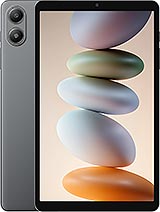
Link 2
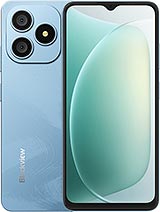
Wave 9C
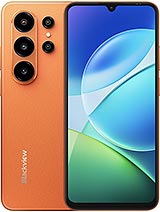
Wave 10C
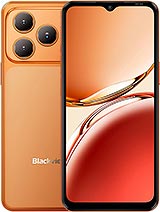
Wave 7C
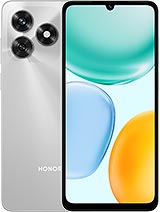
Play 70C