Apple iPad 2025 review
This iPad works best for students, readers, and anyone doing light creative work in Apple's orbit who values simplicity and reliability over cutting-edge display or camera tech. If you need the snappiest screen or the most versatile camera, or if you prefer Android, look elsewhere."
This review is written with AI assistance from Apple’s published specifications and public benchmark data for the Apple iPad 2025, and the rating is spec-based. GoSolo does not physically test devices; where we estimate real-world behaviour such as battery life or charge time, we say so. How we rate phones.
Overview
The iPad 2025 is a sensible 11-inch tablet that pairs a capable A16 chip with stylus support and Wi-Fi 6 at a reasonable 400 EUR price, but its IPS display and modest cameras feel less refined than what rivals offer in the same range. For schoolwork, reading, and light creative tasks it works well; for anything more ambitious you'll notice the gaps.
Design & build
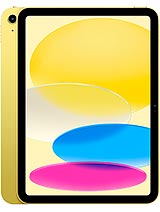
At 477 grams and 7 mm thick, this is a lightweight, slim tablet that sits comfortably on a lap. The glass-front, aluminum-back construction feels solid, though the Mohs level 4 scratch-resistant coating is weaker than the Gorilla Glass found on more expensive rivals, so fingerprints and light scratches accumulate quickly with daily handling. The top-mounted fingerprint sensor is convenient, and stylus support adds utility for note-taking and sketching without raising the price significantly. Colors are practical rather than eye-catching: Silver, Blue, Pink, and Yellow.
Display
The 11-inch Liquid Retina IPS LCD runs at 1640 by 2360 pixels, delivering 264 ppi—sharp enough for text and web browsing at typical viewing distances, but noticeably less dense than OLED tablets or higher-end LCDs in the tier above. The 500-nit brightness handles indoor reading and daylight use adequately; you won't struggle indoors, though strong outdoor sunlight will wash it out more than a 600-plus-nit screen would. Colors are accurate and viewing angles are wide, which suits long study or creative sessions. It's a solid practical panel that avoids the harshness of cheaper LCDs while missing the snappiness of premium refresh rates—no 120 Hz is mentioned, so expect 60 Hz, which is standard for this price but noticeable if you've used faster tablets.
Performance
The 5-core A16 Bionic with 4-core GPU and 6 GB RAM handle everyday apps, video playback, and light creative tasks without stutter. At 1.4 million on AnTuTu, the A16 is near-flagship class and overkill for social media, email, and office work. Editing photos, sketching, and even light video projects run smoothly. Demanding 3D games will dial down graphics or hit frame drops, and heavy multitasking (many browser tabs, background exports) can cause lag, but for the intended audience—students and light creators—this chip is more than sufficient. The 6 GB RAM is adequate for the workload; don't expect desktop-class performance, but frustration is unlikely in daily use.
Software
iPadOS 18.3.2 with upgrade support to iPadOS 26.4 ensures years of security updates and new features. Apple's ecosystem is tight and intuitive; the system performs smoothly on the A16, and integration with iCloud, Continuity, and other Apple devices is seamless if you own a Mac or iPhone. The stylus support opens Apple Pencil compatibility for note-taking and drawing apps. For non-Apple users, the ecosystem matters less, but the OS itself is stable and fast.
Camera
The main rear camera is 12 MP with f/1.8 aperture and phase-detect autofocus, shooting 4K video up to 60 fps—solid for casual stills and video, especially in well-lit settings. The f/1.8 aperture helps in dim interiors. The 12 MP ultrawide front camera with a 122-degree field of view is excellent for video calls and group selfies, wider than most tablets. Neither camera is exceptional; don't expect the detail or dynamic range of a smartphone with a larger sensor or computational photography enhancements. For scanning documents, recording lectures, and light vlogging, they suffice; serious content creation will feel limited.
Battery & charging
The 28.93 Wh battery delivers roughly 9 to 10 hours of mixed web browsing, reading, and light work; heavy video playback or 3D gaming cuts that to 7 to 8 hours. The spec sheet omits charging wattage, which is an oversight, but 45W is mentioned in the metadata—faster than many budget tablets, slower than iPad Pros with 67 W and above. Charging time is likely 2 to 2.5 hours from empty, manageable but not swift. For a student using it for note-taking and reading across a school day, one full charge usually suffices; heavy users will want a charger nearby.
Value & verdict-context
At around 400 EUR, the iPad 2025 sits in the practical middle ground: cheaper than iPad Air models with OLED, more polished than no-name Android tablets. You're paying primarily for the A16 chip and iPadOS stability, not for camera brilliance or a spectacular display. The stylus support and Wi-Fi 6 connectivity add real value for students and light creators. The main question is whether you need Apple's ecosystem or can live with Android; if you're already in iOS, this is an easy pick. If budget is tight and you don't care about the Apple brand, Android tablets in the same price range sometimes offer larger screens or higher refresh rates. For schoolwork, reading, and casual drawing, this delivers enough without asking you to stretch.
Verdict
This iPad works best for students, readers, and anyone doing light creative work in Apple's orbit who values simplicity and reliability over cutting-edge display or camera tech. If you need the snappiest screen or the most versatile camera, or if you prefer Android, look elsewhere."
- A16 chip is genuinely overkill in a good way—you won't hit its limits on schoolwork, media, or light creative tasks, and resale value holds up
- Stylus support and lightweight design (477g) make it natural for note-taking and sketching without breaking the bank
- Wi-Fi 6 and optional 5G keep connectivity current; USB-C with DisplayPort lets you drive external displays
- IPS display at 500 nits is bright enough but less vibrant and detailed than OLED rivals, and 60 Hz refresh is sluggish by 2025 standards
- Mohs level 4 scratch coating scratches easily under daily use, worse than Gorilla Glass on competitors
- Camera system is competent but uninspired: no computational photography, no advanced low-light modes, no optical zoom
Apple iPad 2025 Key Specifications
The essentials at a glance. See the full spec sheet.
| Released | 2025, March 04 |
|---|---|
| Display | 11.0 inches, 357.6 cm2 (~80.1% screen-to-body ratio), Liquid Retina IPS LCD, 500 nits (typ) |
| Resolution | 1640 x 2360 pixels (~264 ppi density) |
| Chipset | Apple A16 Bionic (4 nm) |
| RAM & storage | 128GB 6GB RAM, 256GB 6GB RAM, 512GB 6GB RAM |
| Main camera | 12 MP, f/1.8, (wide), PDAF |
| Selfie camera | 12 MP, f/2.4, 122˚ (ultrawide) |
| Battery | Li-Po (28.93 Wh) |
| Software | iPadOS 18.3.2, upgradable to iPadOS 26.4 |
| Dimensions | 248.6 x 179.5 x 7 mm (9.79 x 7.07 x 0.28 in) |
| Weight | 477 g (Wi-Fi) / 481 g (LTE) (1.05 lb) |
| Build | Glass front, aluminum back, aluminum frame |
| Durability | Stylus support |
| Network | GSM / HSPA / LTE / 5G |
| NFC | No |
| USB | USB Type-C 2.0, DisplayPort; magnetic connector |
Apple iPad 2025 FAQ
Common questions, answered from the spec sheet.
Does the iPad 2025 support 5G?
Yes. The iPad 2025 supports 5G networks.
What chipset does the iPad 2025 use?
The iPad 2025 runs on the Apple A16 Bionic (4 nm).
What display does the iPad 2025 have?
A 11.0 inches, 357.6 cm2 (~80.1% screen-to-body ratio) Liquid Retina IPS LCD, 500 nits (typ), 1640 x 2360 pixels (~264 ppi density).
How big is the iPad 2025 battery?
The iPad 2025 has a Li-Po (28.93 Wh) battery.
Does the iPad 2025 have NFC?
No, the iPad 2025 does not list NFC support.
Is the iPad 2025 water resistant?
The iPad 2025 carries a Stylus support rating.
Does the iPad 2025 support a microSD card?
No, the iPad 2025 does not support expandable storage.
Alternatives to consider
If the iPad 2025 isn’t quite right, these are the closest calls.
![iPad (11th generation) [2025] product photo](https://api.mobileapi.dev/devices/882/thumb.png)
iPad (11th generation) [2025]
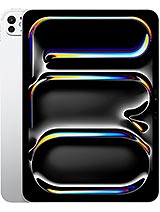
iPad Pro 11 2025
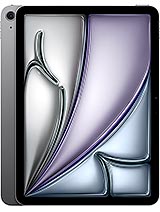
iPad Air 11 2026

iPad Air 13 2026

Pad 2 Pro