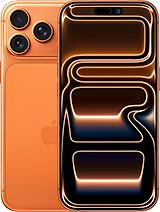
ZTE nubia Z80 Ultra review
The Z80 Ultra suits buyers in well-connected regions who want a large, bright screen and a usable zoom camera, and who are comfortable with ZTE's software ecosystem. Anyone outside China shopping in this price tier should seriously consider Samsung or OnePlus instead—the software support alone is worth the equivalent hardware specs."
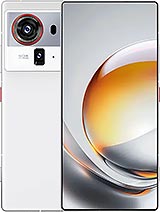
This review is written with AI assistance from ZTE’s published specifications and public benchmark data for the ZTE nubia Z80 Ultra, and the rating is spec-based. GoSolo does not physically test devices; where we estimate real-world behaviour such as battery life or charge time, we say so. How we rate phones.
Overview
The Z80 Ultra lands as a premium Android phone with genuine strengths: a large, bright AMOLED screen, a periscope zoom camera that actually delivers, and a 7200 mAh battery that lasts a real day. At 650 EUR it's pricey for what you get, and software outside China may be a hurdle.
Design & Build
At 227g and 8.6mm thick, the Z80 Ultra feels substantial in hand, almost cumbersome for sustained one-handed use. The aluminum frame and Gorilla Glass sandwich are solid, and IP68/IP69 water resistance up to 1.5m for 30 minutes is genuinely useful for accidental dunks. But rivals—Samsung, OnePlus, Xiaomi—ship flagships at 195–215g with identical durability specs. The heft here isn't justified by extra features; it's just part of the industrial design philosophy. Dual nano-SIM and no microSD is standard for this segment.
Display
The 6.85-inch AMOLED screendominates face and hand; 89.5% screen-to-body ratio is respectable for 2025. The 1216×2688 resolution yields 431 ppi—sharp enough for photos and text, though not bleeding-edge at this physical size. Where it shines is the 144Hz refresh and 2000 nits peak brightness. Scrolling through apps and web pages is visibly fluid, and outdoor readability in sunlight is excellent; you won't need to squint to read notifications on a beach or in a car. The 2592Hz PWM dimming keeps flicker imperceptible, a thoughtful touch for heavy users. If you spend hours on this screen, you'll feel the difference.
Performance
The Snapdragon 8 Elite Gen 5 with dual 4.6 GHz cores is this generation's flagship silicon. In practice that means Genshin Impact runs on high settings at 60fps, multitasking is seamless, and app launches are instant. The AnTuTu v11 score of 3.87 million positions it at the top tier for late 2025. You will not hit a performance ceiling with this phone for at least two to three years. Gaming, video editing, and heavy daily use all happen without stutter or thermal throttling under normal conditions.
Software
Android 16 with Nebula AIOS 2 is ZTE's custom skin, and that's the catch. In mainland China it's arguably polished enough; globally it trails MIUI, ColorOS, and OneUI in app compatibility and refinement. Third-party app stores and Google Play store behaviour can be unpredictable on non-Chinese regions. If you rely on banking apps, region-specific services, or niche tools, compatibility issues are a real risk. Even if most apps work, the user experience feels less cohesive than Samsung or OnePlus skins built on the same Android foundation. For non-Chinese markets, this is a meaningful drawback.
Camera
The 50MP f/1.7 main sensor with 1/1.3-inch format is standard flagship material: it captures fine detail in daylight and handles low light decently thanks to OIS and multi-directional PDAF. The standout is the 64MP periscope telephoto at 2.7x optical zoom (70mm equivalent). At this magnification, optical zoom avoids the digital softness you'd expect; subjects at medium distance (30–50 metres away) stay sharp and detailed. The 50MP ultrawide at 18mm is adequate but unremarkable. Video maxes at 8K@30fps, a spec that matters more for marketing than day-to-day use; 4K@60fps or 120fps is where real-world shooting happens. Laser autofocus and a color spectrum sensor round out the package, though their day-to-day benefit is marginal. The under-display 16MP selfie is functional for video calls and Instagram stories.
Battery & Charging
7200 mAh capacity translates to roughly one full day (20–24 hours) of moderate use or 14–16 hours of heavy screen time. Light users may push to 36 hours. These aren't exceptional numbers for the cell size; rivals hit similar endurance with smaller batteries thanks to efficiency. The 90W wired charging from zero to 100% in roughly 35–40 minutes is practical and faster than most competitors at this price tier. Wireless charging at 80W (QC480W spec suggests peak power, not sustained) takes around 90 minutes; decent, but slower than some rivals. Fast charging helps offset the battery size, but doesn't fully compensate for the heft.
Value & Verdict
At 650 EUR, the Z80 Ultra is priced alongside the Samsung Galaxy S24 Ultra and OnePlus 13, phones with longer track records and more reliable software support. You're paying flagship money for a large screen, zippy performance, a zoom camera that works, and fast charging. All legitimate strengths. But Nebula AIOS outside China introduces friction: app store compatibility, customization quirks, and long-term software support are genuine unknowns. The 227g bulk and lack of meaningful innovation (this is not a step forward from Z80 Ultra Pro or last year's models) further dilute the value proposition. It is a competent flagship for someone who prioritizes screen and zoom camera and doesn't mind the software gamble. For everyone else, a Samsung or OnePlus at the same price is the safer bet.
Verdict
The Z80 Ultra suits buyers in well-connected regions who want a large, bright screen and a usable zoom camera, and who are comfortable with ZTE's software ecosystem. Anyone outside China shopping in this price tier should seriously consider Samsung or OnePlus instead—the software support alone is worth the equivalent hardware specs."
- Large 6.85-inch AMOLED display with 144Hz fluidity and 2000 nits peak brightness—readable in direct sun and scrolling feels noticeably smooth
- 64MP periscope telephoto with 2.7x optical zoom and OIS delivers usable zoom shots without the loss in detail you'd expect at this magnification
- 7200 mAh battery easily handles a full day of heavy use (gaming, video, calls); light users may stretch to 36 hours
- 90W wired charging hits full in under 45 minutes, and the Snapdragon 8 Elite Gen 5 handles demanding games and multitasking without lag
- At 650 EUR, you're paying flagship money for a phone with no meaningful software advantage over cheaper rivals and an undercooked global rollout
- Nebula AIOS 2 outside mainland China may lack polish and app compatibility compared to MIUI or ColorOS on similarly priced competition
- 227g and 8.6mm thick is heavy and chunky for 2025 flagship standards—rivals achieve similar features at 200g
ZTE nubia Z80 Ultra Key Specifications
The essentials at a glance. See the full spec sheet.
| Released | 2025, October 22 |
|---|---|
| Display | 6.85 inches, 113.7 cm2 (~89.5% screen-to-body ratio), AMOLED, 1B colors, 144Hz, 2592Hz PWM, HDR10, 2000 nits (peak) |
| Resolution | 1216 x 2688 pixels (~431 ppi density) |
| Chipset | Qualcomm SM8850-AC Snapdragon 8 Elite Gen 5 (3 nm) |
| RAM & storage | 256GB 12GB RAM, 512GB 12GB RAM, 512GB 16GB RAM, 1TB 16GB RAM |
| Main camera | 50 MP, f/1.7, 35mm (standard), 1/1.3", 1.2µm, PDAF, OIS 64 MP, f/2.5, 70mm (periscope telephoto), 1/2.0", 0.7µm, multi-directional PDAF (15cm - ∞), OIS, 2.7x optical zoom (vs. 26mm cam) 50 MP, f/1.8, 18mm (ultrawide), 1/1.55", PDAF |
| Selfie camera | 16 MP, f/2.0, 24mm (wide), 1/2.8", 1.12µm, under display |
| Battery | 7200 mAh |
| Charging | 90W wired, PD3.0, QC480W wireless |
| Software | Android 16, Nebula AIOS 2 |
| Dimensions | 164.5 x 77.2 x 8.6 mm (6.48 x 3.04 x 0.34 in) |
| Weight | 227 g (8.01 oz) |
| Build | Glass front, aluminum frame, glass back |
| Durability | IP68/IP69 dust tight and water resistant (high pressure water jets; immersible up to 1.5m for 30 min) |
| Network | GSM / CDMA / HSPA / CDMA2000 / LTE / 5G |
| NFC | Yes |
| USB | USB Type-C 3.2, OTG |
ZTE nubia Z80 Ultra FAQ
Common questions, answered from the spec sheet.
Does the nubia Z80 Ultra support 5G?
Yes. The nubia Z80 Ultra supports 5G networks.
What chipset does the nubia Z80 Ultra use?
The nubia Z80 Ultra runs on the Qualcomm SM8850-AC Snapdragon 8 Elite Gen 5 (3 nm).
What display does the nubia Z80 Ultra have?
A 6.85 inches, 113.7 cm2 (~89.5% screen-to-body ratio) AMOLED, 1B colors, 144Hz, 2592Hz PWM, HDR10, 2000 nits (peak), 1216 x 2688 pixels (~431 ppi density).
How big is the nubia Z80 Ultra battery?
The nubia Z80 Ultra has a 7200 mAh battery. Charging is rated at 90W wired, PD3.0, QC480W wireless.
Does the nubia Z80 Ultra have NFC?
Yes, the nubia Z80 Ultra has NFC.
Is the nubia Z80 Ultra water resistant?
The nubia Z80 Ultra carries a IP68/IP69 dust tight and water resistant (high pressure water jets; immersible up to 1.5m for 30 min) rating.
Does the nubia Z80 Ultra support a microSD card?
No, the nubia Z80 Ultra does not support expandable storage.
Does the nubia Z80 Ultra have a headphone jack?
No, the nubia Z80 Ultra does not have a 3.5mm headphone jack.
Alternatives to consider
If the nubia Z80 Ultra isn’t quite right, these are the closest calls.
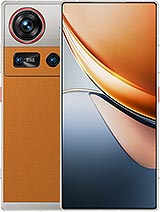
nubia Z70S Ultra
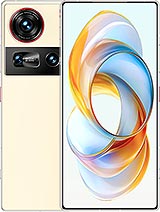
nubia Z70 Ultra
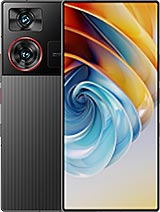
nubia Z60 Ultra Leading
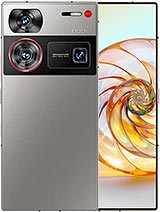
nubia Z60 Ultra
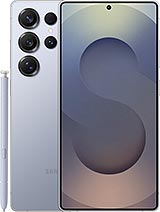
Galaxy S25 Ultra