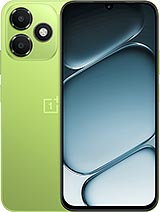
ZTE nubia Focus 2 review
The Focus 2 suits long-haul travelers and light users who value all-day battery and a bright, smooth screen over raw speed. Anyone who games, edits media, or wants snappy app performance should look elsewhere; the Unisoc T760 drags, and the 22.5W charging is a headache if you are on the move.
This review is written with AI assistance from ZTE’s published specifications and public benchmark data for the ZTE nubia Focus 2, and the rating is spec-based. GoSolo does not physically test devices; where we estimate real-world behaviour such as battery life or charge time, we say so. How we rate phones.
Overview
The ZTE nubia Focus 2 is a large, lightweight budget phone with a bright 120Hz screen and a 5000mAh battery that lasts well into a second day on light use. It stumbles with entry-level performance, slow charging, and a sub-HD display that looks soft up close—fine for basics, but not much of a leap over older budget rivals.
Design & build
The Focus 2 is a tall, lean phone that prioritizes lightness and reach over compactness. At 163.6mm tall and only 205.5 grams, it feels airy in the hand despite the 6.56-inch footprint—a real advantage if you do a lot of one-handed use or take it on trips. The 8.6mm profile sits thin enough to slip into a pocket without bulk. Glass on both front and back is a safe, standard choice; it picks up fingerprints and shows scratches easily, but at this price point, paying extra for metal or plastic feels like lost money. Dual nano-SIM support is useful in markets where that matters. Overall, ZTE has made a sensible choice: the phone doesn't try to look expensive, and it doesn't feel cheap either.
Display
The 120Hz refresh rate is the standout here and worth the mention. Scrolling through social feeds and web pages feels smooth and responsive, a clear step up from the 60Hz panels still common in this price bracket. The IPS LCD panel is bright enough for outdoor use without excessive glare or washout. However, the 720 by 1612 resolution on a 6.56-inch screen works out to just 269 pixels per inch, which means text, app icons, and fine details look noticeably soft and fuzzy at arm's length. This isn't a deal-breaker for casual users, but if you read a lot of text or spend hours editing photos, the fuzziness will wear on your eyes. At this price, you can find phones with sharper 1080p panels, so the compromise here is visible.
Performance
The Unisoc T760 is entry-level silicon, and it shows. Everyday tasks—messaging, social media, light browsing, email—run without stutter. Anything heavier lags noticeably. Demanding mobile games will stutter, video editing in real time is sluggish, and opening large PDFs or spreadsheets takes longer than you would like. The 8GB RAM variant (the one worth buying, if you can) helps smooth out app-switching, but it cannot make up for the weak GPU. For the price, rivals using Snapdragon 6 Gen 1 or MediaTek Helio G series chips deliver measurably faster gaming and video performance. If your life is messaging, streaming, and light web browsing, the T760 is adequate; otherwise, you are paying for a phone that cannot do what you ask of it.
Software
Android 14 out of the box is current and, for this hardware, sensible. ZTE's overlay is light and does not clutter the experience with bloat, a refreshing departure from heavier skins on other budget phones. Updates are a question mark—ZTE has a mixed track record on long-term software support, and many of its budget lines do not see consistent patches. If you need security updates and new Android versions for years, you should look at Samsung or Xiaomi instead. For someone who keeps a phone two or three years and upgrades, it is less of a concern.
Camera
The 108MP sensor with f/1.8 aperture and PDAF sounds impressive on paper, but the real-world jump over a well-tuned 50MP sensor is tiny. In good light, photos are sharp and retain detail, though colors can look slightly cool and flat compared to what Xiaomi or Samsung squeeze out of similar hardware. The large sensor and wide aperture do help in indoor and dim scenes, reducing noise and keeping shadows from falling apart. The fixed 24mm focal length means no optical zoom, so distant subjects require cropping and will lose sharpness. The 4K recording at 30fps is passable but not smooth, and low-light video is noisy. The 5MP or 8MP selfie camera is basic; it works for video calls and casual snaps, but do not expect detail. For a budget phone, the main camera is capable; just do not expect it to rival midrange phones with telephoto lenses or better computational photography.
Battery & charging
The 5000mAh battery is big and delivers real endurance. With light to moderate use—messaging, social media, music, some video—you will easily stretch to the end of day two before needing a charge. Heavier use (constant gaming or video) will pull you back to evening of day one, which is still solid. Where the phone falls short is charging speed. At 22.5W, a full charge takes roughly 70 to 90 minutes, which is slow by 2024 standards. Rivals at this price charge at 33W to 65W and finish in 40 to 50 minutes. That difference matters if you need to grab a quick top-up before heading out; you cannot do that with the Focus 2. The slow charging partly negates the battery's advantage, since you must plan ahead to have the phone ready.
Value & verdict
At around 200 EUR, the Focus 2 occupies a crowded space. It is cheap, but not the cheapest. It is large and light, which suits some people. The battery life is genuine; the screen is bright and smooth. The chipset, display density, and charging speed are all weak points that rivals handle better for the same money. The phone works best for users in markets with poor network coverage (where the 5G and LTE support is useful) who prioritize battery endurance and do not game or do demanding work on their phone. For anyone else, a Redmi Note or Poco would offer faster performance and quicker charging at a similar price. The Focus 2 is not a bad phone, but it is an older way of thinking about budget phones—focus on battery and screen, accept the weak brain. That strategy has aged poorly as the market moved on.
Verdict
The Focus 2 suits long-haul travelers and light users who value all-day battery and a bright, smooth screen over raw speed. Anyone who games, edits media, or wants snappy app performance should look elsewhere; the Unisoc T760 drags, and the 22.5W charging is a headache if you are on the move.
- 5000mAh battery with modest software means one-and-a-half to two days of real-world use without hunting for a plug
- 120Hz IPS LCD is smooth to scroll and bright enough to use in direct sunlight without strain
- Large 6.56-inch screen in a frame that weighs only 205 grams keeps the phone comfortable to hold for long stretches
- Side-mounted fingerprint sensor is faster and more reliable than the in-display alternatives often found at this price
- Unisoc T760 is well below what rivals charge at this price; expect lag in demanding apps and games, and slow loading times compared to phones with Snapdragon or MediaTek equivalents
- 22.5W charging takes over an hour to fill the 5000mAh battery, slower than most competitors and impractical for a quick top-up before heading out
- 720p display density (269 ppi) on a 6.56-inch screen leaves text and UI elements visibly pixelated at normal viewing distance
ZTE nubia Focus 2 Key Specifications
The essentials at a glance. See the full spec sheet.
| Released | 2024, February 28 |
|---|---|
| Display | 6.56 inches, 103.4 cm2 (~84.4% screen-to-body ratio), IPS LCD, 120Hz (90Hz - LATAM) |
| Resolution | 720 x 1612 pixels, 20:9 ratio (~269 ppi density) |
| Chipset | Unisoc T760 (6 nm) |
| RAM & storage | 256GB 4GB RAM, 256GB 6GB RAM, 256GB 8GB RAM, 256GB 12GB RAM |
| Main camera | 108 MP, f/1.8, 24mm (wide), 1/1.67", PDAF Auxiliary lens |
| Selfie camera | 5 MP, f/2.2, (wide) or 8 MP, (wide) |
| Battery | 5000 mAh |
| Charging | 22.5W wired |
| Software | Android 14 |
| Dimensions | 163.6 x 74.9 x 8.6 mm (6.44 x 2.95 x 0.34 in) |
| Weight | 205.5 g (7.27 oz) |
| Build | Glass front, glass back |
| Network | GSM / HSPA / LTE / 5G |
| NFC | Yes (market/region dependent) |
| USB | USB Type-C 2.0 |
ZTE nubia Focus 2 FAQ
Common questions, answered from the spec sheet.
Does the nubia Focus 2 support 5G?
Yes. The nubia Focus 2 supports 5G networks.
What chipset does the nubia Focus 2 use?
The nubia Focus 2 runs on the Unisoc T760 (6 nm).
What display does the nubia Focus 2 have?
A 6.56 inches, 103.4 cm2 (~84.4% screen-to-body ratio) IPS LCD, 120Hz (90Hz - LATAM), 720 x 1612 pixels, 20:9 ratio (~269 ppi density).
How big is the nubia Focus 2 battery?
The nubia Focus 2 has a 5000 mAh battery. Charging is rated at 22.5W wired.
Does the nubia Focus 2 have NFC?
Yes, the nubia Focus 2 has NFC.
Does the nubia Focus 2 support a microSD card?
No, the nubia Focus 2 does not support expandable storage.
Does the nubia Focus 2 have a headphone jack?
No, the nubia Focus 2 does not have a 3.5mm headphone jack.
Alternatives to consider
If the nubia Focus 2 isn’t quite right, these are the closest calls.
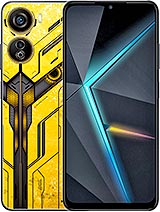
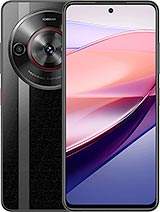
nubia Neo 3
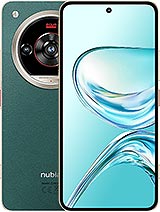
nubia Focus 2 Ultra
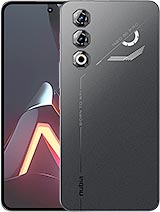
nubia Neo 5 Pro
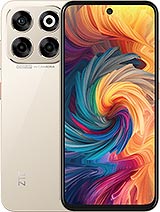
Blade V70
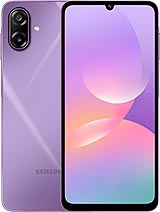
Galaxy M17e