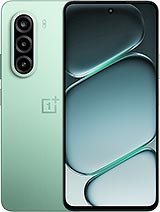
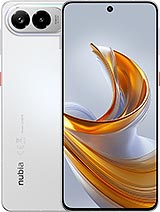
ZTE nubia Air Pro review
The Air Pro suits anyone who travels frequently, spends hours outdoors, or simply hates carrying a heavy phone—and does not mind trading processing power for lightness. Everyone else should consider rivals that offer better cameras, faster charging, and stronger performance at the same price.
This review is written with AI assistance from ZTE’s published specifications and public benchmark data for the ZTE nubia Air Pro, and the rating is spec-based. GoSolo does not physically test devices; where we estimate real-world behaviour such as battery life or charge time, we say so. How we rate phones.
Overview
The nubia Air Pro is a thin-and-light mid-ranger with a bright AMOLED screen and solid build, but its Dimensity 7100 chipset and dated 108MP sensor feel ordinary for 2026. It's a competent travel phone if you value lightness and display quality over camera or performance firepower.
Design & build
At 172 grams and 6mm thick, the Air Pro is one of the lightest phones you can buy in 2026. It feels almost fragile in hand—in the good way, not the worrying way. The glass front and aluminum frame are solid without being ornate, and the dual Nano-SIM setup means no compromise on connectivity. The IP68/IP69K rating goes further than most, offering dust-tightness and survival of high-pressure water jets, which is overkill for a travel phone but reassuring if you're careless. Two colours, Aero White and Prime Black, keep things understated. For someone who hates carrying weight, this phone justifies itself on form alone.
Display
The 6.77-inch AMOLED panel is the star. 1224×2720 resolution yields 441 ppi—crisp enough that individual pixels vanish at arm's length. 144Hz refresh makes scrolling buttery, and the 3840Hz PWM dimming eliminates flicker that plagues cheaper OLEDs. The headline is the 4500-nit peak brightness, which genuinely matters: outdoor visibility is excellent, and video tone-mapping in HDR looks rich without crushing blacks. Rivals at this price often skimp on brightness or PWM rate; nubia did neither here. The Mohs level 4 glass is not scratch-resistant by modern standards—expect marks—but the display itself is future-proof for the next two years of content.
Performance
The Dimensity 7100 is a mid-range workhorse: fast enough for daily apps, messaging, and light gaming, but it does not have the headroom of flagship chips. Multitasking is smooth until you pile on five or six heavy apps, then you notice frame drops. Gaming at high settings will throttle within 10–15 minutes; casual games run fine. Compared to last year's upper-midrange flagships, performance has barely shifted—you are not gaining speed, you are maintaining it. For browsing, social media, and Netflix, this phone will not frustrate you. For sustained performance or emulation, look elsewhere.
Software
Android 16 ships clean and updates are promised, though ZTE's history of OS support is patchy outside China. The phone carries minimal bloat, and the interface is near-stock. No serious complaints here, but longevity depends on ZTE's commitment, which is not guaranteed. Security patches lag behind Samsung and Google, so do not expect day-one updates.
Camera
The 108MP sensor with PDAF should impress on a spec sheet, but real-world output is middling. Detail is softer than competitors at this price—Samsung and Xiaomi extract more from similar sensors through post-processing. Colour is slightly cool and flat, and dynamic range is narrow; bright skies blow out faster than rivals. The 32MP selfie is serviceable for video calls. In good light, the main camera is acceptable; in dim conditions or high contrast, it falls behind. For a phone aimed at travel (light weight, good screen), the camera is a weak point when rivals offer sharper, more vibrant files at the same price.
Battery & charging
5000mAh in a light, thin phone is respectable. Real-world battery life is about 1.5 days of moderate use—acceptable, not exceptional. The worry is charging: 45W is pedestrian for June 2026, when 80W to 120W has become standard at €400–500. A full charge takes 50–60 minutes, which is slow enough to feel like a chore on road trips. If you charge overnight, this does not matter; if you travel and need quick top-ups, the slow speed is a genuine friction.
Value & verdict-context
At €449.90, the Air Pro competes with Samsung's A-series, Xiaomi's Poco, and Motorola's G-series, all of which offer faster chips and quicker charging. What you pay for here is extreme lightness and display brightness—niche strengths that matter if you travel often or spend time outdoors. The camera and chipset are uninspired, and the charging speed is a missed opportunity for a 2026 release. The phone is not bad; it is just ordinary with one very good thing (thinness and display) tacked on. If portability and screen quality are your priorities, it earns a look. If you want the most capable phone for your money, save your cash or spend €50 more on something faster.
Verdict
The Air Pro suits anyone who travels frequently, spends hours outdoors, or simply hates carrying a heavy phone—and does not mind trading processing power for lightness. Everyone else should consider rivals that offer better cameras, faster charging, and stronger performance at the same price.
- Exceptionally thin at 6mm and light at 172g—genuinely easy to carry and hold for hours
- Bright 6.77-inch AMOLED with 144Hz refresh and 4500 nits peak brightness, making it excellent for outdoor use and demanding apps
- IP68/IP69K rating with high-pressure water resistance justifies the durability claims beyond typical flagships
- 5000mAh battery in a compact form factor avoids the bloat common in larger phones
- Dimensity 7100 is capable but not fast; mid-range gaming and multitasking lag behind current-gen flagships
- 108MP main camera with PDAF sounds impressive on paper but struggles with detail and dynamic range compared to rivals at this price
- 45W charging speed is below average for €450 in 2026, when 80W+ has become standard in this bracket
ZTE nubia Air Pro Key Specifications
The essentials at a glance. See the full spec sheet.
| Released | 2026, June 26 |
|---|---|
| Display | 6.77 inches, 110.7 cm2, AMOLED, 1B colors, 144Hz, 3840Hz PWM, HDR, 4500 nits (peak) |
| Resolution | 1224 x 2720 pixels, 20:9 ratio (~441 ppi density) |
| Chipset | Mediatek Dimensity 7100 (6 nm) |
| RAM & storage | 256GB 8GB RAM, 512GB 8GB RAM |
| Main camera | 108 MP, (wide), PDAF Auxiliary lenses |
| Selfie camera | 32 MP |
| Battery | 5000 mAh |
| Software | Android 16 |
| Dimensions | 6 mm thickness |
| Weight | 172 g (6.07 oz) |
| Build | Glass front, aluminum frame |
| Durability | IP68/IP69K dust tight and water resistant (high pressure water jets; immersible up to 1.5m for 30 min) |
| Network | GSM / HSPA / 5G |
| NFC | Yes |
| USB | USB Type-C 2.0 |
ZTE nubia Air Pro FAQ
Common questions, answered from the spec sheet.
Does the nubia Air Pro support 5G?
Yes. The nubia Air Pro supports 5G networks.
What chipset does the nubia Air Pro use?
The nubia Air Pro runs on the Mediatek Dimensity 7100 (6 nm).
What display does the nubia Air Pro have?
A 6.77 inches, 110.7 cm2 AMOLED, 1B colors, 144Hz, 3840Hz PWM, HDR, 4500 nits (peak), 1224 x 2720 pixels, 20:9 ratio (~441 ppi density).
How big is the nubia Air Pro battery?
The nubia Air Pro has a 5000 mAh battery.
Does the nubia Air Pro have NFC?
Yes, the nubia Air Pro has NFC.
Is the nubia Air Pro water resistant?
The nubia Air Pro carries a IP68/IP69K dust tight and water resistant (high pressure water jets; immersible up to 1.5m for 30 min) rating.
Does the nubia Air Pro support a microSD card?
No, the nubia Air Pro does not support expandable storage.
Alternatives to consider
If the nubia Air Pro isn’t quite right, these are the closest calls.
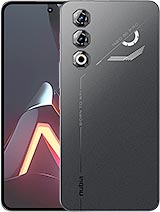
nubia Neo 5 Pro
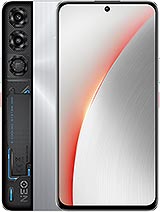
nubia Neo 5 Max
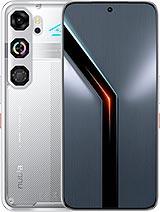
nubia Neo 5 GT
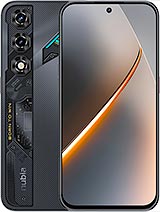
nubia Neo 5
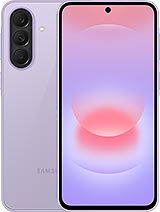
Galaxy A37