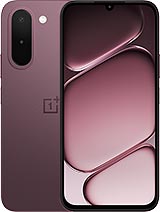
ZTE Blade A56 review
The Blade A56 suits users who want a big, light phone for messaging and media consumption and don't mind accepting a soft display and slow charging as trade-offs. Skip it if you game, multitask heavily, or need a charger faster than the pace of a slow afternoon—the Unisoc and 10W power delivery are deal-breakers for those use cases.
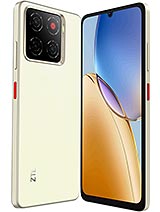
This review is written with AI assistance from ZTE’s published specifications and public benchmark data for the ZTE Blade A56, and the rating is spec-based. GoSolo does not physically test devices; where we estimate real-world behaviour such as battery life or charge time, we say so. How we rate phones.
Overview
The Blade A56 is a no-frills budget phone that trades screen sharpness and raw speed for a large 90Hz display, all-day battery, and the rare inclusion of a 3.5mm jack. At under £100, it's honest about its limits: the 260-ppi display is soft, performance is basic, and the 10W charger crawls, but if you want a talker's phone with a headphone jack and a screen that actually feels big, it doesn't pretend to be anything else.
Design & Build
At 193g and 8.3mm thin, the Blade A56 feels light and compact in hand, a nice contrast to the sprawling 6.75-inch screen it carries. The build is plastic and routine for the price, with no pretense toward durability—Mohs level 4 scratch protection is cosmetic-grade at best. The side-mounted fingerprint sensor works quickly enough, and dual nano-SIM with a dedicated microSD slot shows ZTE understood that users at this price often juggle two numbers and need storage. Nothing here excels, but nothing feels cheap in the way that makes you dread holding it.
Display
The 6.75-inch 90Hz IPS LCD is the Blade A56's calling card, and it does what it sets out to do: scrolling through social feeds and documents feels smooth and responsive, a noticeable leap over 60Hz peers. The 20:9 aspect ratio gives you real vertical real estate, and the 84.8% screen-to-body ratio means less bezels wasted. But here's the catch: 260 ppi density is soft by modern standards, and text at arm's length looks faintly blurred compared to any phone with a 1080p display at this diagonal. If you read a lot on your phone, the paragraph blur will grate after a few weeks. No brightness spec is listed, which hints that outdoor visibility is probably middling. IPS LCD is standard and fade-resistant, but this is an old-tech display stretched thin to hit a size number.
Performance
The Unisoc T7200 is a 2024 entry-level chipset, and the Blade A56 shows all the marks of that class. Messaging, video playback, and basic web browsing run without hiccup on the 4GB RAM, and you won't feel held back by lag in day-to-day tasks. But ask it to game, open a dozen browser tabs, or run a demanding app, and you'll see frame drops and visible thinking time. The Mali-G57 MP1 GPU is single-core and weak; 3D games at high settings stutter badly. For the price, this is neither surprising nor unfair, but it does mean the Blade A56 is not a phone you'd hand to someone expecting responsiveness across the board. It's a phone for phone calls, messaging, and light content—not a multitasking workhorse.
Software
Android 15 ships clean without visible bloat, a small mercy for a 64GB base model. ZTE has historically kept its Android close to vanilla, and that pattern holds here. Software updates for this device will likely be sparse—budget ZTE phones rarely see more than one or two years of patches—so security support is a consideration if you keep this phone longer than two years. For someone upgrading from an older Android phone, the OS is straightforward enough; for anyone bouncing between flagships, the lack of polish in animations and transitions will feel noticeably slower.
Camera
The 13MP main sensor with LED flash captures acceptable daylight snapshots and 1080p video at 30fps, the bare minimum for modern phones. The single lens means no ultrawide or telephoto tricks; what you see is what you get. Indoors, the LED flash prevents images from going too dark, but detail remains grainy and color balance is flat. Low-light performance is the weakest point—without optical stabilisation or a fast aperture, nighttime shots blur and noise dominates. The 8MP selfie camera handles video calls adequately. Overall, the camera is functional for quick snapshots and video calls, but do not expect pleasing results in anything beyond bright daylight.
Battery & Charging
The 5000 mAh battery paired with the efficient Unisoc T7200 and 720p screen yields genuine all-day endurance under mixed use—browsing, messaging, video playback, and music streaming without heavy gaming or video recording. Drop into games or heavy video streaming, and you'll see battery dip noticeably faster, but for a typical day of social media and calls, a single charge sees you home. The real pain is charging: 10W wired is glacially slow by 2025 standards. Expect two to three hours from empty to full, making a missed overnight charge a serious inconvenience. If you're the type who uses your phone all day and needs to charge on the go, this phone's weak charger becomes a daily frustration.
Value & Verdict Context
At £96 (roughly £70 USD conversion), the Blade A56 is well below the global budget floor—it's almost a throwaway price. For that money, you're not getting a modern mid-ranger in miniature; you're getting a no-nonsense screen for content and a battery that lasts, anchored by an entry-level chip and weak charging. Rivals at this price from Xiaomi, Tecno, and Samsung either prioritise narrower performance or drop the screen size and jack to shave cost further. The Blade A56 has chosen size and features, which resonates if you spend your day reading and talking rather than gaming. The inclusion of a 3.5mm jack and FM radio—extinct on rivals—tips the scale toward users wedded to older earbuds or offline radio. It's a choice, not a mistake.
Verdict
The Blade A56 suits users who want a big, light phone for messaging and media consumption and don't mind accepting a soft display and slow charging as trade-offs. Skip it if you game, multitask heavily, or need a charger faster than the pace of a slow afternoon—the Unisoc and 10W power delivery are deal-breakers for those use cases.
- 6.75-inch 90Hz screen with solid 84.8% screen-to-body ratio—scrolling feels fluid despite the low pixel density, and the aspect ratio gives you actual vertical space for reading
- 5000 mAh battery with efficient chipset delivers genuine all-day mixed use without aggressive power modes kicking in
- 3.5mm headphone jack still present, a practical feature most budget competitors have dropped, and FM radio adds offline listening options
- Dual nano-SIM with dedicated microSD slot—you can actually expand storage and keep two network connections without compromise
- 10W charging is glacially slow by 2025 standards—expect 2 to 3 hours from zero, making quick top-ups impractical for road warriors
- 720p display resolution leaves text and icons noticeably soft at normal reading distance, more of a daily annoyance than a mere spec disadvantage
- Unisoc T7200 is entry-level even for this price tier; meaningful gaming or heavy multitasking will see stuttering, and app launches are visibly slower than rivals using similar chips
ZTE Blade A56 Key Specifications
The essentials at a glance. See the full spec sheet.
| Released | 2025, June 11 |
|---|---|
| Display | 6.75 inches, 110.0 cm2 (~84.8% screen-to-body ratio), IPS LCD, 90Hz |
| Resolution | 720 x 1600 pixels, 20:9 ratio (~260 ppi density) |
| Chipset | Unisoc T7200 (12 nm) |
| RAM & storage | 64GB 4GB RAM, 128GB 4GB RAM |
| Main camera | 13 MP, AF Auxiliary lenses |
| Selfie camera | 8 MP |
| Battery | 5000 mAh |
| Charging | 10W wired |
| Software | Android 15 |
| Dimensions | 167.6 x 77.4 x 8.3 mm (6.60 x 3.05 x 0.33 in) |
| Weight | 193 g (6.81 oz) |
| Network | GSM / HSPA / LTE |
| NFC | No |
| USB | USB Type-C 2.0, OTG |
ZTE Blade A56 FAQ
Common questions, answered from the spec sheet.
Does the Blade A56 support 5G?
No. The Blade A56 tops out at GSM / HSPA / LTE, without 5G.
What chipset does the Blade A56 use?
The Blade A56 runs on the Unisoc T7200 (12 nm).
What display does the Blade A56 have?
A 6.75 inches, 110.0 cm2 (~84.8% screen-to-body ratio) IPS LCD, 90Hz, 720 x 1600 pixels, 20:9 ratio (~260 ppi density).
How big is the Blade A56 battery?
The Blade A56 has a 5000 mAh battery. Charging is rated at 10W wired.
Does the Blade A56 have NFC?
No, the Blade A56 does not list NFC support.
Does the Blade A56 support a microSD card?
Yes, the Blade A56 supports expandable storage (microSDXC (dedicated slot)).
Does the Blade A56 have a headphone jack?
Yes, the Blade A56 has a 3.5mm headphone jack.
Alternatives to consider
If the Blade A56 isn’t quite right, these are the closest calls.
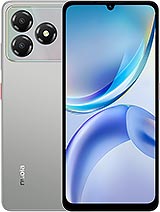
Blade A36
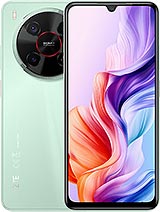
Blade V70 Max
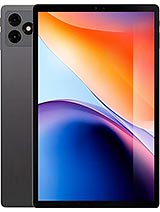
Blade X1001
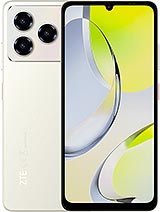
Blade A76 4G
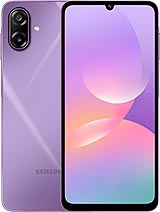
Galaxy M17e