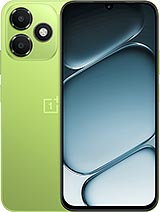
Xiaomi Redmi R70 review
The R70 suits buyers who prioritize battery endurance and screen real estate over sharpness, performance, or camera quality. Anyone who values display clarity, faster charging, or a more capable camera should cross-shop competing 200 EUR phones, where better specs have become the norm."
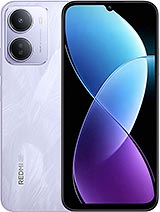
This review is written with AI assistance from Xiaomi’s published specifications and public benchmark data for the Xiaomi Redmi R70, and the rating is spec-based. GoSolo does not physically test devices; where we estimate real-world behaviour such as battery life or charge time, we say so. How we rate phones.
Overview
The Redmi R70 is a budget 5G phone with a large 6.9-inch display and 6000mAh battery, but it is held back by an entry-level chipset, a low-resolution screen, and a bare-bones camera setup that feels more dated than its 2026 launch date suggests.
Design & build
At 210g and 8.2mm thick, the R70 is a workable frame for a 6.9-inch phone—not light, but not unwieldy either. The build materials are not spelled out in the spec sheet, so I cannot speak to durability, but the physical footprint strikes a sensible balance between reach and usability. Nano-SIM dual slots and a microSD slot keep storage flexible, which matters at this price where 128GB fills fast. The design does not stand out, but it does not need to at 200 EUR.
Display
A 720p IPS LCD on a 6.9-inch frame is the weak point here. At 254ppi, text and fine detail will look noticeably soft compared to 1080p budget rivals or even mid-range phones from two years ago. The 120Hz refresh helps movement feel smoother during scrolling, and 800 nits peak brightness should manage outdoors in most light, but the resolution itself is a compromise. For a 2026 launch, 720p at this screen size feels like a cost-cut that shortcuts the viewing experience. 84.3% screen-to-body ratio is fine; bezels are trim but not minimal.
Performance
The Unisoc T8300 is an entry-level 6nm chip, and it performs accordingly. Two Cortex-A78 cores and six A55 cores with Mali-G57 GPU will handle everyday tasks—messaging, social media, light browsing—without stuttering. Gaming and heavy multitasking will feel sluggish, and demanding apps may lag. For the asking price this is acceptable; you are not paying flagship money and should not expect flagship speed. The pairing with 6GB or 8GB of RAM keeps basics responsive, but do not expect this chipset to age gracefully. UFS 2.2 storage is slower than the UFS 3.x found in most mid-range phones today.
Software
Android 16 with HyperOS 3 is current, and Xiaomi's interface has matured into something straightforward without excessive bloat. The software experience should be competent for daily use. Update roadmap and support longevity are not specified in the sheet, so assume typical budget-tier coverage: a year or two of major updates, then security patches for a while longer. Nothing here excels, but nothing here disappoints either.
Camera
A 13MP rear camera and 8MP front camera are thin by any standard today. The rear has LED flash and HDR, and it shoots 1080p video at 30fps—functional, but basic. For 2026, even budget competition typically offers 50MP rear sensors; 13MP feels like a placeholder. Night mode capability, zoom, and processing detail will trail rivals at this price by a visible margin. The selfie camera is adequate for video calls but nothing more. This is not a phone for anyone who values photography.
Battery & charging
The 6000mAh battery is the R70's strongest asset. At this capacity and with a modest entry-level chipset, you should expect 1.5 to 2 days of mixed use, maybe longer on light duty. Heavy users will stretch to a day and a half comfortably. The spec sheet lists 15W charging, which is slow by today's standard—rivals in this segment offer 30W or 50W—so topping up will take time. No wireless charging, as expected at this price. The large battery compensates partly for the slow charge speed, but if you need a phone topped up quickly, this is not it.
Value & verdict-context
At 200 EUR, the R70 targets users who need a big screen and long battery life over performance and image quality. The 5G connectivity is a nice inclusion and offers future-proofing in that narrow sense. The microSD slot and dual SIM are real conveniences for the price. Where it stumbles is the 720p display—a genuine sacrifice that undermines the large screen—and the cameras, which feel sparse for 2026. The chipset is adequate but not impressive. Versus last year's 200 EUR budget phones, this is not a big step forward; it feels more like a sideways move. If you prioritize battery life and screen size over sharpness and camera capability, and you can tolerate slower performance, it is a reasonable choice. Anyone wanting better image quality, faster responsiveness, or a sharper display should look elsewhere in this price tier.
Verdict
The R70 suits buyers who prioritize battery endurance and screen real estate over sharpness, performance, or camera quality. Anyone who values display clarity, faster charging, or a more capable camera should cross-shop competing 200 EUR phones, where better specs have become the norm."
- 6000mAh battery delivers 1.5 to 2 days of realistic use, outpacing most rivals at this price
- Large 6.9-inch display with 120Hz refresh and dual SIM + microSD slot for storage expansion
- 5G connectivity, Android 16, and current HyperOS in a 200 EUR package
- 720p resolution on a 6.9-inch screen looks soft compared to 1080p budget rivals and feels like a significant compromise in 2026
- 13MP camera is sparse by today's standard; 50MP is common at this price, and the gap in detail and capability is visible
- 15W charging is slow, taking hours to refill the large battery
Xiaomi Redmi R70 Key Specifications
The essentials at a glance. See the full spec sheet.
| Released | 2026, April 15 |
|---|---|
| Display | 6.9 inches, 114.9 cm2 (~84.3% screen-to-body ratio), IPS LCD, 120Hz, 800 nits (peak) |
| Resolution | 720 x 1600 pixels, 20:9 ratio (~254 ppi density) |
| Chipset | Unisoc T8300 (6 nm) |
| RAM & storage | 128GB 4GB RAM, 128GB 6GB RAM, 256GB 6GB RAM, 256GB 8GB RAM |
| Main camera | 13 MP |
| Selfie camera | 8 MP |
| Battery | 6000 mAh |
| Software | Android 16, HyperOS 3 |
| Dimensions | 171.6 x 79.5 x 8.2 mm (6.76 x 3.13 x 0.32 in) |
| Weight | 210 g (7.41 oz) |
| Network | GSM / HSPA / LTE / 5G |
| NFC | No |
| USB | USB Type-C 2.0, OTG |
Xiaomi Redmi R70 FAQ
Common questions, answered from the spec sheet.
Does the Redmi R70 support 5G?
Yes. The Redmi R70 supports 5G networks.
What chipset does the Redmi R70 use?
The Redmi R70 runs on the Unisoc T8300 (6 nm).
What display does the Redmi R70 have?
A 6.9 inches, 114.9 cm2 (~84.3% screen-to-body ratio) IPS LCD, 120Hz, 800 nits (peak), 720 x 1600 pixels, 20:9 ratio (~254 ppi density).
How big is the Redmi R70 battery?
The Redmi R70 has a 6000 mAh battery.
Does the Redmi R70 have NFC?
No, the Redmi R70 does not list NFC support.
Does the Redmi R70 support a microSD card?
Yes, the Redmi R70 supports expandable storage (microSDXC).
Alternatives to consider
If the Redmi R70 isn’t quite right, these are the closest calls.
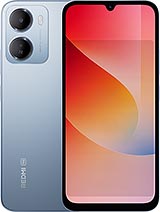
Redmi 15a
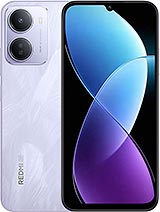
Redmi R70m
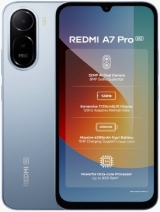
Redmi A7 Pro
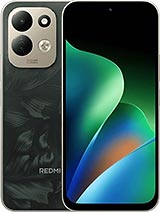
Redmi 17 4G
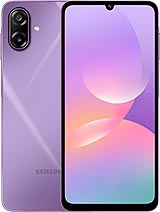
Galaxy M17e