Xiaomi Redmi Note 17 Pro Max review
This phone suits people who spend most time on email, messaging, video streaming, and light social media and who value durability and battery life. Anyone who games regularly, edits video, or needs snappy performance across heavy apps should look at phones with stronger processors at similar or lower prices.
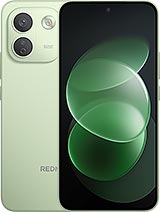
This review is written with AI assistance from Xiaomi’s published specifications and public benchmark data for the Xiaomi Redmi Note 17 Pro Max, and the rating is spec-based. GoSolo does not physically test devices; where we estimate real-world behaviour such as battery life or charge time, we say so. How we rate phones.
Overview
The Redmi Note 17 Pro Max is a large, capable midrange phone that trades processing power for a bright AMOLED display, practical durability, and a sensible camera setup. It's a solid all-rounder for its price, but the Snapdragon 6 Gen 5 won't impress anyone who plays demanding games or runs heavy apps.
Design & Build
At 229.5g and 8.6mm thick, this is a hefty device, but the weight is distributed across a large 6.83-inch frame, so it doesn't feel unwieldy. What matters more is durability: IP68/IP69K certification (high-pressure water jets and 1.5m submersion) and a 3m drop rating are genuine protections you'll actually use, not just spec-sheet theater. The device ships with Gorilla Glass Victus 2 and feels built to survive neglect. For a €649 phone in 2026, this level of ruggedness is standard now, not a luxury. The quad-SIM setup (two nano-SIM and two eSIM slots) is practical for travel or dual-provider setups, though only two can be active at once.
Display
The 6.83-inch AMOLED screen is this phone's main draw. At 447ppi and 1280×2772 resolution, the pixel density isn't cutting-edge, but it's sharp enough at arm's length, and the 19.5:9 aspect ratio gives real vertical stretch for email and reading. Brightness is where it shines: 2000 nits HDR and 3500 nits peak ensure outdoor visibility even in sunlight. The 120Hz refresh rate is smooth, though not exceptional anymore; every midrange contender offers it now. HDR10+ and Dolby Vision support matter if you stream a lot, but daily scrolling won't reveal them. The 3840Hz PWM dimming keeps flickering imperceptible at low brightness, a detail that saves your eyes during night use.
Performance
The Snapdragon 6 Gen 5 is a midrange chip, capable but not quick. An AnTuTu score of 841,707 puts it comfortably ahead of budget phones, but well behind flagship rivals. This means everyday tasks—messaging, browsing, light social media—run smoothly, but demanding games stutter, heavy multitasking lags, and apps like video editors or 3D design tools will feel sluggish. For work email and productivity apps, it's adequate. RAM starts at 8GB (12GB on the top config), which is fine for this generation; don't expect blazing handoffs between tabs. The UFS 4.1 storage on 256GB and 512GB variants is fast, though the base 128GB model has slower UFS 2.2, a real compromise if you choose the cheapest tier.
Software
Android 16 with HyperOS 3 is current and should see regular updates from Xiaomi. HyperOS is Xiaomi's Android overlay, generally lightweight and faster than previous MIUI builds, though it still carries bloatware out of the box. The good news: there's no aggressive battery drain or significant lag from the UI itself. You can uninstall most bloat, and the system is practical for daily use. Security patches depend on Xiaomi's track record in your region; expect at least two years of OS updates and three of patches, though this varies by market.
Camera
A 50MP wide camera with f/1.5 aperture, OIS, and 0.8µm pixels is solid for midrange work. In good light, detail is strong and colors are natural. The f/1.5 aperture helps in dim conditions, though the smaller 0.8µm pixels mean night shots are noisier than flagship rivals. The 8MP ultrawide (15mm, 120°) is genuinely useful for landscape and group photos, with acceptable edge distortion. No telephoto or macro, which is typical for this tier. The 32MP selfie is adequate for video calls and casual portraits. Video is limited to 4K@30fps—fine for social media clips, but rivals at this price often push 60fps. Stabilization (OIS and gyro-EIS) keeps handheld footage reasonably smooth.
Battery & Charging
The battery sits at 10,000mAh (ROW) or 9210mAh (EU, due to regulations). That's a sizable pack; expect about 22-24 hours of mixed use before needing a charge, according to Xiaomi's testing. The spec sheet lists 100W charging, which is now standard at this price—rivals match or exceed it. Actual charge time from empty to full is probably 20-25 minutes, though real-world speeds vary by charger and ambient temperature. Wireless charging is absent, which is fine; it's rarely seen below flagship pricing. Battery longevity over two years should be reasonable given the size, though modern fast charging always degrades capacity eventually.
Value & Verdict
At €649, the Redmi Note 17 Pro Max sits in the upper midrange, competing against phones like the Samsung Galaxy A-series and other regional options. It's not trying to be a flagship; it's a practical large-screen phone for people who prioritize durability, display quality, and battery endurance over raw power. If you stream video, shoot casual photos, and spend most time browsing and messaging, this phone handles everything smoothly. If you game seriously, edit video regularly, or switch apps rapidly, the Snapdragon 6 Gen 5 will frustrate you. The real question is whether the bright AMOLED screen and proven durability justify the price against cheaper rivals with last-gen Snapdragon processors, or whether a €50-100 premium for a 7 Gen 1 or similar would serve you better.
Verdict
This phone suits people who spend most time on email, messaging, video streaming, and light social media and who value durability and battery life. Anyone who games regularly, edits video, or needs snappy performance across heavy apps should look at phones with stronger processors at similar or lower prices.
- Bright, large AMOLED display with 2000 nits HDR and 3500 nits peak brightness, genuinely usable in sunlight
- IP68/IP69K water and dust rating plus 3m drop resistance—practical durability without the fragility of thin flagships
- 10,000mAh battery with 100W charging, realistic 22+ hour battery life for moderate use
- Practical camera setup with OIS on the wide lens and a useful 120° ultrawide for landscapes and groups
- Snapdragon 6 Gen 5 is a midrange chip that struggles with demanding games and heavy multitasking, not a meaningful upgrade path if processing power matters to you
- UFS 2.2 storage on the base 128GB model is noticeably slower than the UFS 4.1 on higher tiers, a real penalty for the cheapest option
- At 229.5g the phone is heavy for its class, and the thick bezels around the 6.83-inch display make it genuinely large to carry
Xiaomi Redmi Note 17 Pro Max Key Specifications
The essentials at a glance. See the full spec sheet.
| Released | 2026, August 27 |
|---|---|
| Display | 6.83 inches, 114.5 cm2 (~89.5% screen-to-body ratio), AMOLED, 68B colors, 120Hz, 3840Hz PWM, HDR10+, Dolby Vision, 1060 nits (typ), 2000 nits (HBM), 3500 nits (peak) |
| Resolution | 1280 x 2772 pixels, 19.5:9 ratio (~447 ppi density) |
| Chipset | Qualcomm SM6850 Snapdragon 6 Gen 5 (4 nm) |
| RAM & storage | 128GB 8GB RAM, 256GB 8GB RAM, 256GB 12GB RAM, 512GB 8GB RAM |
| Main camera | 50 MP, f/1.5, 26mm (wide), 0.8µm, PDAF, OIS 8 MP, f/2.2, 15mm, 120˚ (ultrawide), 1/4.0", 1.12µm |
| Selfie camera | 32 MP, f/2.2, (wide), 0.61µm |
| Battery | 10000 mAh |
| Software | Android 16, HyperOS 3 |
| Dimensions | 163.4 x 78.3 x 8.6 mm (6.43 x 3.08 x 0.34 in) |
| Weight | 229.5 g (8.11 oz) |
| Durability | IP68/IP69K dust tight and water resistant (high pressure water jets; immersible up to 1.5m for 30 min) - ROW IP68 dust tight and water resistant (immersible up to 1.5m for 30 min) - EU only Manufacturer-rated water-resistance (up to 2m for 72 hours) Drop resistant up to 3m |
| Network | GSM / HSPA / LTE / 5G |
| NFC | Yes (market/region dependent) |
| USB | USB Type-C 2.0, OTG |
Xiaomi Redmi Note 17 Pro Max FAQ
Common questions, answered from the spec sheet.
Does the Redmi Note 17 Pro Max support 5G?
Yes. The Redmi Note 17 Pro Max supports 5G networks.
What chipset does the Redmi Note 17 Pro Max use?
The Redmi Note 17 Pro Max runs on the Qualcomm SM6850 Snapdragon 6 Gen 5 (4 nm).
What display does the Redmi Note 17 Pro Max have?
A 6.83 inches, 114.5 cm2 (~89.5% screen-to-body ratio) AMOLED, 68B colors, 120Hz, 3840Hz PWM, HDR10+, Dolby Vision, 1060 nits (typ), 2000 nits (HBM), 3500 nits (peak), 1280 x 2772 pixels, 19.5:9 ratio (~447 ppi density).
How big is the Redmi Note 17 Pro Max battery?
The Redmi Note 17 Pro Max has a 10000 mAh battery.
Does the Redmi Note 17 Pro Max have NFC?
Yes, the Redmi Note 17 Pro Max has NFC.
Is the Redmi Note 17 Pro Max water resistant?
The Redmi Note 17 Pro Max carries a IP68/IP69K dust tight and water resistant (high pressure water jets; immersible up to 1.5m for 30 min) - ROW IP68 dust tight and water resistant (immersible up to 1.5m for 30 min) - EU only Manufacturer-rated water-resistance (up to 2m for 72 hours) Drop resistant up to 3m rating.
Does the Redmi Note 17 Pro Max support a microSD card?
No, the Redmi Note 17 Pro Max does not support expandable storage.
Alternatives to consider
If the Redmi Note 17 Pro Max isn’t quite right, these are the closest calls.

Redmi Note 17 Pro

Redmi Turbo 5 Max

Redmi K90 Max

Poco M8 Pro

Galaxy F70 Pro