Xiaomi Redmi A7 Pro 4G review
The Redmi A7 Pro suits buyers in markets where price is life-or-death and who genuinely use phones for calling, texts, and apps like WhatsApp rather than content creation or gaming. Anyone who watches video, edits photos, or games should stretch the budget for a competing 1080p phone with a faster chip; the extra money pays for itself in daily frustration avoided.

This review is written with AI assistance from Xiaomi’s published specifications and public benchmark data for the Xiaomi Redmi A7 Pro 4G, and the rating is spec-based. GoSolo does not physically test devices; where we estimate real-world behaviour such as battery life or charge time, we say so. How we rate phones.
Overview
The Redmi A7 Pro is a 6.9-inch budget phone with a large 6000 mAh battery and 120Hz display for under $100, but its entry-level Unisoc chip, 720p resolution, and 13MP camera mean it is a device for calls, chat, and light use rather than any real mobile work or gaming.
Design & build
At 208g and 8.2mm thick, this is a weighty slab, not a slim phone. The large 6.9-inch frame makes it a two-hander for most people. Dust and splash resistance is welcome at this price, and the quad color palette (Black, Mist Blue, Palm Green, Sunset Orange) shows some personality. The weight and thickness are honest tradeoffs for fitting a 6000 mAh battery. Side-mounted fingerprint is reliable and familiar. There is nothing elegant here, but it feels made to last through daily drops and pocket lint.
Display
The 6.9-inch IPS LCD running at 120Hz is a genuine strength for under $100. The 800 nits peak brightness helps outdoors, and the 84.3% screen-to-body ratio means minimal bezels. The problem is resolution: 720 x 1600 pixels and 254 ppi make text and icons look slightly soft compared to 1080p phones at the same price from other brands. Scrolling is smooth thanks to 120Hz, but you notice the pixel density when reading small text or viewing photos. For video streaming and social apps, it is fine. For reading or detail work, rivals have pulled ahead at this price point.
Performance
The Unisoc T7250 is entry-level silicon designed for budget phones, and it delivers what you would expect: adequate for calls, messaging, social media, and light web browsing. Multitasking and app switching work but are not snappy. Gaming, video editing, or any sustained workload will stall it. The Mali-G57 MP1 GPU is older and weak. Paired with 4GB RAM, this is a phone for people who use one app at a time. If you depend on splitting apps side by side or running demanding tools, look elsewhere. For a teenager checking TikTok or a parent doing email, it is enough.
Software
Android 16 with HyperOS 3 is current, and a budget Xiaomi in 2026 should get at least two years of updates. The software is Xiaomi's own skin, which adds features and polish but also bloat compared to vanilla Android. Ads and sponsored shortcuts in the system are common complaints on Redmi devices. For pure Android experience, this is not it, but HyperOS is stable and does not slow the already modest hardware further.
Camera
The 13MP f/2.2 main camera with LED flash and HDR is functional but dated. It handles bright daylight adequately and the LED flash covers close-up shots, but low-light performance is weak. The 1080p video at 30fps is passable for clips but no more. The 8MP f/2.0 selfie camera does the job for video calls. Do not expect detail, dynamic range, or fast focus. This is point-and-shoot level, not a tool for visual content. Against rivals with 50MP mains and better processing, the Redmi A7 Pro falls short.
Battery & charging
The 6000 mAh cell is the headline here. On modest use (calls, messaging, social media), expect two to three days between charges. Heavy video streaming or gaming will drain it faster, but the sheer capacity means you are not hunting for a socket daily like lighter phones. The spec sheet does not detail charging wattage, but at 15W, it likely takes 90 minutes to two hours for a full charge. That is slow by 2026 standards when rivals offer 30–60W, but the large battery softens the pain: you charge less often anyway.
Value & verdict
At $97.50 (or ₹12,417 in India, where budget phones matter most), the Redmi A7 Pro hits a price that puts it in the same bracket as basic feature phones in some regions. The build is solid, the screen is large and smooth, and the battery lasts days. The tradeoff is clear: you get a low-resolution display, an underpowered chip, and a basic camera. This is a phone for people who need the basics at absolute minimum cost, not for anyone expecting a halfway capable all-rounder. It is a better buy than an actual feature phone, but not as rounded as a mid-range option at 40–50% more money.
Verdict
The Redmi A7 Pro suits buyers in markets where price is life-or-death and who genuinely use phones for calling, texts, and apps like WhatsApp rather than content creation or gaming. Anyone who watches video, edits photos, or games should stretch the budget for a competing 1080p phone with a faster chip; the extra money pays for itself in daily frustration avoided.
- Massive 6000 mAh battery lasting days of light use, not hours
- 120Hz IPS LCD display and 84% screen-to-body ratio make the 6.9-inch screen feel spacious for its weight
- Dedicated microSD slot expands storage beyond the tight 64/128GB base options
- Launched in 2026 with Android 16 and HyperOS 3, so software support should extend reasonably into the future
- Unisoc T7250 is slow for anything beyond messaging, social media, and light browsing; no gaming or multitasking here
- 720p resolution on a 6.9-inch screen means 254 ppi and visible pixel grain compared to 1080p rivals at this price
- 13MP camera with f/2.2 and 1080p video only, weak in low light and outdated for 2026
Xiaomi Redmi A7 Pro 4G Key Specifications
The essentials at a glance. See the full spec sheet.
| Released | 2026, February 27 |
|---|---|
| Display | 6.9 inches, 114.9 cm2 (~84.3% screen-to-body ratio), IPS LCD, 120Hz, 800 nits (HBM) |
| Resolution | 720 x 1600 pixels, 20:9 ratio (~254 ppi density) |
| Chipset | Unisoc T7250 (12 nm) |
| RAM & storage | 64GB 4GB RAM, 128GB 4GB RAM |
| Main camera | 13 MP, f/2.2, (wide), 1/3.06" Auxiliary lens |
| Selfie camera | 8 MP, f/2.0, (wide) |
| Battery | 6000 mAh |
| Software | Android 16, HyperOS 3 |
| Dimensions | 171.6 x 79.5 x 8.2 mm (6.76 x 3.13 x 0.32 in) |
| Weight | 208 g (7.34 oz) |
| Durability | Dust and splash resistant |
| Network | GSM / HSPA / LTE |
| NFC | Yes (market/region dependent) |
| USB | USB Type-C 2.0 |
Xiaomi Redmi A7 Pro 4G FAQ
Common questions, answered from the spec sheet.
Does the Redmi A7 Pro 4G support 5G?
No. The Redmi A7 Pro 4G tops out at GSM / HSPA / LTE, without 5G.
What chipset does the Redmi A7 Pro 4G use?
The Redmi A7 Pro 4G runs on the Unisoc T7250 (12 nm).
What display does the Redmi A7 Pro 4G have?
A 6.9 inches, 114.9 cm2 (~84.3% screen-to-body ratio) IPS LCD, 120Hz, 800 nits (HBM), 720 x 1600 pixels, 20:9 ratio (~254 ppi density).
How big is the Redmi A7 Pro 4G battery?
The Redmi A7 Pro 4G has a 6000 mAh battery.
Does the Redmi A7 Pro 4G have NFC?
Yes, the Redmi A7 Pro 4G has NFC.
Is the Redmi A7 Pro 4G water resistant?
The Redmi A7 Pro 4G carries a Dust and splash resistant rating.
Does the Redmi A7 Pro 4G support a microSD card?
Yes, the Redmi A7 Pro 4G supports expandable storage (microSDXC (dedicated slot)).
Alternatives to consider
If the Redmi A7 Pro 4G isn’t quite right, these are the closest calls.
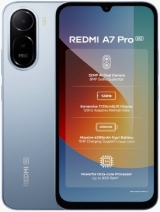
Redmi A7 Pro

Redmi A7
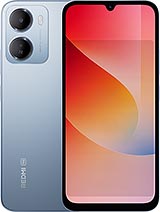
Redmi 15a

Redmi 17C 4G

Galaxy M17e