Xiaomi Redmi 17C 4G review
The Redmi 17C suits someone in a low-budget segment who values screen size and battery life over processing speed or camera quality. Skip it if you play games, edit photos regularly, or spend significant time on tasks that demand a sharper display or quicker processor.

This review is written with AI assistance from Xiaomi’s published specifications and public benchmark data for the Xiaomi Redmi 17C 4G, and the rating is spec-based. GoSolo does not physically test devices; where we estimate real-world behaviour such as battery life or charge time, we say so. How we rate phones.
Overview
The Redmi 17C is a straightforward budget 4G phone built around a modest entry-level chipset and a 120Hz screen stretched across a large 6.88-inch frame. At 100 EUR it competes on size and battery life rather than raw power, making it a decent pick for someone who wants a roomy display and all-day use without spending much, though the processor will lag noticeably in anything demanding.
Design & build
The Redmi 17C is tall and wide but surprisingly light and thin, a sensible trade-off for a 6.88-inch phone pitched at €100. Glass front paired with a plastic or eco leather back keeps weight down while maintaining some durability; the frame is plastic, so it feels less solid than midrange rivals, but for the price it is acceptable. The side-mounted fingerprint sensor works reliably and saves screen real estate. At 8.2mm thick, it sits comfortably in the hand without the bulk many large-screen budget phones suffer from. Dual Nano-SIM provides regional flexibility common to this tier.
Display
A 120Hz IPS LCD on a budget phone is welcome, though the trade-off is immediate: 720 x 1640 pixels on 6.88 inches yields 260 ppi, low enough that text and icons show visible pixelation in daily use. For static content and video it is serviceable; for reading and fine UI work it lags behind the 1080p minimums most competitors hit at this price in 2026. Peak brightness of 600 nits (HBM) is adequate for outdoor daylight, and the 84% screen-to-body ratio is decent. The 120Hz scroll feels smooth on light tasks, but the resolution remains the weak point—a 720p screen on this diagonal is a conscious cost-cut, not a technical limitation.
Performance
The Helio G81 Ultra is entry-level processing power dressed up with a marketing suffix. Its two Cortex-A75 cores and six Cortex-A55 cores handle everyday tasks—messaging, browsing, light apps—but anything demanding exposes its limits. Gaming beyond casual titles produces visible frame drops, and juggling multiple apps leads to noticeable stalls. For someone upgrading from a very old handset or using the phone primarily for calls and messaging, it is sufficient. Anyone expecting to run demanding mobile games, heavy photo editing, or smooth media production should look elsewhere. Android 16 and HyperOS 3 run adequately on this silicon, but do not expect zippy app launches or instant multitasking.
Software
The Redmi 17C ships with Android 16 and Xiaomi's HyperOS 3 skin. HyperOS has streamlined Xiaomi's customization compared to earlier versions, reducing bloat somewhat, though ad placement and proprietary apps still clutter the experience out of the box. Security patches and major updates are likely to come, though budget Redmi lines do not enjoy the update longevity of flagship models. For a €100 device, the software experience is unremarkable—functional, not refined.
Camera
A single 13MP sensor with f/2.2 aperture and LED flash is predictable for this price, but underwhelming even by budget standards in 2026. Photos in daylight are passable, losing detail and clarity versus the 50MP+ and faster lenses rivals now offer at similar prices. Low-light shooting is poor; the LED flash is harsh and limited in range. The 5MP front camera is phone-booth quality, barely fit for video calls. Video maxes out at 1080p@30fps, which is acceptable but does not justify using this phone as a primary camera. If photography matters at all, look at budget competitors offering better sensors or wider fields of view.
Battery & charging
The 5160 mAh cell is hefty for a light, thin device, and it shows in real use: expect about 1.5 to 2 days of mixed use, or a full day of moderate to heavy use. That is respectable for a budget phone without extreme power draw. Charging is the catch: the spec sheet lists 18W, which is conservative for 2026 and will take well over 90 minutes to a full charge. Many rivals at €100 now offer 30W or faster; relative to the competition, charging is slow. USB Type-C 2.0 is standard, at least, though the slow wattage dampens the benefit.
Value & verdict
The Redmi 17C targets buyers who prioritize screen size, battery stamina, and price above all else. A 6.88-inch 120Hz display on €100 is a real selling point for someone who spends hours scrolling and wants a roomy canvas without breaking the budget. The 5160 mAh battery backs that up with genuine multi-day endurance. However, the 720p resolution, entry-level chipset, and dated camera are real compromises. For light users—calls, messaging, social media, basic browsing—it delivers adequate value. For anyone who games, edits photos, or expects snappy performance, the processor and display resolution will frustrate. It is a niche device: expansive and long-lasting, but underpowered and visibly low-res.
Verdict
The Redmi 17C suits someone in a low-budget segment who values screen size and battery life over processing speed or camera quality. Skip it if you play games, edit photos regularly, or spend significant time on tasks that demand a sharper display or quicker processor.
- Large 6.88-inch display with 120Hz refresh at entry price point, unusual for the budget tier
- Capacious 5160 mAh battery, realistic for 1.5-2 days of light to moderate use without charge
- Dedicated microSDXC slot and side-mounted fingerprint reader, practical add-ons that rivals often skip
- Lightweight at 206g and thin at 8.2mm, handling is less fatiguing than typical budget phablets
- Helio G81 Ultra is entry-level even for 2026; multi-tasking and newer games stutter noticeably
- 720p resolution on a 6.88-inch screen leaves text and icons visibly pixelated, a step down from baseline midrange
- 13MP main camera with f/2.2 aperture and 1080p video output is distinctly basic; low-light and detail are mediocre
Xiaomi Redmi 17C 4G Key Specifications
The essentials at a glance. See the full spec sheet.
| Released | 2026, June 23 |
|---|---|
| Display | 6.88 inches, 112.4 cm2 (~84.0% screen-to-body ratio), IPS LCD, 120Hz, 450 nits (typ), 600 nits (HBM) |
| Resolution | 720 x 1640 pixels (~260 ppi density) |
| Chipset | Mediatek Helio G81 Ultra (12 nm) |
| RAM & storage | 64GB 4GB RAM, 128GB 4GB RAM |
| Main camera | 13 MP, f/2.2, 25mm (wide) |
| Selfie camera | 5 MP |
| Battery | 5160 mAh |
| Software | Android 16, HyperOS 3 |
| Dimensions | 171.9 x 77.8 x 8.2 mm (6.77 x 3.06 x 0.32 in) |
| Weight | 206 g (7.27 oz) |
| Build | Glass front, plastic frame, plastic back or silicone polymer back (eco leather) |
| Network | GSM / CDMA / HSPA / LTE |
| NFC | No |
| USB | USB Type-C 2.0 |
Xiaomi Redmi 17C 4G FAQ
Common questions, answered from the spec sheet.
Does the Redmi 17C 4G support 5G?
No. The Redmi 17C 4G tops out at GSM / CDMA / HSPA / LTE, without 5G.
What chipset does the Redmi 17C 4G use?
The Redmi 17C 4G runs on the Mediatek Helio G81 Ultra (12 nm).
What display does the Redmi 17C 4G have?
A 6.88 inches, 112.4 cm2 (~84.0% screen-to-body ratio) IPS LCD, 120Hz, 450 nits (typ), 600 nits (HBM), 720 x 1640 pixels (~260 ppi density).
How big is the Redmi 17C 4G battery?
The Redmi 17C 4G has a 5160 mAh battery.
Does the Redmi 17C 4G have NFC?
No, the Redmi 17C 4G does not list NFC support.
Does the Redmi 17C 4G support a microSD card?
Yes, the Redmi 17C 4G supports expandable storage (microSDXC (dedicated slot)).
Alternatives to consider
If the Redmi 17C 4G isn’t quite right, these are the closest calls.

Redmi 17C
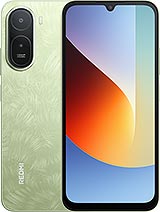
Redmi A7 Pro 4G
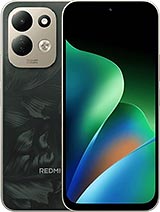
Redmi M100

Redmi 17
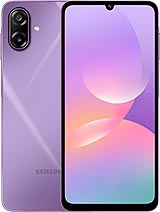
Galaxy M17e