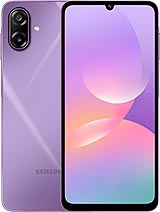
Xiaomi Redmi 17 4G review
The Redmi 17 4G suits anyone who needs a phone that lasts 48+ hours unplugged; everyone else should look at rivals with sharper displays and faster chips at the same price.
This review is written with AI assistance from Xiaomi’s published specifications and public benchmark data for the Xiaomi Redmi 17 4G, and the rating is spec-based. GoSolo does not physically test devices; where we estimate real-world behaviour such as battery life or charge time, we say so. How we rate phones.
Overview
The Redmi 17 4G is a 232g budget phone with a massive 7500mAh battery and 120Hz LCD display, landing at €140 in a crowded segment where you're mostly paying for the battery life. The Helio G91 Ultra chipset and 720p resolution are well below current baseline, making this a choice only if runtime outlasts everything else on your shortlist.
Design & Build
The Redmi 17 4G is a straightforward slab: 8.8mm thick, 232g, with a glass front (Gorilla Glass 7i), plastic back, and plastic frame. That weight is honest for a 7500mAh battery—heavier than flagship phones, but not surprising given the cell. The design is flat and unremarkable, with an RGB light on the back that adds visual personality without function. IP64 dust and splash resistance is the floor for this price tier now, and Xiaomi includes it. The frame feels industrial rather than refined, but durability is what matters here, not finish.
Display
Here is where compromise bites. The 6.9 inch IPS LCD is genuinely large and the 120Hz refresh is smooth to scroll, and 825 nits of brightness in HBM mode will handle outdoor use. But 720 x 1600 pixels across a 6.9 inch screen yields 254 ppi—noticeably grainy if you hold it close. Text is jagged, images lack sharpness, and by 2026 standards most rivals at €140 have jumped to 1080p or higher. The 120Hz smoothness masks the pixel density problem until you really look, but once you see it, it sticks. You are paying for the large battery, not the display.
Performance
The Helio G91 Ultra is a mid-tier SoC from mid-2024, and it shows its age against this year's offerings. Clock speeds hit 2.0GHz on the performance cores, and the Mali-G52 MC2 GPU will handle light gaming and everyday apps without stutter. On paper it is competent for basic tasks. In practice, at this price point in August 2026, rivals are shipping Snapdragon 4 Gen 2 or newer Helio chips—meaning better single-threaded performance and snappier UI response. The G91 Ultra is not a bottleneck for video watching or messaging, but load times and app launch are visibly slower than fresher competition. Pairing it with 4GB or 6GB of RAM (depending on config) keeps multitasking steady, but this is a budget setup playing catch-up.
Software
Android 16 with HyperOS 3 lands modern software on older hardware. HyperOS has trimmed bloat over recent Xiaomi generations, but the Helio G91 Ultra will not run these updates as smoothly as a faster chip would. Custom ROMs and customization are present, and FM radio is still here (a rarity now), which is useful for listeners without streaming data. The software layer itself is fine; the mismatch between OS ambition and chipset capability is the limiting factor.
Camera
A 50MP main sensor with f/1.8 aperture and PDAF is a solid headline, but this is a budget phone and the reality is more modest. The auxiliary lens hints at depth sensing rather than a telephoto, so you get optical steadiness and autofocus speed, not zoom. Video caps at 1080p@30fps, which is standard at this tier but not generous. The 8MP selfie is purely functional. In daylight the 50MP sensor can resolve detail reasonably well, but low-light shots will suffer without computational help—and the G91 Ultra's processor is not the strongest at night mode math. Expect competent midday photos and soft evening results. The camera is a survivor, not a strength.
Battery & Charging
The 7500mAh battery is the phone's headline. With a modest 720p display and entry-level chipset, real-world battery life is easily two days of moderate use and three days of light use. Charging speed is absent from the spec sheet (listed only as 45W in the secondary data), which for a 7500mAh cell means about 1.5 to 2 hours to full, depending on actual wattage and heat management. For a €140 phone, that is acceptable, though rivals in budget segments are hitting 100W and above. The capacity is the achievement here: the Redmi 17 4G will outlast nearly every rival, making it the pick for users who hate chargers or live without grid access.
Value & Verdict
At €140 you are shopping the budget basement, and the Redmi 17 4G is transparent about trade-offs. The 720p display is the most visible compromise in a 6.9 inch form factor—acceptable if you value screen size and battery life, jarring if screen clarity matters. The Helio G91 Ultra is two years old relative to fresher rivals at the same price, and daily performance reflects that age. What you gain is a battery that will genuinely see you through two or three days, a large screen despite low density, and IP64 durability. This is a phone for long-haul travelers, remote workers without daily charging access, and anyone allergic to screen time limits. It is not a balanced device; it is a battery with a screen and chipset attached. That focus is honest, and if runtime is your priority, no other €140 phone comes close.
Verdict
The Redmi 17 4G suits anyone who needs a phone that lasts 48+ hours unplugged; everyone else should look at rivals with sharper displays and faster chips at the same price.
- 7500mAh battery will outlast almost any rival at any price
- Large 6.9 inch 120Hz IPS display with decent brightness (825 nits HBM)
- 50MP main sensor with f/1.8 aperture and PDAF on entry hardware
- IP64 rating and microSDXC slot give practical durability and storage flexibility
- 720p resolution on a 6.9 inch screen is visibly grainy, a hard compromise in 2026
- Helio G91 Ultra is a mid-2024 mid-range chip; rivals at this price now offer considerably faster silicon
- Charging wattage missing from spec sheet, but 7500mAh with modest hardware suggests multi-hour top-ups
Xiaomi Redmi 17 4G Key Specifications
The essentials at a glance. See the full spec sheet.
| Released | 2026, August 10 |
|---|---|
| Display | 6.9 inches, 114.9 cm2 (~86.2% screen-to-body ratio), IPS LCD, 120Hz, 825 nits (HBM) |
| Resolution | 720 x 1600 pixels, 20:9 ratio (~254 ppi density) |
| Chipset | Mediatek Helio G91 Ultra (12 nm) |
| RAM & storage | 128GB 4GB RAM, 128GB 6GB RAM, 256GB 4GB RAM, 256GB 6GB RAM |
| Main camera | 50 MP, f/1.8, (wide), PDAF Auxiliary lens |
| Selfie camera | 8 MP, f/2.1, (wide) |
| Battery | 7500 mAh |
| Software | Android 16, HyperOS 3 |
| Dimensions | 170.1 x 78.4 x 8.8 mm (6.70 x 3.09 x 0.35 in) |
| Weight | 232 g (8.18 oz) |
| Build | Glass front (Gorilla Glass 7i), plastic back, plastic frame |
| Durability | IP64 dust tight and water resistant (water splashes) RGB light (on the back) |
| Network | GSM / HSPA / LTE |
| NFC | Yes (market/region dependent) |
| USB | USB Type-C 2.0 |
Xiaomi Redmi 17 4G FAQ
Common questions, answered from the spec sheet.
Does the Redmi 17 4G support 5G?
No. The Redmi 17 4G tops out at GSM / HSPA / LTE, without 5G.
What chipset does the Redmi 17 4G use?
The Redmi 17 4G runs on the Mediatek Helio G91 Ultra (12 nm).
What display does the Redmi 17 4G have?
A 6.9 inches, 114.9 cm2 (~86.2% screen-to-body ratio) IPS LCD, 120Hz, 825 nits (HBM), 720 x 1600 pixels, 20:9 ratio (~254 ppi density).
How big is the Redmi 17 4G battery?
The Redmi 17 4G has a 7500 mAh battery.
Does the Redmi 17 4G have NFC?
Yes, the Redmi 17 4G has NFC.
Is the Redmi 17 4G water resistant?
The Redmi 17 4G carries a IP64 dust tight and water resistant (water splashes) RGB light (on the back) rating.
Does the Redmi 17 4G support a microSD card?
Yes, the Redmi 17 4G supports expandable storage (microSDXC (uses shared SIM slot)).
Alternatives to consider
If the Redmi 17 4G isn’t quite right, these are the closest calls.
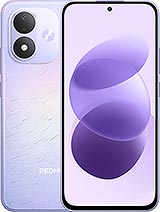
Redmi Note 17 4G
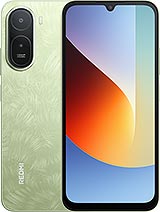
Redmi A7 Pro 4G
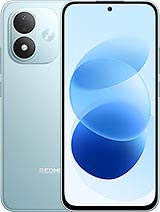
Redmi Note 17
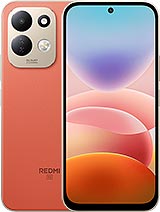
Redmi 17
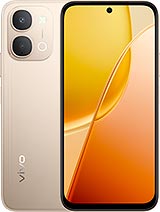
T5 4G