Xiaomi Poco X8 Pro Max review
The Poco X8 Pro Max suits buyers who spend most of their time looking at the screen and value rugged durability; its large, bright AMOLED display and IP69K rating are genuine strengths. Anyone prioritizing camera quality or seeking an upgrade beyond "big bright screen and decent performance" should cross-shop rivals that offer tighter ultrawide lenses or faster charging at similar prices.
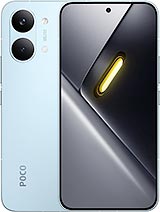
This review is written with AI assistance from Xiaomi’s published specifications and public benchmark data for the Xiaomi Poco X8 Pro Max, and the rating is spec-based. GoSolo does not physically test devices; where we estimate real-world behaviour such as battery life or charge time, we say so. How we rate phones.
Overview
The Poco X8 Pro Max is a large-screen midrange phone with flagship display chops (6.83-inch AMOLED, 120Hz, 3500-nit peak brightness) and a capable but unremarkable camera setup. It delivers solid performance and durability at a price that makes sense if you value screen real estate, but the mediocre ultrawide and lack of meaningful battery or charging upgrades over rivals leaves it feeling more all-rounder than standout.
Design & build
At 218 grams and 8.2mm thick, this is a hefty device, though not unusually so for its 6.83-inch footprint. The frame is aluminum and the back is glass-fiber reinforced plastic, a sensible choice that keeps costs down while the Gorilla Glass 7i front handles scratches reasonably well. The IP68/IP69K rating (immersible to 1.5m for 30 minutes, resistant to high-pressure jets) is genuinely useful, a strong point for durability that rivals at this price often skip or water down. The glass-and-aluminum combo feels adequate rather than premium, which is honest positioning for a midrange phone. Triple-slot SIM support (two nano-SIM plus eSIM) covers most global use cases.
Display
The 6.83-inch AMOLED screen is the star: 1280×2772 pixels (447 ppi), 120Hz refresh, 3840Hz PWM dimming, Dolby Vision, and HDR10+ support. Peak brightness hits 3500 nits, which beats many phones in its price band. The 19.5:9 aspect ratio is tall and thin, making the phone feel narrower in hand than its diagonal suggests, though the 90.3% screen-to-body ratio shows Xiaomi squeezed the bezels tightly. Colors are vivid, scrolling is smooth, and outdoor visibility is excellent thanks to that brightness ceiling. For a device at under €600, this display is a genuine strength; it's the kind of screen you'd expect on a phone 1.5 to 2 times the price.
Performance
The Mediatek Dimensity 9500s (3nm process) is a solid 2026 midrange chip. AnTuTu scores of 2.4 million put it in the upper-midrange tier, and real-world performance is swift: apps load quickly, gaming handles well, and multitasking rarely stutters. You're not getting flagship CPU speed (the Cortex-X925 cores cap at 3.73 GHz), but for this price and class, the trade-off is fair. Android 16 with HyperOS 3 runs cleanly, though Xiaomi's software layer adds bloat that some find intrusive. The 12GB RAM pairs well with 256GB or 512GB storage (UFS 4.1), both options good for their tier. No microSD slot is standard now, so that's not a con, but buyers stuck with 256GB should know storage choices are locked in at purchase.
Camera
The main camera is a 50MP f/1.5 sensor with optical image stabilization and phase-detection autofocus, a credible foundation. Low-light performance is decent thanks to the wide aperture and larger sensor (1/1.95"), and stills are sharp and color-accurate in daylight. The 8MP f/2.2 ultrawide is where things disappoint: the 15mm focal length and small 1/4" sensor deliver soft, dim shots that lack detail. There's no telephoto, which is standard for this price but worth knowing if you shoot distant subjects. The selfie camera (20MP f/2.2) is functional but unspectacular. Video goes up to 4K at 60fps with HDR10+ support, which is competitive. Overall, the camera setup is capable for everyday use but uninspiring compared to rivals that have added tighter ultrawide optics or modest zoom.
Battery & charging
The 8500mAh battery (or 9000mAh in some regions) delivers solid endurance: Xiaomi claims an active-use score of about 25 hours, realistic for moderate daily use with this screen on all day. Charging sits at 100W, which sounds modern but is now table-stakes at €600 and below; rivals regularly hit 120W or higher. You're looking at a 20-ish minute top-up, fast but not exceptional for 2026. The lack of wireless charging is a minor miss for a phone at this price tier, though not a deal-breaker. Battery health should remain good thanks to the large capacity, but the charging speed is no longer a selling point.
Software & connectivity
HyperOS 3 on Android 16 is modern and feature-rich, but Xiaomi packs it with system apps and promotional content that clutter the experience. The fast fingerprint sensor (ultrasonic, under display) works well. Connectivity is thorough: Wi-Fi 7, Bluetooth 6.0 with aptX HD and LHDC 5, comprehensive GPS bands, and NFC (region-dependent). 5G bands are numerous and well-supported across global standards. For a phone aimed at global markets, the network stack is thoughtfully done.
Value & verdict
At €590 (or ₹50,000 in India), the Poco X8 Pro Max competes in a crowded midrange segment. The display is a genuine win, the build is durable, and performance is adequate for everyday and light gaming use. But the camera is pedestrian, charging speed is no longer exceptional, and the battery life, while respectable, isn't a standout edge. For buyers who prize a large, bright AMOLED screen and rugged build above all else, this makes sense. For those seeking the best camera or most aggressive feature set in its price class, the X8 Pro Max feels generic. It's a safe, middle-of-the-road choice that excels in one area (the display) and competently checks boxes elsewhere, without memorable strengths beyond that screen.
Verdict
The Poco X8 Pro Max suits buyers who spend most of their time looking at the screen and value rugged durability; its large, bright AMOLED display and IP69K rating are genuine strengths. Anyone prioritizing camera quality or seeking an upgrade beyond "big bright screen and decent performance" should cross-shop rivals that offer tighter ultrawide lenses or faster charging at similar prices.
- 6.83-inch AMOLED display with 3500-nit peak brightness and 120Hz refresh—genuinely impressive for the price
- IP68/IP69K durability rating covers dust and high-pressure water resistance; most competitors skip this
- Solid performance and smooth software with the Dimensity 9500s and adequate RAM for the segment
- Ultrawide camera is weak; the 8MP f/2.2 sensor produces soft, dim shots compared to rivals at this price
- 100W charging is now standard, not exceptional; many rivals at €600 offer 120W or higher
- Heavy at 218g and thick at 8.2mm, though acceptable for the screen size
Xiaomi Poco X8 Pro Max Key Specifications
The essentials at a glance. See the full spec sheet.
| Released | 2026, March 17 |
|---|---|
| Display | 6.83 inches, 114.5 cm2 (~90.3% screen-to-body ratio), AMOLED, 68B colors, 120Hz, 3840Hz PWM, Dolby Vision, HDR10+, 2000 nits (HBM), 3500 nits (peak) |
| Resolution | 1280 x 2772 pixels, 19.5:9 ratio (~447 ppi density) |
| Chipset | Mediatek Dimensity 9500s (3 nm) |
| RAM & storage | 256GB 12GB RAM, 512GB 12GB RAM |
| Main camera | 50 MP, f/1.5, 26mm (wide), 1/1.95", 0.8µm, PDAF, OIS 8 MP, f/2.2, 15mm (ultrawide), 1/4.0", 1.12µm |
| Selfie camera | 20 MP, f/2.2, (wide), 1/4" |
| Battery | 9000 mAh |
| Software | Android 16, HyperOS 3 |
| Dimensions | 162.9 x 77.9 x 8.2 mm (6.41 x 3.07 x 0.32 in) |
| Weight | 218 g (7.69 oz) |
| Build | Glass front (Gorilla Glass 7i), aluminum frame, glass-fiber reinforced plastic back |
| Durability | IP68/IP69K dust tight and water resistant (high pressure water jets; immersible up to 1.5m for 30 min) IP69K (market/region dependent) |
| Network | GSM / HSPA / LTE / 5G |
| NFC | Yes (market/region dependent) |
| USB | USB Type-C 2.0, OTG |
Xiaomi Poco X8 Pro Max FAQ
Common questions, answered from the spec sheet.
Does the Poco X8 Pro Max support 5G?
Yes. The Poco X8 Pro Max supports 5G networks.
What chipset does the Poco X8 Pro Max use?
The Poco X8 Pro Max runs on the Mediatek Dimensity 9500s (3 nm).
What display does the Poco X8 Pro Max have?
A 6.83 inches, 114.5 cm2 (~90.3% screen-to-body ratio) AMOLED, 68B colors, 120Hz, 3840Hz PWM, Dolby Vision, HDR10+, 2000 nits (HBM), 3500 nits (peak), 1280 x 2772 pixels, 19.5:9 ratio (~447 ppi density).
How big is the Poco X8 Pro Max battery?
The Poco X8 Pro Max has a 9000 mAh battery.
Does the Poco X8 Pro Max have NFC?
Yes, the Poco X8 Pro Max has NFC.
Is the Poco X8 Pro Max water resistant?
The Poco X8 Pro Max carries a IP68/IP69K dust tight and water resistant (high pressure water jets; immersible up to 1.5m for 30 min) IP69K (market/region dependent) rating.
Does the Poco X8 Pro Max support a microSD card?
No, the Poco X8 Pro Max does not support expandable storage.
Alternatives to consider
If the Poco X8 Pro Max isn’t quite right, these are the closest calls.
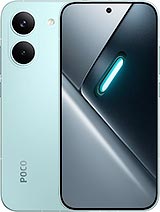
Poco X8 Pro

18 Pro Max
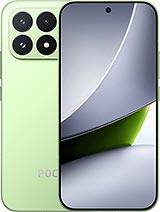
Poco F9 Pro
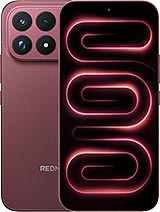
Redmi K100 Pro Max

Galaxy Z Flip8