Xiaomi Poco Pad C1 review
This suits someone after a large, light tablet for reading and video who doesn't demand snappy performance or decent cameras. Anyone buying this for work or creative tasks, or who has budget flexibility, should look elsewhere—the chip is too dated for the stakes.
This review is written with AI assistance from Xiaomi’s published specifications and public benchmark data for the Xiaomi Poco Pad C1, and the rating is spec-based. GoSolo does not physically test devices; where we estimate real-world behaviour such as battery life or charge time, we say so. How we rate phones.
Overview
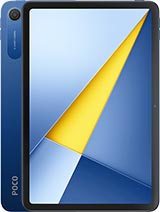
The Poco Pad C1 is a budget tablet that nails the essentials: a roomy 9.7-inch screen, light weight, and a full day of battery for light use, all at an entry-level price. Its main drawback is the underpowered Snapdragon 6s and wimpy cameras, which feel more like a media-consumption device than a productive tool.
Design & Build
At 406 grams, the Poco Pad C1 is refreshingly light for a 9.7-inch tablet—light enough that holding it one-handed for reading doesn't turn into a hand cramp after 15 minutes. The 7.4mm frame is thin without feeling flimsy, and the aluminum back with glass front feels assembled properly. Dust and splash resistance is useful peace of mind, though not waterproofing. There's no cellular option, so Wi-Fi only—a non-issue for a home or office device, but worth noting if you need connectivity on the go.
Display
The 9.7-inch IPS LCD is the tablet's strongest asset. A 120Hz refresh rate makes scrolling smooth, brightness reaches 600 nits in high-brightness mode, and the 87.9% screen-to-body ratio means minimal bezels for the class. The catch: 1280 by 2048 resolution on a screen this size works out to 268 ppi, which is noticeably softer than tablet standards from three years ago. Text doesn't blur into illegibility, but it lacks the crisp detail you get from 300+ ppi competitors. For reading and video, it's perfectly fine; for detail work or graphic design, it will frustrate.
Performance
The Snapdragon 6s is a 2024 processor in a 2026 tablet, and it shows. Day-to-day tasks—email, web browsing, light document editing—run without complaint, but switching between apps or loading heavier games introduces noticeable pauses that rival tablets at this price have mostly eliminated. The Adreno 610 GPU is entry-level, so don't expect smooth gaming beyond simple titles. Paired with 4GB or 6GB RAM, the base model will feel tighter than the 6GB version, and neither offers much headroom for power users. For a content consumption device this hits the bar; as a productivity tool, it lags.
Software
Android 16 with HyperOS 3 ships current and offers the latest tablet conveniences: split-screen, gesture controls, and Xiaomi's tablet-specific optimizations. HyperOS is clean and doesn't feel bloated, though Xiaomi's usual pre-installed app roster is present. Updates depend entirely on Xiaomi's track record, which has historically been reasonable but not best-in-class. For the price, this is above-average software support, though not a major differentiator.
Camera
The 8MP rear and 5MP front cameras are the device's weakest link. Neither sensor handles dynamic range well, and the cramped 1/4.0-inch optics on the main camera struggle in any but bright daylight. 1080p video at 30fps is the cap, making this tablet useless for anything beyond basic web calls or quick clips. For a 2026 release, even a budget tablet should manage better low-light shots and at least 1440p video. If you plan to take photos or video with this, don't; use your phone.
Battery & Charging
The 7600 mAh battery easily stretches through a full day of light to moderate use—email, reading, video streaming. Heavy gaming or video editing will drain it faster, but for a casual user this is plenty. Charging tops out at 18W, which is slow by modern standards; a full charge from empty takes two-plus hours. The specs don't mention whether a charger ships in the box, so budget accordingly if it doesn't.
Value & Verdict
The Poco Pad C1 occupies a tricky middle ground. It's cheaper than flagship tablets and lighter than most budget 10-inchers, but it sacrifices performance and camera quality to hit the price point. For someone buying a first tablet for reading, watching video, or casual browsing, the large screen and long battery life are real wins. If you need a second device that's portable and doesn't demand much, this does the job without breaking the bank. Anyone wanting actual productivity—note-taking, drawing, multitasking—should budget up or look at last-gen discounted models with better chips. The Snapdragon 6s is the limiting factor; Xiaomi chose price over longevity here.
Verdict
This suits someone after a large, light tablet for reading and video who doesn't demand snappy performance or decent cameras. Anyone buying this for work or creative tasks, or who has budget flexibility, should look elsewhere—the chip is too dated for the stakes.
- Large 9.7-inch 120Hz LCD display with solid 87.9% screen-to-body ratio, good for reading and video
- Only 406 grams with a 7.4mm frame makes it genuinely portable; lighter than most 10-inch tablets
- 7600 mAh battery easily handles a full day of casual use without needing a midday charge
- microSDXC slot lets you expand storage cheaply if the base 64GB feels tight
- Snapdragon 6s is a mid-2024 chip in a 2026 tablet; noticeably slower than rivals and stutters in heavier apps
- 8MP rear and 5MP front cameras are genuinely weak even for a budget device—1080p video caps capability at web calls and casual clips
- 268 ppi pixel density leaves text slightly fuzzy at normal viewing distance on a 9.7-inch screen
Xiaomi Poco Pad C1 Key Specifications
The essentials at a glance. See the full spec sheet.
| Released | 2026, May 21 |
|---|---|
| Display | 9.7 inches, 294.5 cm2 (~87.9% screen-to-body ratio), IPS LCD, 120Hz, 500 nits (typ), 600 nits (HBM) |
| Resolution | 1280 x 2048 pixels (~268 ppi density) |
| Chipset | Qualcomm Snapdragon 6s 4G Gen 2 (6 nm) |
| RAM & storage | 64GB 4GB RAM, 128GB 6GB RAM |
| Main camera | 8 MP, f/2.0, (wide), 1/4.0", 1.12µm |
| Selfie camera | 5 MP, f/2.2, (wide), 1/5.0", 1.12µm |
| Battery | 7600 mAh |
| Software | Android 16, HyperOS 3 |
| Dimensions | 226.5 x 148 x 7.4 mm (8.92 x 5.83 x 0.29 in) |
| Weight | 406 g (14.32 oz) |
| Build | Glass front, aluminum back, aluminum frame |
| Durability | Dust protected and splash resistant |
| Network | No cellular connectivity |
| NFC | No |
| USB | USB Type-C |
Xiaomi Poco Pad C1 FAQ
Common questions, answered from the spec sheet.
Does the Poco Pad C1 support 5G?
No. The Poco Pad C1 tops out at No cellular connectivity, without 5G.
What chipset does the Poco Pad C1 use?
The Poco Pad C1 runs on the Qualcomm Snapdragon 6s 4G Gen 2 (6 nm).
What display does the Poco Pad C1 have?
A 9.7 inches, 294.5 cm2 (~87.9% screen-to-body ratio) IPS LCD, 120Hz, 500 nits (typ), 600 nits (HBM), 1280 x 2048 pixels (~268 ppi density).
How big is the Poco Pad C1 battery?
The Poco Pad C1 has a 7600 mAh battery.
Does the Poco Pad C1 have NFC?
No, the Poco Pad C1 does not list NFC support.
Is the Poco Pad C1 water resistant?
The Poco Pad C1 carries a Dust protected and splash resistant rating.
Does the Poco Pad C1 support a microSD card?
Yes, the Poco Pad C1 supports expandable storage (microSDXC).
Alternatives to consider
If the Poco Pad C1 isn’t quite right, these are the closest calls.
Redmi Pad 2 9.7
Pad 9 Pro Max
Poco Pad 5G
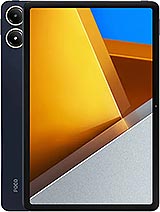
Poco Pad
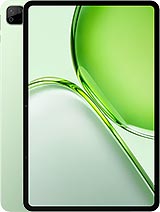
Pad X10 Pro Max