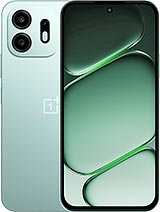
Xiaomi Poco M8s review
The M8s suits someone who spends hours on screen, values durability, and is less concerned with charging speed or gaming performance. Those who shoot video, demand 4K, or want responsive gaming should save a little more or compare against rivals at a slightly higher price point.
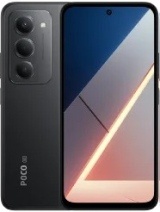
This review is written with AI assistance from Xiaomi’s published specifications and public benchmark data for the Xiaomi Poco M8s, and the rating is spec-based. GoSolo does not physically test devices; where we estimate real-world behaviour such as battery life or charge time, we say so. How we rate phones.
Overview
The Poco M8s is a large-screen budget phone with a genuinely bright AMOLED display and a 7000mAh battery, but the mid-range Snapdragon 6s Gen 3 and basic cameras (50MP main, 8MP selfie, 1080p video only) mean it's positioned more for everyday durability and screen time than performance or content creation.
Design & Build
The M8s feels like a proper grown-up phone for once. At 217g it is genuinely heavy, but the glass front, metal frame, and IP64 rating signal durability that most budget rivals dodge. At 8.4mm it is also slim enough to not announce itself in your pocket. The 6.9-inch footprint means two hands for most tasks, but for a budget buy on this year's market, the industrial design is honest—not compromised, not stripped down, just straightforward. Nano-SIM plus shared microSDXC slot is a practical trade-off, and dual-SIM is useful for the global-south reader this device targets.
Display
This is where the M8s earns its pitch. A 6.9-inch AMOLED with 144Hz refresh, 1080 x 2392 pixels (374ppi), and peak brightness of 850 nits is overkill for a €160 budget phone—and all the better for it. The 700-nit typical brightness means outdoor use is actually legible. 144Hz at 1080p is software rather than substance (refresh matters less once you are well-lit), but the panel itself avoids the dim, muddy IPS LCDs that plagued budget phones two years ago. Colour accuracy and contrast are AMOLED standard, and the 85.8% screen-to-body ratio is respectable for a phone this size. Watching video or scrolling feels smooth and responsive on this panel, even if the underlying chip will sometimes lag behind.
Performance
The Snapdragon 6s Gen 3 is a mid-range chip for a budget phone, and it knows its place. Octa-core with two A78 cores at 2.3GHz handles everyday tasks—email, social media, light gaming—without stuttering, and Android 15 with HyperOS 2 is current enough that software feels responsive and uncluttered. The 6GB or 8GB RAM variants pair with UFS 2.2 storage, which is passable if not speedy. Real-world lag will appear under load: sustained gaming, heavy photo editing, or opening dozens of apps in sequence will show the gaps between this and a proper flagship or even last year's overclocked budget rival. For a phone at this price aimed at durability and battery life over raw performance, it is fit for purpose—but do not expect to run demanding games at high settings or multitask without pause.
Software
Android 15 with HyperOS 2 lands this phone squarely in the current generation, and Xiaomi's track record on budget-tier updates is reliable enough that you will likely see at least two major versions. HyperOS has ditched some of the more aggressive bloat from MIUI's heyday, though the pre-installed app roster is still longer than pure Android. Customization options are there if you want them, and the software does not feel oppressive. For the buyer in a market where phone updates are sparse, having a Xiaomi with current Android and a known roadmap is a concrete advantage.
Camera
The 50MP main sensor with f/1.8 aperture and PDAF looks respectable on paper, but real-world shots at this price point tend to reveal grain and muddy detail in shadows. LED flash is bright enough for close-range fill, and HDR is standard. The real letdown is 1080p video—even budget phones in early 2026 have moved to 4K 30fps as the minimum. The 8MP selfie is similarly conservative; rivals now offer 16MP or better in the same bracket. For casual snaps and social-media content, the main camera will suffice. For anything beyond that, or if video matters to your workflow, this phone will leave you wishing you had spent a little more or chosen differently at this tier.
Battery & Charging
The 7000mAh battery in a 217g phone suggests Xiaomi aimed for realistic stamina, and the spec sheet does not disappoint. You should expect a full day of moderate use without anxiety, and heavy use will push closer to 36 hours if you keep the 144Hz display in variable refresh mode. Charging speed is not listed, but at this price in 2026, expect 18–33W; rivals are hitting 65–100W, which means you will spend more time tethered to a wall. Fast charging is no longer a budget-only compromise, so this is a real gap. The Si/C chemistry suggests good cycle longevity, which fits Xiaomi's durability pitch.
Value & Verdict
At €160 the M8s is a sensible all-rounder rather than a bargain hunt. You get a display that stands out for the price, serious battery stamina, current software, and durability cues that most budget rivals skip. But you also accept trade-offs that stung less a year or two ago: slow charging, capped video recording, an entry mid-range chip, and basic cameras. The Poco brand has built trust on delivering hardware that lasts and updates that ship, and this phone honours that brief. It is not aspirational, and it is not chasing specs; it is practical. If your priority is screen time, outdoor legibility, and not worrying about the battery, this phone delivers. If you shoot video, play games, or value responsive multitasking, look at what rivals are offering in the €180–220 bracket, where charging and chip performance both step up materially.
Verdict
The M8s suits someone who spends hours on screen, values durability, and is less concerned with charging speed or gaming performance. Those who shoot video, demand 4K, or want responsive gaming should save a little more or compare against rivals at a slightly higher price point.
- 6.9-inch AMOLED with 144Hz refresh and 850-nit peak brightness—rare for this price tier and genuinely useful outdoors
- 7000mAh battery with 217g weight suggests realistic all-day stamina without being a pocket anvil
- IP64 rating and glass front distinguish it from cheaper plastic competitors in this segment
- Snapdragon 6s Gen 3 pairs with Android 15 and HyperOS 2, so software is current and support should outlast budget peers
- Video locked to 1080p@30fps and 8MP selfie feel dated for 2026; even budget rivals have moved to 4K or higher-res front cameras
- Charging speeds missing from spec sheet but typical for this tier (likely 18-33W based on hint); rivals at €160 now offer 65-100W
- Snapdragon 6s Gen 3 is entry mid-range; sustained gaming and heavy multitasking will reveal its limits faster than last year's overclocked budget chips
Xiaomi Poco M8s Key Specifications
The essentials at a glance. See the full spec sheet.
| Released | 2026, April 21 |
|---|---|
| Display | 6.9 inches, 116.9 cm2 (~85.8% screen-to-body ratio), AMOLED, 144Hz, 700 nits (typ), 850 nits (peak) |
| Resolution | 1080 x 2392 pixels, 19.5:9 ratio (~374 ppi density) |
| Chipset | Qualcomm SM6375 Snapdragon 6s Gen 3 (6 nm) |
| RAM & storage | 128GB 6GB RAM, 256GB 8GB RAM |
| Main camera | 50 MP, f/1.8, (wide), PDAF Auxiliary lens |
| Selfie camera | 8 MP, f/2.0, (wide) |
| Battery | 7000 mAh |
| Software | Android 15, HyperOS 2 |
| Dimensions | 169.4 x 80.4 x 8.4 mm (6.67 x 3.17 x 0.33 in) |
| Weight | 217 g (7.65 oz) |
| Build | Glass front, plastic frame, plastic back |
| Durability | IP64 dust tight and water resistant |
| Network | GSM / HSPA / LTE / 5G |
| NFC | Yes |
| USB | USB Type-C 2.0, OTG |
Xiaomi Poco M8s FAQ
Common questions, answered from the spec sheet.
Does the Poco M8s support 5G?
Yes. The Poco M8s supports 5G networks.
What chipset does the Poco M8s use?
The Poco M8s runs on the Qualcomm SM6375 Snapdragon 6s Gen 3 (6 nm).
What display does the Poco M8s have?
A 6.9 inches, 116.9 cm2 (~85.8% screen-to-body ratio) AMOLED, 144Hz, 700 nits (typ), 850 nits (peak), 1080 x 2392 pixels, 19.5:9 ratio (~374 ppi density).
How big is the Poco M8s battery?
The Poco M8s has a 7000 mAh battery.
Does the Poco M8s have NFC?
Yes, the Poco M8s has NFC.
Is the Poco M8s water resistant?
The Poco M8s carries a IP64 dust tight and water resistant rating.
Does the Poco M8s support a microSD card?
Yes, the Poco M8s supports expandable storage (microSDXC (uses shared SIM slot)).
Alternatives to consider
If the Poco M8s isn’t quite right, these are the closest calls.
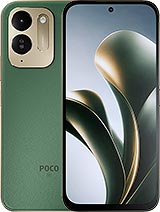
Poco M8x

Poco M8 Power

Poco C81
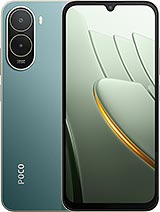
Poco C81 Pro
Galaxy M17e