Xiaomi Poco C81x review
The Poco C81x suits someone who spends long days away from power, values a large screen, and does not play mobile games or edit video on their phone. Anyone wanting snappy performance, better camera quality, or faster charging should stretch to a midrange device or look at last year's budget offerings from rival brands.
This review is written with AI assistance from Xiaomi’s published specifications and public benchmark data for the Xiaomi Poco C81x, and the rating is spec-based. GoSolo does not physically test devices; where we estimate real-world behaviour such as battery life or charge time, we say so. How we rate phones.
Overview
The Poco C81x is a lean budget phone that prioritizes screen size and battery life over raw power, with a 6.88-inch 120Hz display and 5200mAh cell that should stretch to two full days with moderate use. At €90, it feels honest about what it is—a simple, large-screened device for calls, messaging, and streaming—rather than a false bargain trying to do everything.
Design & Build
The Poco C81x is a straightforward slab: 171.8 x 77.8 x 8.3 mm, 193 grams, dual nano-SIM, and dust and splash resistance that covers the basics without fanfare. It sits comfortably at the larger end of what most people can use single-handed, though the 77.8mm width will require a two-grip approach if your palms are smaller. The frame and back feel plastic throughout, which is exactly what you expect at this price, and the weight is light enough not to fatigue over a day of use. Side-mounted fingerprint sensor is reliable and faster than an in-display alternative on budget silicon. No IP67 rating here—just splash and dust tolerance—so treat it like you would any phone under €100: careful around open water.
Display
A 6.88-inch IPS LCD running 720 x 1640 pixels (260 ppi) delivers soft text and muted colors, but that is the familiar compromise of budget phones: go high-resolution and kill battery life on entry-level silicon, or accept lower pixel density and gain hours of runtime. Xiaomi has chosen battery over sharpness, a sound call for a phone this cheap. The 120Hz refresh rate is the standout here—not flagship 144Hz or 165Hz, but a noticeable smoothness over 60Hz when scrolling feeds or playing slower games. 650 nits (HBM) brightness is adequate for indoor use and readable outdoors in moderate sun, though it struggles in direct glare. The 84.1% screen-to-body ratio is honest; bezels are visible but not cumbersome for this class.
Performance
The Unisoc T7250 is an entry-level chipset, and the phone does not pretend otherwise. Apps open smoothly in normal rhythm, social media and email run without lag, and video playback is trouble-free. Demanding games will stutter or reduce detail, so this is not a device for mobile gaming ambitions. The Mali-G57 MP1 GPU is particularly weak by today's standards, and the 3GB RAM means you will see background app reloads if you context-switch too quickly. That said, for the intended user—messaging, calling, light browsing, streaming video—the C81x is steady and unremarkable, which is the right attitude for €90. Do not expect multitasking like a midrange device; expect a phone that does one thing at a time without stumbling.
Software
Android 15 out of the box with a promise of two major OS upgrades takes you to Android 17, a modest but real commitment for this tier. Xiaomi's overlay is present but restrained; MIUI Lite does not cram bloatware or aggressive ads into the experience. Security patches will matter more than major version jumps on a device this affordable, and the predictability here is solid. Updates may stall or arrive slowly—typical for budget releases—but at least the roadmap is transparent.
Camera
A 13MP f/2.2 main camera with LED flash and HDR shoots 1080p video at 30fps. The sensor is basic: photos in good light are serviceable, detail is soft, and shadow recovery is minimal. Night shots will be noisy and dark unless you use the HDR mode and keep your hands steady. The 8MP f/2.0 selfie camera performs similarly—fine for video calls, adequate for selfies at arm's length, unremarkable in low light. Neither lens will impress, but neither will embarrass you if you are sharing casual snapshots. Video stabilization is absent, so handheld clips will be jittery. For a €90 phone, the bar is simply using an actual camera sensor and recording video without crashing; the C81x clears it.
Battery & Charging
The 5200mAh cell is the C81x's strongest card. Paired with the low-power Unisoc chipset and modest display, it will stretch comfortably past 24 hours of moderate mixed use and edge toward 48 hours if you keep brightness low and avoid video streaming. The spec sheet lists 15W charging, which is slow by today's midrange standard but acceptable at this price; expect a full charge in about 1.5 to 2 hours from empty. No fast-charging means you will not top up the phone in five minutes before leaving the house, but the two-day battery life reduces the urgency. This is trade-off by design: simple charger, simple voltage, long life.
Value & Verdict-Context
At €90, the Poco C81x occupies a shrinking niche: the no-frills workhorse phone for people who want reliability and battery life without paying for features they will not use. It is not trying to be a midrange phone at a budget price; it is content to be a budget phone at a budget price. The large screen and day-plus battery life are genuine assets for someone who works long hours away from a charger and values screen real estate for media consumption. The weak chipset, soft camera, and low-resolution display are honest trade-offs at this money, not hidden gotchas. A midrange alternative would charge faster, perform smoother, and shoot better photos—but would cost twice as much and empty its battery by evening.
Verdict
The Poco C81x suits someone who spends long days away from power, values a large screen, and does not play mobile games or edit video on their phone. Anyone wanting snappy performance, better camera quality, or faster charging should stretch to a midrange device or look at last year's budget offerings from rival brands.
- 5200mAh battery easily stretches to two days on moderate use, a rare advantage at this price
- 6.88-inch 120Hz display is large and smooth enough for streaming and social media scrolling
- Dust and splash resistance plus dedicated microSD slot mean the phone can handle real-world wear
- Side-mounted fingerprint sensor is fast and reliable, avoiding the slower in-display options on weak entry chips
- Unisoc T7250 and Mali-G57 GPU struggle with any app beyond light browsing and video playback
- 720p resolution on a 6.88-inch screen looks soft; text and detail suffer compared to rivals at this price
- 15W charging is slow, taking 1.5–2 hours from empty—rivals often offer 30W or more
Xiaomi Poco C81x Key Specifications
The essentials at a glance. See the full spec sheet.
| Released | 2026, April 23 |
|---|---|
| Display | 6.88 inches, 112.4 cm2 (~84.1% screen-to-body ratio), IPS LCD, 120Hz, 650 nits (HBM) |
| Resolution | 720 x 1640 pixels (~260 ppi density) |
| Chipset | Unisoc T7250 (12 nm) |
| RAM & storage | 64GB 3GB RAM |
| Main camera | 13 MP, f/2.2, (wide) |
| Selfie camera | 8 MP, f/2.0, (wide) |
| Battery | 5200 mAh |
| Software | Android 15, up to 2 major Android upgrades |
| Dimensions | 171.8 x 77.8 x 8.3 mm (6.76 x 3.06 x 0.33 in) |
| Weight | 193 g (6.81 oz) |
| Durability | Dust and splash resistant |
| Network | GSM / HSPA / LTE |
| NFC | No |
| USB | USB Type-C 2.0, OTG |
Xiaomi Poco C81x FAQ
Common questions, answered from the spec sheet.
Does the Poco C81x support 5G?
No. The Poco C81x tops out at GSM / HSPA / LTE, without 5G.
What chipset does the Poco C81x use?
The Poco C81x runs on the Unisoc T7250 (12 nm).
What display does the Poco C81x have?
A 6.88 inches, 112.4 cm2 (~84.1% screen-to-body ratio) IPS LCD, 120Hz, 650 nits (HBM), 720 x 1640 pixels (~260 ppi density).
How big is the Poco C81x battery?
The Poco C81x has a 5200 mAh battery.
Does the Poco C81x have NFC?
No, the Poco C81x does not list NFC support.
Is the Poco C81x water resistant?
The Poco C81x carries a Dust and splash resistant rating.
Does the Poco C81x support a microSD card?
Yes, the Poco C81x supports expandable storage (microSDXC (dedicated slot)).
Alternatives to consider
If the Poco C81x isn’t quite right, these are the closest calls.

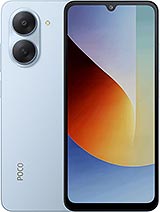
Poco C85x

Poco C81
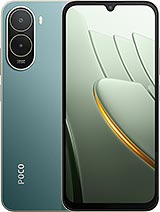
Poco C81 Pro
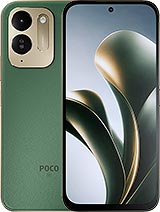
Poco M8x
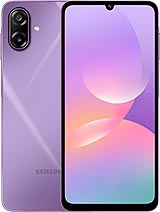
Galaxy M17e