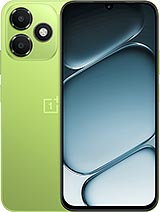
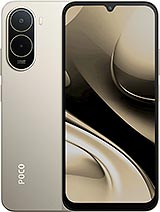
Xiaomi Poco C81 review
The Poco C81 suits someone who prioritizes screen size, battery life, and long-term software support over raw performance or camera quality. Anyone shopping for a phone that can handle gaming, heavy multitasking, or photography should step up to a mid-range device.
This review is written with AI assistance from Xiaomi’s published specifications and public benchmark data for the Xiaomi Poco C81, and the rating is spec-based. GoSolo does not physically test devices; where we estimate real-world behaviour such as battery life or charge time, we say so. How we rate phones.
Overview
The Poco C81 is a budget 6.9-inch phone built for battery life and basic tasks on a tight budget. At around €100, it delivers a generous screen, a large battery, and reasonable longevity through software updates—but the 720p display and entry-level Unisoc chip mean it's not built for anything demanding.
Design & build
The Poco C81 weighs 208g and measures 8.2mm thick—solid and unremarkable, the kind of phone that disappears in your pocket. Glass front, plastic frame and back feels cost-conscious but not flimsy. The side-mounted fingerprint sensor is responsive enough for this price tier. At this size and weight, it's pitched as a device for people who want screen space without too much bulk. It looks fine; it just doesn't stand out.
Display
A 6.9-inch IPS LCD at 120Hz is the main selling point here, and it lands as a genuine treat for a €100 phone. The 800 nits peak brightness is respectable outdoors. But 720 x 1600 pixels on a 6.9-inch canvas means only 254 ppi—text is noticeably soft, and scrolling reveals the limits of the resolution. For scrolling social media and YouTube, it's fine. For reading or any text-heavy app, you will feel the compromise. The 84% screen-to-body ratio is solid for this generation.
Performance
The Unisoc T7250 is an entry-level processor that handles everyday tasks—messaging, calls, light browsing, basic games. It will run Android 16 without constant lag, but do not expect smooth multitasking or anything graphics-intensive. The Mali-G57 MP1 GPU is very modest; gaming on this phone means casual titles at low frame rates, not current releases. For a €100 device this is expected, but it's honest to name it: this phone is not built for demand. 4GB RAM and 64GB storage force you to rely on the microSD slot for any media library.
Software
HyperOS 3 on Android 16 is current, and Xiaomi's promise of 4 major Android upgrades to Android 20 is genuinely useful at this price—it means the phone won't feel abandoned in two years. HyperOS is fairly clean, though budget phones do sometimes accumulate bloat. Updates should arrive on a reasonable schedule, which matters more at €100 than at any other tier.
Camera
The 13MP rear camera is a basic wide lens with LED flash and 1080p video at 30fps. In good light it captures usable snapshots; in dim indoor scenes it will struggle and noise creeps in. The 8MP selfie camera with HDR is adequate for video calls. Do not expect computational photography tricks or zoom quality; this is a point-and-shoot setup. For a €100 budget it is not a disappointment, just unremarkable.
Battery & charging
The 6300 mAh battery is one of the C81's strongest points and should push past a full day of typical use. The spec sheet shows 15W charging, which is conservative by today's standards—expect about two hours to a full charge. That is slow by flagship or even mid-range standards, but the large capacity means you are not desperate to find a charger every afternoon. Battery life is where budget buyers get real value, and this phone delivers it.
Value & verdict-context
At €100, the Poco C81 lands squarely in the market for people who need a phone that works, lasts all day, and does not demand much from them. The 6.9-inch display and 6300 mAh cell are genuine advantages for the price. The 720p resolution and Unisoc T7250 are honest trade-offs, not betrayals. You are buying a functional device, not a compromise-free bargain. Xiaomi's update promise lifts this above typical throwaway budget phones. If you scroll social media, take basic photos, and use messaging apps, this phone will serve you well. If you game, edit video, or demand snappy app performance, look elsewhere or spend more.
Verdict
The Poco C81 suits someone who prioritizes screen size, battery life, and long-term software support over raw performance or camera quality. Anyone shopping for a phone that can handle gaming, heavy multitasking, or photography should step up to a mid-range device.
- 6300 mAh battery with reasonable daily endurance for a budget phone
- Large 6.9-inch display with 120Hz refresh and acceptable brightness for the price
- 4 major Android upgrades promised, genuinely useful for a €100 device
- Dedicated microSD slot for affordable storage expansion
- 720p resolution on a 6.9-inch screen means visible pixelation and soft text
- Unisoc T7250 is entry-level, underpowered for any app that demands real performance
- 13MP main camera is dated and unlikely to impress in low light or detail
Xiaomi Poco C81 Key Specifications
The essentials at a glance. See the full spec sheet.
| Released | 2026, April 23 |
|---|---|
| Display | 6.9 inches, 114.9 cm2 (~84.3% screen-to-body ratio), IPS LCD, 120Hz, 800 nits (peak) |
| Resolution | 720 x 1600 pixels, 20:9 ratio (~254 ppi density) |
| Chipset | Unisoc T7250 (12 nm) |
| RAM & storage | 64GB 4GB RAM |
| Main camera | 13 MP, (wide) |
| Selfie camera | 8 MP, (wide) |
| Battery | 6300 mAh |
| Software | Android 16, up to 4 major Android upgrades, HyperOS 3 |
| Dimensions | 171.6 x 79.5 x 8.2 mm (6.76 x 3.13 x 0.32 in) |
| Weight | 208 g (7.34 oz) |
| Build | Glass front, plastic frame, plastic back |
| Network | GSM / HSPA / LTE |
| NFC | No |
| USB | USB Type-C 2.0 |
Xiaomi Poco C81 FAQ
Common questions, answered from the spec sheet.
Does the Poco C81 support 5G?
No. The Poco C81 tops out at GSM / HSPA / LTE, without 5G.
What chipset does the Poco C81 use?
The Poco C81 runs on the Unisoc T7250 (12 nm).
What display does the Poco C81 have?
A 6.9 inches, 114.9 cm2 (~84.3% screen-to-body ratio) IPS LCD, 120Hz, 800 nits (peak), 720 x 1600 pixels, 20:9 ratio (~254 ppi density).
How big is the Poco C81 battery?
The Poco C81 has a 6300 mAh battery.
Does the Poco C81 have NFC?
No, the Poco C81 does not list NFC support.
Does the Poco C81 support a microSD card?
Yes, the Poco C81 supports expandable storage (microSDXC (dedicated slot)).
Alternatives to consider
If the Poco C81 isn’t quite right, these are the closest calls.
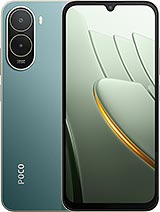
Poco C81 Pro
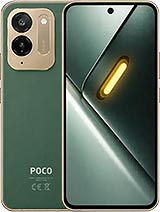
Poco C95 Pro
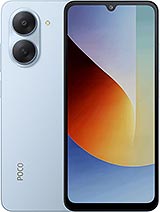
Poco C81x
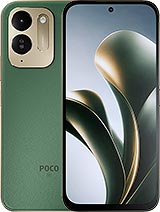
Poco M8x
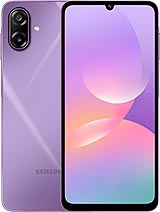
Galaxy M17e