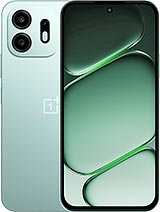
Vivo Y500s review
This phone suits buyers who live offline stretches and value battery life and screen real estate above snappiness and clarity. Anyone who plays games, edits content, or demands a crisp display should cross-shop Xiaomi or Realme alternatives at the same price, which offer better specs and faster chips.
This review is written with AI assistance from Vivo’s published specifications and public benchmark data for the Vivo Y500s, and the rating is spec-based. GoSolo does not physically test devices; where we estimate real-world behaviour such as battery life or charge time, we say so. How we rate phones.
Overview
The Y500s is a straightforward €230 mid-ranger built around a large 7200 mAh battery and a spacious 6.75-inch display, but it's held back by a low-resolution 720p screen and entry-level Snapdragon 4 chip that struggles with heavier tasks. It makes sense if you prioritize longevity and screen real estate over performance, but rivals now offer sharper displays and faster processors at this price.
Design & build
At 219 grams and 8.4 mm thick, the Y500s is solid and handhold-friendly for its 6.75-inch footprint. The glass front, plastic frame, and plastic back are the norm for this price tier; nothing feels flimsy, but there's no sense of substance either. More worthwhile is the IP68/IP69 rating, which means the phone is dust-tight and can withstand immersion to 1.5 meters for 30 minutes, plus high-pressure water jets. For a €230 device, that's a real safeguard if you work outdoors or near water. The dual nano-SIM design is practical, and the 85.3% screen-to-body ratio shows Vivo made use of the frame space.
Display
The 6.75-inch IPS LCD panel runs at 120Hz with respectable peak brightness of 1200 nits, so visibility in sunlight is not a problem. The catch is resolution: 720 x 1570 pixels works out to 256 ppi, which is noticeably soft. At this screen size, text feels grainy and images lack sharpness compared to rivals that now ship 1080p or higher at this price. The 120Hz refresh helps scrolling feel smoother and partly masks the low pixel density, but it does not erase it. For video playback and casual browsing, it is acceptable; for anyone who reads text or zooms into photos regularly, the softness will grate.
Performance
The Snapdragon 4 Gen 2 is a capable chip for light work, but it is entry-level by 2026 standards. Everyday tasks like messaging, social media, and light web use run without hiccups; heavier loads like gaming, video editing, or heavy multitasking will expose its limits. The Adreno 613 GPU is modest, and the 6GB base RAM means slower app switching under load. The 8GB and 12GB variants improve responsiveness, but the chipset remains the real bottleneck. If you intend to use this as a secondary phone or for basic duties, it suffices. If performance is a priority, this is not your device.
Software
Android 16 with OriginOS 6 ships immediately, keeping the Y500s current at launch. OriginOS adds Vivo's customizations and integrations on top of Android; the overlay is lighter than some rivals, but it still adds bloat and occasionally proprietary apps you may not need. Update cadence for mid-range Vivo devices is historically modest, so expect security patches and at most one or two major OS updates before support drops. The core Android experience is stable, but don't assume multi-year feature updates.
Camera
The main camera is a 50MP sensor with f/1.8 aperture, PDAF, and LED flash—solid spec work on paper. In practice, a 50MP sensor on a Snapdragon 4 means limited computational photography and processing power, so real-world results tend to be softer than flagship rivals despite the megapixel count. The f/1.8 aperture and PDAF are genuine pluses for low-light capture, and the LED flash helps in darkness. Video tops out at 1080p30, which is standard for this class but uninspiring. The 8MP selfie camera is basic. For casual snapshots and social media, it works; for anything demanding sharpness or dynamic range, you will notice the limitations.
Battery & charging
The 7200 mAh battery is the Y500s's strongest suit. With moderate use (light browsing, messaging, some video), expect 1.5 to 2 days away from a charger—a real advantage in regions with unreliable power access. The entry-level chipset and lower screen resolution both help stretch battery life further. Charging speed is not specified in the official sheet, but Vivo mid-range practice typically tops out at 33W to 44W; real charge time is likely 90 to 120 minutes to full from empty. By 2026 standards, that is unremarkable—rivals at this price now push 100W or more—but the battery size compensates by making plugging in less frequent a necessity.
Value & verdict-context
At €230, the Y500s targets users in emerging markets and those prioritizing battery endurance and screen size over performance or image quality. The 5G support and IP68/IP69 durability are solid additions for the price. The real tension is the 720p screen on a large panel; it feels stuck between a budget phone and a proper mid-ranger. For comparison, rivals like the Xiaomi Redmi Note series now ship 1080p or higher displays and snappier chipsets in this range, though perhaps with smaller batteries. The Y500s makes sense if your day revolves around messaging, social media, videos, and maps—all tasks the Snapdragon 4 handles fine—and you go days between charges. If you spend time gaming, editing photos, or reading fine text, the display and chipset will both frustrate within weeks.
Verdict
This phone suits buyers who live offline stretches and value battery life and screen real estate above snappiness and clarity. Anyone who plays games, edits content, or demands a crisp display should cross-shop Xiaomi or Realme alternatives at the same price, which offer better specs and faster chips.
- 7200 mAh battery with IP68/IP69 water resistance means all-day runtime even with light to moderate use, and the phone can survive a dip
- 120Hz IPS display with good brightness (1200 nits peak) and minimal bezel, even if the 256 ppi resolution is soft
- Side-mounted fingerprint and 50MP main camera with f/1.8 aperture and PDAF, both solid basics for the price
- 5G support and Android 16 with OriginOS 6 out of the box
- 720p resolution on a 6.75-inch screen feels blurry for scrolling and reading—rivals at this price now offer 1080p or better
- Snapdragon 4 Gen 2 is entry-level and bottlenecks gaming and multitasking; the 6GB RAM base model compounds this lag
- Charging speed not listed; if it matches typical Vivo mid-range practice, expect 33-44W and mediocre real-world times compared to peers
Vivo Y500s Key Specifications
The essentials at a glance. See the full spec sheet.
| Released | 2026, April 27 |
|---|---|
| Display | 6.75 inches, 111.4 cm2 (~85.3% screen-to-body ratio), IPS LCD, 120Hz, 1000 nits (HBM), 1200 nits (peak) |
| Resolution | 720 x 1570 pixels, 19.5:9 ratio (~256 ppi density) |
| Chipset | Qualcomm SM4450 Snapdragon 4 Gen 2 (4 nm) |
| RAM & storage | 256GB 6GB RAM, 256GB 8GB RAM, 256GB 12GB RAM, 512GB 8GB RAM |
| Main camera | 50 MP, f/1.8, (wide), PDAF |
| Selfie camera | 8 MP, f/2.1, (wide) |
| Battery | 7200 mAh |
| Software | Android 16, OriginOS 6 |
| Dimensions | 166.6 x 78.4 x 8.4 mm (6.56 x 3.09 x 0.33 in) |
| Weight | 219 g (7.72 oz) |
| Build | Glass front, plastic frame, plastic back |
| Durability | IP68/IP69 dust tight and water resistant (high pressure water jets; immersible up to 1.5m for 30 min) |
| Network | GSM / HSPA / LTE / 5G |
| NFC | Yes |
| USB | USB Type-C 2.0, OTG |
Vivo Y500s FAQ
Common questions, answered from the spec sheet.
Does the Y500s support 5G?
Yes. The Y500s supports 5G networks.
What chipset does the Y500s use?
The Y500s runs on the Qualcomm SM4450 Snapdragon 4 Gen 2 (4 nm).
What display does the Y500s have?
A 6.75 inches, 111.4 cm2 (~85.3% screen-to-body ratio) IPS LCD, 120Hz, 1000 nits (HBM), 1200 nits (peak), 720 x 1570 pixels, 19.5:9 ratio (~256 ppi density).
How big is the Y500s battery?
The Y500s has a 7200 mAh battery.
Does the Y500s have NFC?
Yes, the Y500s has NFC.
Is the Y500s water resistant?
The Y500s carries a IP68/IP69 dust tight and water resistant (high pressure water jets; immersible up to 1.5m for 30 min) rating.
Does the Y500s support a microSD card?
No, the Y500s does not support expandable storage.
Alternatives to consider
If the Y500s isn’t quite right, these are the closest calls.
Y600i
Y11d
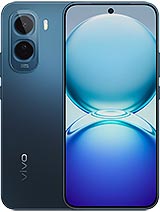
V70 Lite 4G
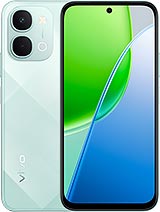
Y31t
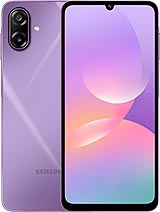
Galaxy M17e