Vivo Y39 5G review
Suits buyers who want a large screen and multi-day battery for everyday messaging, browsing, and light gaming, and live where 5G is available. Pass if photography, gaming, or fast charging matter to you, or if you want a phone that feels premium rather than purely functional.

This review is written with AI assistance from Vivo’s published specifications and public benchmark data for the Vivo Y39 5G, and the rating is spec-based. GoSolo does not physically test devices; where we estimate real-world behaviour such as battery life or charge time, we say so. How we rate phones.
Overview
The Y39 5G is a large-screen, long-battery phone for everyday use and light gaming, with a 120Hz display and 6500mAh cell. It trades raw power and camera finesse for size and endurance at a price that makes sense in the budget 5G space.
Design & build
The Y39 5G weighs 205g and measures 8.3mm thick, which is unremarkable for a large-screen budget phone—not slim, not heavy, just present. The frame is plastic, the back is plastic, the front is glass. It feels utilitarian rather than aspirational, but that is exactly what a ₹22,999 phone should feel like. IP64 rating means it can take splashes and dust to a point; you can use it at the beach or near a sink without panic, but do not test it in a pool. MIL-STD-810H compliance is a nice marketing nod, though real-world durability depends more on how you treat it than on any standard.
Display
The 6.68-inch IPS LCD panel runs at 120Hz and reaches 1000 nits at peak brightness, which is excellent for outdoor visibility in this segment. Scrolling through social media or browsers feels fluid. The problem is resolution: 720 x 1608 pixels at 264ppi means text and fine details are noticeably softer than a 1080p phone of the same size. If you read a lot of text or view detailed images, this will annoy you daily. For video and maps, the difference is less critical, and 120Hz smoothness goes some way to mask it. Schott Glass protection is standard and appreciated, though not a selling point anymore.
Performance
The Snapdragon 4 Gen 2 is an entry-level chip, and Vivo has not pretended otherwise. With 8GB of RAM and UFS 2.2 storage, it handles daily apps—messaging, email, social media, light browsing—without hiccups. PUBG runs on medium settings, Genshin Impact on low. Sustained gaming heats the phone up and drains battery faster, so do not expect console-like sessions. For office work, streaming, and casual gaming, this is competent. For anything more demanding or for a year or two of ownership without feeling slowness creep in, a mid-range chip would have been wiser.
Software
Android 15 with Funtouch 15 overlay. Vivo's skin is lighter than it used to be, but still prone to pre-installed apps and notifications that take effort to disable. Android 15 itself is solid, and 8GB RAM should keep the system responsive for at least two years. Software updates from Vivo have historically been slow in some markets, so do not count on timely security patches or major upgrades.
Camera
The 50MP main sensor sounds respectable on paper; in reality, it is a resolution bump masking a simple setup. The f/1.8 aperture is decent, and PDAF helps focus speed, but low-light output is muddy and color handling is bland. The sensor is small by modern standards, so it struggles to separate subject from background or preserve detail in shadows. Video tops out at 1080p30fps, which is fine for social media but feels dated for a 2025 phone. The 8MP selfie is adequate for video calls and casual snaps. If photos matter to you, rivals at this price offer better optical and computational results.
Battery & charging
The 6500mAh cell delivers around 18–22 hours of mixed use (browsing, messaging, calls, some video) at typical brightness before you need to plug in. Heavy gaming or video playback cuts that to 10–12 hours. For a day-long user who tops up at night, this is excellent peace of mind. The charging speed is not specified in the datasheet—a red flag—and Vivo has a history of conservative charging wattages in the budget range. Assume it is slower than rivals that advertise 65W or 100W; this is a real-world drawback if you routinely forget to charge overnight.
Value & verdict
At ₹22,999, the Y39 5G lands in a crowded segment where 5G is becoming table stakes rather than a feature. The large display, long battery life, and dual SIM appeal to users who prioritize screen size and endurance over snappiness or camera quality. The plastic build and 720p resolution are honest trade-offs to keep the price down. The missing camera prowess and unspecified (likely slow) charging are the real frustrations. For someone who spends hours scrolling social media or video calls, and lives in an area with 5G coverage, this phone makes practical sense. For anyone who demands good photos or fast top-ups, or who upgrades every two years, there are better bets in the same price band.
Verdict
Suits buyers who want a large screen and multi-day battery for everyday messaging, browsing, and light gaming, and live where 5G is available. Pass if photography, gaming, or fast charging matter to you, or if you want a phone that feels premium rather than purely functional.
- Large 6.68-inch 120Hz IPS display stays bright in sunlight at 1000 nits peak and scrolls smoothly despite 720p resolution
- 6500mAh battery delivers about 18–22 hours of mixed use before needing a charge, with minimal daily anxiety
- Snapdragon 4 Gen 2 handles WhatsApp, video streaming, and casual gaming (PUBG medium, Genshin low) without stuttering
- IP64 rating and MIL-STD-810H cert mean splashes and minor drops won't kill it outright
- Camera is basic: 50MP feels padded on the spec sheet, output in low light is muddy, and video maxes out at 1080p30fps
- 720p resolution on a 6.68-inch screen leaves text and images visibly softer than 1080p rivals at this price
- No charging wattage specified in the datasheet, and no charger in box is now standard practice, but the omission from the spec is a red flag for slow charging
Vivo Y39 5G Key Specifications
The essentials at a glance. See the full spec sheet.
| Released | 2025, March 27 |
|---|---|
| Display | 6.68 inches, 107.4 cm2 (~84.9% screen-to-body ratio), IPS LCD, 120Hz, 1000 nits (HBM) |
| Resolution | 720 x 1608 pixels, 20:9 ratio (~264 ppi density) |
| Chipset | Qualcomm SM4450 Snapdragon 4 Gen 2 (4 nm) |
| RAM & storage | 128GB 8GB RAM, 256GB 8GB RAM |
| Main camera | 50 MP, f/1.8, (wide), PDAF Auxiliary lens |
| Selfie camera | 8 MP, f/2.0, (wide) |
| Battery | 6500 mAh |
| Software | Android 15, Funtouch 15 |
| Dimensions | 165.7 x 76.3 x 8.3 mm (6.52 x 3.00 x 0.33 in) |
| Weight | 205 g (7.23 oz) |
| Build | Glass front, plastic frame, plastic back |
| Durability | IP64 dust tight and water resistant (water splashes) MIL-STD-810H compliant* * does not guarantee ruggedness or use in extreme conditions |
| Network | GSM / HSPA / LTE / 5G |
| NFC | No |
| USB | USB Type-C 2.0, OTG |
Vivo Y39 5G FAQ
Common questions, answered from the spec sheet.
Does the Y39 5G support 5G?
Yes. The Y39 5G supports 5G networks.
What chipset does the Y39 5G use?
The Y39 5G runs on the Qualcomm SM4450 Snapdragon 4 Gen 2 (4 nm).
What display does the Y39 5G have?
A 6.68 inches, 107.4 cm2 (~84.9% screen-to-body ratio) IPS LCD, 120Hz, 1000 nits (HBM), 720 x 1608 pixels, 20:9 ratio (~264 ppi density).
How big is the Y39 5G battery?
The Y39 5G has a 6500 mAh battery.
Does the Y39 5G have NFC?
No, the Y39 5G does not list NFC support.
Is the Y39 5G water resistant?
The Y39 5G carries a IP64 dust tight and water resistant (water splashes) MIL-STD-810H compliant* * does not guarantee ruggedness or use in extreme conditions rating.
Does the Y39 5G support a microSD card?
No, the Y39 5G does not support expandable storage.
Alternatives to consider
If the Y39 5G isn’t quite right, these are the closest calls.
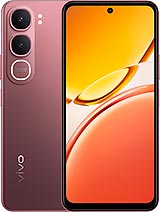
Y31 5G

Y400 5G

Y200 4G
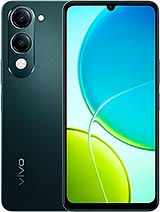
Y19 5G
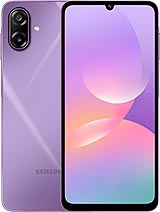
Galaxy M17e