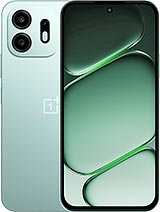
Vivo Y11d review
The Y11d suits someone who prioritizes multi-day battery life and durability over responsiveness and display quality, or who buys it as a secondary device for international travel. Anyone who uses their phone for work, gaming, or reading should look at faster alternatives in the €120-150 range.
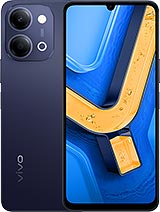
This review is written with AI assistance from Vivo’s published specifications and public benchmark data for the Vivo Y11d, and the rating is spec-based. GoSolo does not physically test devices; where we estimate real-world behaviour such as battery life or charge time, we say so. How we rate phones.
Overview
The Y11d is a chunky entry-level phone with a 120Hz display and 6500mAh battery that lasts days, but the Unisoc T7225 and 260ppi screen hold it back from feeling snappy or sharp. At €100, it undercuts rivals with better performance and clarity, but asks you to accept slowness in exchange for endurance.
Design & build
At 209g and 8.4mm thick, the Y11d is noticeably heavier and chunkier than modern rivals—rivals in the €100-150 range often hit 185-195g. The plastic back and frame are fine for the price, and the glass front won't feel cheap in hand, but the weight is the real story. The 6.74-inch body feels oversized for a budget device, and holding it for an hour leaves your hand fatigued. The glass-and-plastic mix does attract fingerprints. IP65 rating and MIL-STD-810H compliance are genuine selling points at this price, though Vivo's disclaimer wisely notes these do not guarantee ruggedness in extreme conditions. Dual nano-SIM without eSIM is practical if you travel or manage multiple numbers.
Display
The 120Hz IPS LCD is a selling point on paper—you do not see high refresh rates at €100 often—but the 260ppi density at 6.74 inches undermines the experience. Text and icons are noticeably soft; reading small print or comparing this side by side with a 300+ ppi screen makes the difference obvious. The 1200-nit peak brightness (HBM) is adequate for outdoor use, but the 85% screen-to-body ratio shows fat bezels by 2026 standards. The 20:9 ratio is stretched and favors video, though app compatibility is no longer an issue. If you spend hours scrolling, the softness will irritate you; if you mostly watch video or use it casually, you will live with it.
Performance
The Unisoc T7225 is an entry-level chip even for 2026, and it shows. Apps open noticeably slower than phones with mid-range Snapdragon or MediaTek chips at similar or only slightly higher prices. Casual use—calls, texts, social media—feels workable, but switching between apps or opening a browser tab reveals lag. Gaming is a no-go; even light games like Candy Crush stutter. The 4GB RAM base model makes this worse; the optional 6GB helps but does not fix the core limitation. If you work or study and need a responsive phone for emails and documents, this is frustrating. If you want a call-and-chat device that rarely leaves home, the slowness is bearable. The eMMC 5.1 storage is also dated—read and write speeds lag modern standards—so file transfers are slow.
Software
Android 16 with OriginOS 6 is current and will feel modern out of the box. Vivo's overlay is bloat-light compared to others, though some stock apps remain hard to uninstall. The system itself runs as smoothly as the Unisoc allows; the software is not the problem. Update support is a question mark at this price—Vivo does not always commit to years of updates for budget models—so assume two major Android upgrades at best.
Camera
The 50MP main sensor with f/1.8 aperture is a decent spec sheet, but a 50MP single-camera setup at this price is typical, and the 1080p 30fps video ceiling is outdated for 2026. Daylight shots are acceptable and benefit from the wide aperture, but low-light performance is ordinary; don't expect fast focusing or detailed night photos. The 5MP selfie is forgettable but fine for video calls. There is no ultrawide or telephoto, which is standard at this price but worth noting if group shots or zoom matter to you. The auxiliary lens mentioned in the spec is vague—it likely aids autofocus rather than offering a second optical perspective. Video at 1080p 30fps is functional for casual recording but looks dated next to phones offering 4K.
Battery & charging
The 6500mAh cell is the strongest selling point. On moderate use—texting, browsing, one video call—expect two full days; on heavier use, a day and a half. That endurance is rare at €100 and beats rivals that rely on smaller batteries. The spec sheet lists 44W charging, which at this capacity should top the phone in about 50 minutes, but Vivo rarely ships a charger in the box at this price, so factor in the cost of a USB-C adapter if you don't have one.
Value & verdict
At €100, the Y11d undercuts most competitors, and the long battery life and IP65 durability justify it for specific buyers. The trade-off is processing power and screen clarity—two things that matter daily. If your budget genuinely caps at €100 and you want the longest possible runtime without recharging, or if you need a backup rugged phone for travel, the Y11d delivers. But if you can stretch to €120-140, you will find phones with faster chips and sharper screens that feel less like a compromise. The weight is also a real ergonomic issue that €100 does not excuse; lighter, thinner rivals exist at this price. Choose this only if battery longevity and durability are your top priorities.
Verdict
The Y11d suits someone who prioritizes multi-day battery life and durability over responsiveness and display quality, or who buys it as a secondary device for international travel. Anyone who uses their phone for work, gaming, or reading should look at faster alternatives in the €120-150 range.
- 6500mAh battery easily outlasts a full day of moderate use, putting it ahead of most budget rivals
- 120Hz IPS LCD display is a rarity at this price, even if pixel density lags
- Side-mounted fingerprint sensor is reliable and faster than in-display alternatives at this tier
- IP65 rating and MIL-STD-810H compliance offer genuine protection against dust and water splashes
- 260ppi density makes text and icons noticeably soft; text feels blurry compared to 300ppi peers
- Unisoc T7225 is entry-level even for 2026: app load times lag, gaming and multitasking feel sluggish
- 4GB base RAM pairs poorly with the weak chipset; the 6GB option helps but the platform remains a bottleneck
Vivo Y11d Key Specifications
The essentials at a glance. See the full spec sheet.
| Released | 2026, June |
|---|---|
| Display | 6.74 inches, 109.7 cm2 (~85.0% screen-to-body ratio), IPS LCD, 120Hz, 1200 nits (HBM) |
| Resolution | 720 x 1600 pixels, 20:9 ratio (~260 ppi density) |
| Chipset | Unisoc T7225 (12 nm) |
| RAM & storage | 64GB 4GB RAM, 128GB 4GB RAM, 128GB 6GB RAM |
| Main camera | 50 MP, f/1.8, (wide) Auxiliary lens |
| Selfie camera | 5 MP, f/2.2, (wide) |
| Battery | 6500 mAh |
| Software | Android 16, OriginOS 6 |
| Dimensions | 167.4 x 77.1 x 8.4 mm (6.59 x 3.04 x 0.33 in) |
| Weight | 209 g (7.37 oz) |
| Build | Glass front, plastic frame, plastic back |
| Durability | IP65 dust tight and water resistant (low pressure water jets) MIL-STD-810H compliant* * does not guarantee ruggedness or use in extreme conditions |
| Network | GSM / HSPA / LTE |
| NFC | No |
| USB | USB Type-C 2.0, OTG |
Vivo Y11d FAQ
Common questions, answered from the spec sheet.
Does the Y11d support 5G?
No. The Y11d tops out at GSM / HSPA / LTE, without 5G.
What chipset does the Y11d use?
The Y11d runs on the Unisoc T7225 (12 nm).
What display does the Y11d have?
A 6.74 inches, 109.7 cm2 (~85.0% screen-to-body ratio) IPS LCD, 120Hz, 1200 nits (HBM), 720 x 1600 pixels, 20:9 ratio (~260 ppi density).
How big is the Y11d battery?
The Y11d has a 6500 mAh battery.
Does the Y11d have NFC?
No, the Y11d does not list NFC support.
Is the Y11d water resistant?
The Y11d carries a IP65 dust tight and water resistant (low pressure water jets) MIL-STD-810H compliant* * does not guarantee ruggedness or use in extreme conditions rating.
Does the Y11d support a microSD card?
Yes, the Y11d supports expandable storage (microSDXC (dedicated slot)).
Alternatives to consider
If the Y11d isn’t quite right, these are the closest calls.
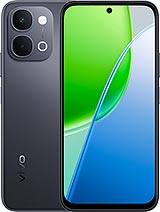
Y31d
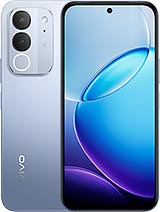
Y600i
V70 Lite 4G
Y31t
Galaxy M17e