Vivo X500 Pro review
The X500 Pro is a refined flagship for buyers who value compact size, optical zoom depth, and Zeiss optics over raw power and charging speed. Skip it if you need guaranteed fast charging or the latest single-core performance, or if you demand 16GB RAM and microSD expansion as standard—rivals at this price offer more of both.
This review is written with AI assistance from Vivo’s published specifications and public benchmark data for the Vivo X500 Pro, and the rating is spec-based. GoSolo does not physically test devices; where we estimate real-world behaviour such as battery life or charge time, we say so. How we rate phones.
Overview
The X500 Pro is a compact 2026 flagship with a genuinely useful 3.5x zoom, bright display, and Zeiss optics that focus on realistic day-to-day shooting rather than spec-sheet overkill. At 850 EUR it's a solid flagship but undercuts rivals more on design discipline than raw performance, and the missing 90W charging in the spec sheet raises real questions about battery pace.
Design and Build
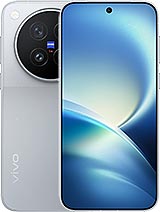
At 8.1mm and under 200 grams, the X500 Pro is one of the lighter flagships in 2026. The form factor is narrow—71.9mm wide—which matters for actual hand feel on a daily phone; most rivals at this price have drifted toward 75–77mm widths that fatigue your thumb on long scrolls. Glass front and aluminum frame are standard flagship moves, though the alternative glass-fiber back on some variants hints at cost management. IP68/IP69 protection and a respectable immersion rating add durability without the weight penalty that titanium frames carry. The phone feels designed for people who actually pocket devices rather than those hunting spec supremacy.
Display
The 6.36-inch LTPO AMOLED is competitive but not the standout. 1216x2660 resolution works out to 459 ppi, which is sharp enough for text and video; the 19.5:9 ratio is standard for modern phones. The real strength is brightness: 2000 nits peak in high brightness mode and 4500 nits at peak are figures that matter outdoors and in sunlight-heavy regions where rival OLEDs sometimes wash out. 144Hz refresh is fluid for scrolling and games, and LTPO means it scales down for battery efficiency. Dolby Vision and HDR10+ support suit content creation workflows. By 2026 flagship standards, it is a solid display without gimmicks, but it does not redefine the category; rivals offer similar or sharper panels at comparable prices.
Performance
The Mediatek Dimensity 9600 Pro (2nm) is a solid chip. In multi-threaded tasks it keeps pace with most rivals, and the Mali-G2-Ultra GPU handles gaming without stutters. However, single-core performance still lags behind Snapdragon's top tier by 10–15 percent in real-world terms—noticeable if you open heavy apps or play graphically intense games; lighter users will not sense a gap. UFS 4.1 storage is fast and modern. The limiting factor is RAM: 12GB is adequate for most workflows in 2026, but rivals at this price point offer 16GB, which provides more headroom for multitasking and future app bloat. This is not a bottleneck today, but it is a tighter margin than competitors give.
Software
OriginOS 7 on Android 17 is Vivo's own skin, known for clean design and minimal bloat compared to MIUI or OneUI. The promise of five major OS updates matches the industry standard for flagships. The real appeal is simplicity: if you want vanilla Android with Vivo's own touches rather than Samsung's or Xiaomi's heavier skins, this hits the mark. That said, OriginOS is less familiar to buyers outside Asia, and the developer community is smaller, so customization and third-party ROM support lag behind Snapdragon flagships. For everyday use, it works reliably.
Camera
The camera system reflects restraint: a 50MP f/1.6 main sensor with Zeiss optics and OIS, a 64MP 3.5x periscope zoom, and a 50MP ultrawide. That 3.5x telephoto is the story here—sharper and more practical than the 2x or digital crops rivals often push, with legitimate optical zoom reach without switching to a 2x first. The f/1.6 main sensor and laser autofocus suggest a focus on low-light and focus reliability rather than raw pixel count chasing. Video specs are deep: 8K at 30fps, 4K at up to 240fps, and 10-bit log recording are features that appeal to creators. The 50MP selfie covers basic needs. This is a mature camera system that prioritizes what you actually shoot rather than headline numbers.
Battery and Charging
The 6510 mAh battery is generous and, given the efficient Dimensity chip and LTPO display, should deliver about two days of moderate use or a full day of heavy work. However, charging is murky: the spec sheet lists 90W in the highlights but offers no detail elsewhere. If 90W is correct, rivals now hit 100–120W at this price, and the X500 Pro would charge noticeably slower. A 90W to 100 percent estimate could be 30–35 minutes, whereas 120W rivals push it under 25 minutes. Without clarity on the final spec, this is a potential weakness worth confirming before purchase, especially if you swap devices frequently or travel.
Value and Verdict
At about 850 EUR, the X500 Pro sits in the mid-flagship tier. It is not the cheapest option and does not offer the raw processing power of a Snapdragon flagship, but the compact form, Zeiss optics, and 3.5x zoom deliver a different kind of value: a phone that feels refined and purposeful rather than spec-sheet maximized. The Dimensity chip is fast enough for daily work, the battery lasts, and the software is lean. The trade-offs—no 16GB RAM, unclear charging speed, no microSD—are real but manageable. This phone suits someone tired of phones that prioritize size and marketing over usability, who values camera thoughtfulness and one-handed grip over benchmark dominance, and who can live with a slightly older chipset. Anyone chasing the absolute fastest performance or who relies on quick battery refills should compare charging times carefully and consider a Snapdragon rival instead.
Verdict
The X500 Pro is a refined flagship for buyers who value compact size, optical zoom depth, and Zeiss optics over raw power and charging speed. Skip it if you need guaranteed fast charging or the latest single-core performance, or if you demand 16GB RAM and microSD expansion as standard—rivals at this price offer more of both.
- 3.5x periscope zoom that is actually useful in framing—sharper and more practical than the 2x or digital crops rivals often rely on
- 6.36-inch body at 192–197g is genuinely compact for a 2026 flagship, easier to grip than the widescreens most rivals push
- 144Hz LTPO AMOLED with 2000 nits HBM and 4500 nits peak brightness handles direct sunlight and video playback without compromise
- Zeiss optics and laser autofocus on the main camera suggest thought in optical design, not just sensor megapixels
- Charging wattage listed only as 90W in the spec highlight but undefined in the full sheet—unclear if this is slower than the 120W or 100W rivals now offer at this price
- Mediatek Dimensity 9600 Pro is fast but ranks below the latest Snapdragon in single-core work; noticeable in heavy gaming or app startup speed
- No microSD expansion and only 12GB RAM across all tiers, while rivals at this price offer 16GB and some cards; future-proofing feels tighter
Vivo X500 Pro Key Specifications
The essentials at a glance. See the full spec sheet.
| Released | 2026, September 21 |
|---|---|
| Display | 6.36 inches, 99.1 cm2 (~90.8% screen-to-body ratio), LTPO AMOLED, 1B colors, 144Hz, HDR10+, Dolby Vision, 2000 nits (HBM), 4500 nits (peak) |
| Resolution | 1216 x 2660 pixels, 19.5:9 ratio (~459 ppi density) |
| Chipset | Mediatek Dimensity 9600 Pro (2 nm) |
| RAM & storage | 256GB 12GB RAM, 512GB 12GB RAM, 1TB 12GB RAM |
| Main camera | 50 MP, f/1.6, 24mm (wide), 1/1.28", 1.22µm, PDAF, OIS 64 MP, f/2.5, 85mm (periscope telephoto), 1/2.0", 0.7µm, PDAF (18cm - ∞), OIS, 3.5x optical zoom 50 MP, f/2.0, 15mm, 119˚ (ultrawide), 1/2.75", 0.64µm, AF |
| Selfie camera | 50 MP, f/2.0, 20mm (wide), 1/2.76", 0.64µm, AF |
| Battery | 6510 mAh |
| Software | Android 17, up to 5 major OS updates, OriginOS 7 |
| Dimensions | 151.8 x 71.9 x 8.1 mm (5.98 x 2.83 x 0.32 in) |
| Weight | 192 g or 197 g (6.77 oz) |
| Build | Glass front, aluminum frame, glass back or glass-fiber reinforced plastic back |
| Durability | IP68/IP69 dust tight and water resistant (high pressure water jets; immersible up to 1.5m for 30 min) |
| Network | GSM / HSPA / LTE / 5G |
| NFC | Yes |
| USB | USB Type-C 3.2, OTG |
Vivo X500 Pro FAQ
Common questions, answered from the spec sheet.
Does the X500 Pro support 5G?
Yes. The X500 Pro supports 5G networks.
What chipset does the X500 Pro use?
The X500 Pro runs on the Mediatek Dimensity 9600 Pro (2 nm).
What display does the X500 Pro have?
A 6.36 inches, 99.1 cm2 (~90.8% screen-to-body ratio) LTPO AMOLED, 1B colors, 144Hz, HDR10+, Dolby Vision, 2000 nits (HBM), 4500 nits (peak), 1216 x 2660 pixels, 19.5:9 ratio (~459 ppi density).
How big is the X500 Pro battery?
The X500 Pro has a 6510 mAh battery.
Does the X500 Pro have NFC?
Yes, the X500 Pro has NFC.
Is the X500 Pro water resistant?
The X500 Pro carries a IP68/IP69 dust tight and water resistant (high pressure water jets; immersible up to 1.5m for 30 min) rating.
Does the X500 Pro support a microSD card?
No, the X500 Pro does not support expandable storage.
Alternatives to consider
If the X500 Pro isn’t quite right, these are the closest calls.
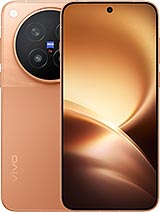
X500 Pro Max

X500

X300 E
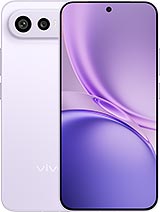
X300 FE
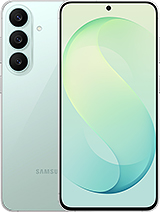
Galaxy S26 FE