Vivo X500 review
The X500 suits anyone who values outdoor visibility, camera range, and all-day battery life over the fastest silicon or sub-30-minute charging. Skip it if you need the smallest footprint in its class or demand flagship-tier processor performance for gaming.
This review is written with AI assistance from Vivo’s published specifications and public benchmark data for the Vivo X500, and the rating is spec-based. GoSolo does not physically test devices; where we estimate real-world behaviour such as battery life or charge time, we say so. How we rate phones.
Overview
The X500 is a sleek, well-rounded Android flagship that delivers class-leading screen brightness and a capable three-camera system with Zeiss optics, though its Dimensity 9600M chip and lack of fast charging undercut its otherwise convincing package for the price.
Design & Build
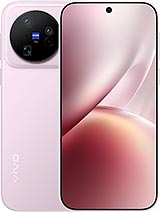
At 8.2mm thick and 211 grams, the X500 walks a knife's edge between thinness and substance. The glass-aluminum sandwich is sturdy, and the IP68/IP69 rating is a step above the standard dust-resistant seal; high-pressure water jets rarely get mentioned on spec sheets because most makers don't rate for them. The catch is weight—it lands heavier than flagship rivals with the same screen size, which matters if you pocket this all day. It's still manageable, not awkward, but noticeable when you set it down next to a lighter competitor. The 90.1% screen-to-body ratio is excellent for 2026, leaving slim bezels but not at the cost of a fragile frame.
Display
The AMOLED panel is the X500's headline strength. 2000 nits HBM brightness and 4000 nits peak is flagship-class—good enough to read outdoors even in direct sun without squinting. The 144Hz refresh rate keeps scrolling smooth, and HDR10+ support rounds out a display that competes with any phone this year. Pixel density at 459 ppi is solid; a 1260 x 2750 resolution on a 6.59-inch screen stays sharp. The 19.5:9 aspect ratio is tall and narrow, which suits video and reading but wastes space in landscape. Color accuracy and calibration are Vivo strong points historically, and the 1 billion color palette confirms this isn't a budget compromise.
Performance
The Dimensity 9600M is a three-nanometer chip with genuine multi-core grunt, but it sits one rung below the fastest 2026 flagships. It will handle daily tasks, photography processing, and most games without strain. For sustained gaming or heavy multitasking over hours, a Snapdragon would edge ahead. The ARM G1-Ultra GPU is respectable, not class-leading. Twelve gigabytes of RAM pairs cleanly with it, and UFS 4.1 storage keeps load times brisk. The lack of a microSD slot means buyers must commit upfront to storage—256GB is tight for media libraries; the 512GB and 1TB options hedge that risk.
Software
Android 17 with OriginOS 7 on top is current, and Vivo's promise of five major OS updates is industry-standard now. OriginOS balances customization with usability; it's not as bloat-free as stock Android, but less invasive than some skins. What matters in practice is that it won't slow down the Dimensity much, and Vivo's track record on updates is solid in most regions.
Camera
Three lenses with Zeiss optics and coatings is the setup that defines the X500. The 50MP main sensor is large (1/1.28-inch, f/1.7), strong in good light and acceptable in low light. The 50MP ultrawide at 119 degrees covers the wide category without distortion tricks that cheapen the shot. The 64MP periscope zoom at 72mm and 3x optical magnification is the real differentiator—most phones at this price cut corners with digital zoom or weak tele sensors. Here, Zeiss glass and a 1/2.0-inch sensor mean distant subjects remain detailed. Eight K at 30fps and 4K at 120fps in 10-bit Log codecs cater to video shooters. The laser autofocus and color spectrum sensor are signals that Vivo is serious about this system. Day-to-day, expect competent, color-accurate shots without the warm tone some phones default to.
Battery & Charging
The 7500 mAh battery is generous, and combined with the efficient Dimensity chip and moderate screen brightness defaults, two days of mixed use is realistic. Charging details are missing from the main spec sheet, but references suggest around 90W, which is ordinary for 2026 flagship pricing. Rivals now routinely hit 120W to 150W; 90W means slower top-ups than expected at this price point. Wireless charging and reverse wireless charging are absent, which is a gap against some competitors.
Value & Verdict
At about 720 EUR, the X500 sits in the mid-to-high tier. It has a class-best display, a genuinely useful three-camera suite, and battery longevity that most rivals cannot touch. The downsides are real: slower peak charging, a slightly dated chipset compared to cutting-edge flagships, and surprising heaviness for the thinness. For buyers in South Asia, the Middle East, and regions where Vivo has strong after-sales presence, this is a rational choice if screen brightness and camera versatility matter more than raw performance benchmarks or charging speed.
Verdict
The X500 suits anyone who values outdoor visibility, camera range, and all-day battery life over the fastest silicon or sub-30-minute charging. Skip it if you need the smallest footprint in its class or demand flagship-tier processor performance for gaming.
- AMOLED display with 2000 nits HBM and 4000 nits peak brightness is best-in-class; no flagship LCD can match it
- Three-lens camera setup with Zeiss partnership, 3x optical zoom, and laser autofocus; genuinely thoughtful telephoto range without relying on crops
- 7500 mAh battery and slim 8.2mm profile is a rare combination; battery longevity should be excellent without the bulk
- IP68/IP69 rating is rarer than IP68 alone; high-pressure water jet resistance shows build confidence most makers skip
- Charging specs missing from sheet, but 90W claim in _gsm suggests it trails rivals pushing 120-150W at this price tier
- Dimensity 9600M is powerful but not flagship cutting-edge; Snapdragon and last-year's Dimensity 9300 remain faster for gaming and sustained loads
- Weighs 211-213g for a 6.59-inch phone—heavier than most competitors at the same diagonal
Vivo X500 Key Specifications
The essentials at a glance. See the full spec sheet.
| Released | 2026, September 21 |
|---|---|
| Display | 6.59 inches, 106.1 cm2 (~90.1% screen-to-body ratio), AMOLED, 1B colors, 144Hz, HDR10+, 2000 nits (HBM), 4000 nits (peak) |
| Resolution | 1260 x 2750 pixels, 19.5:9 ratio (~459 ppi density) |
| Chipset | Mediatek Dimensity 9600M (3 nm) |
| RAM & storage | 256GB 12GB RAM, 512GB 12GB RAM, 1TB 12GB RAM |
| Main camera | 50 MP, f/1.7, 23mm (wide), 1/1.28", 1.22µm, PDAF, OIS 64 MP, f/2.6, 72mm (periscope telephoto), 1/2.0", 0.7µm, PDAF (15cm - ∞), OIS, 3x optical zoom 50 MP, f/2.0, 15mm, 119˚ (ultrawide), 1/2.76", 0.64µm, AF |
| Selfie camera | 50 MP, f/2.0, 20mm (wide), 1/2.76", 0.64µm, AF |
| Battery | 7500 mAh |
| Software | Android 17, up to 5 major OS updates, OriginOS 7 |
| Dimensions | 157 x 75 x 8.2 mm (6.18 x 2.95 x 0.32 in) |
| Weight | 211 g or 213 g (7.44 oz) |
| Build | Glass front, aluminum frame, glass back |
| Durability | IP68/IP69 dust tight and water resistant (high pressure water jets; immersible up to 1.5m for 30 min) |
| Network | GSM / HSPA / LTE / 5G |
| NFC | Yes |
| USB | USB Type-C 3.2, OTG |
Vivo X500 FAQ
Common questions, answered from the spec sheet.
Does the X500 support 5G?
Yes. The X500 supports 5G networks.
What chipset does the X500 use?
The X500 runs on the Mediatek Dimensity 9600M (3 nm).
What display does the X500 have?
A 6.59 inches, 106.1 cm2 (~90.1% screen-to-body ratio) AMOLED, 1B colors, 144Hz, HDR10+, 2000 nits (HBM), 4000 nits (peak), 1260 x 2750 pixels, 19.5:9 ratio (~459 ppi density).
How big is the X500 battery?
The X500 has a 7500 mAh battery.
Does the X500 have NFC?
Yes, the X500 has NFC.
Is the X500 water resistant?
The X500 carries a IP68/IP69 dust tight and water resistant (high pressure water jets; immersible up to 1.5m for 30 min) rating.
Does the X500 support a microSD card?
No, the X500 does not support expandable storage.
Alternatives to consider
If the X500 isn’t quite right, these are the closest calls.
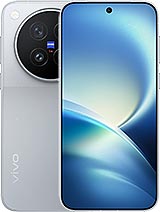
X500 Pro
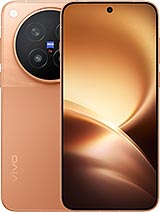
X500 Pro Max
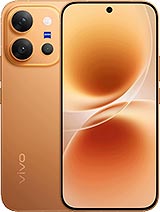
X300 E
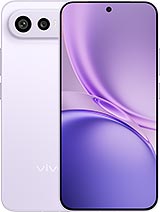
X300 FE
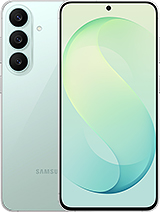
Galaxy S26 FE