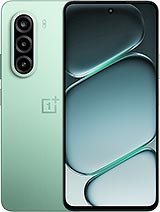
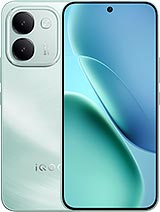
Vivo iQOO Z11S review
The iQOO Z11S suits buyers who value battery life and display quality enough to tolerate the weight, and who don't need ultrawide photos or rapid charging. Those chasing thinness, versatile cameras, or fast refills should cross-shop lighter rivals or phones with more aggressive charging specs.
This review is written with AI assistance from Vivo’s published specifications and public benchmark data for the Vivo iQOO Z11S, and the rating is spec-based. GoSolo does not physically test devices; where we estimate real-world behaviour such as battery life or charge time, we say so. How we rate phones.
Overview
The iQOO Z11S is a hefty but capable mid-range phone built around a 10,000 mAh battery and a bright AMOLED screen that actually justify the bulk. The Dimensity 7500 and camera system are solid day-to-day, but the 225g weight and plastic back feel more like a compromise than a feature for this price.
Design & build
At 225g and 8.6mm thick, the iQOO Z11S sits at the heavier end for its class, but the weight distribution is neutral and the phone doesn't feel cheap. The unibody plastic back is standard at this price, though it will attract fingerprints. IP68/IP69 waterproofing to 1.5m is reassuring—far more useful in the field than a slightly lighter chassis. The 6.83" display drives the overall size; it's not compact, but the 89.8% screen-to-body ratio means minimal bezels. Handling is stable, and the optical under-display fingerprint sensor works reliably, though it can be slow to wake on the first unlock of the day.
Display
The 6.83" AMOLED screen is the phone's strongest asset. 1260 x 2800 pixels yields 450 ppi—sharp enough that individual pixels are invisible at normal viewing distance. The 144Hz refresh makes scrolling silky, and the 2160Hz PWM dimming matters for flicker-sensitive eyes; brightness maxes at 1000 nits typical and 2000 nits in high-brightness mode, which is genuinely bright outdoors. Colors are vibrant without oversaturation. For the price, this screen outpaces LCD offerings and even rivals higher-spec phones in the midrange. If display quality matters to you, this justifies the weight.
Performance
The Mediatek Dimensity 7500 is a capable midrange chip that handles multitasking, streaming, and casual games without lag. App launches snap, scrolling is smooth, and heavy apps like maps or social networks don't stutter. Gaming at high settings will drop frames in demanding titles, but the phone won't feel slow in daily use—this is the level where the chip performs best. The Mali-G625 GPU is not a graphics powerhouse, but sufficient for the market this phone targets. 8GB of RAM is adequate; the 12GB option adds headroom but is not necessary for typical use. Storage is fast (UFS 3.1), and load times are brisk.
Software
Android 16 with OriginOS 6 is Vivo's interface layer. OriginOS is visually clean and responsive, though it bundles more pre-installed apps than stock Android. Customization is granular—widgets, app icons, and themes can be tweaked extensively. Updates should flow regularly given this is a 2026 release, though Vivo's track record of long-term support in lower tiers varies by region. No major bloat shows up in the spec, and the interface doesn't feel dated.
Camera
A single 50MP f/1.8 wide camera with PDAF and LED flash is the entire rear setup—no ultrawide, no telephoto, no macro mode. In good light, the sensor captures detail and color accurately, and the f/1.8 aperture performs well indoors. However, without a second lens, cropping for zoom results in soft, noisy images. The 8MP selfie camera is basic but serviceable for video calls. Video stabilization via gyro-EIS is present but not as refined as optical stabilization. For casual users and social media posting, the main camera is enough; anyone who shoots ultrawide landscapes or zooms regularly will feel the absence immediately.
Battery & charging
The 10,000 mAh battery is the phone's headline feature. In practice, you'll easily see two days of moderate use, and power users will stretch to a full day plus evening without looking for an outlet. That longevity is tangible and valuable for travel or fieldwork. The catch is 44W charging, which takes about 70 minutes for a full charge—pedestrian for 2026, when rivals at similar prices offer 100W+. If all-day battery life matters more to you than quick top-ups, this trade-off is worth it. Wireless charging is absent, a common omission at this price.
Value & verdict-context
At roughly €230, the iQOO Z11S competes with solid midrange phones from Xiaomi, Motorola, and Realme. The standout case is battery longevity paired with a genuinely nice AMOLED screen—that's a valid reason to choose it over cheaper LCD rivals. The weight and slow charging are real friction points, and the single camera feels limiting compared to competition that typically includes at least an ultrawide. The Dimensity 7500 is no longer a flagship chip, but it's sufficient and responsive for the work. This is a phone that prioritizes endurance and display quality over thinness or charging speed—not a compromise, but a deliberate choice that doesn't suit everyone.
Verdict
The iQOO Z11S suits buyers who value battery life and display quality enough to tolerate the weight, and who don't need ultrawide photos or rapid charging. Those chasing thinness, versatile cameras, or fast refills should cross-shop lighter rivals or phones with more aggressive charging specs.
- 10,000 mAh battery with IP68/IP69 waterproofing gives genuine peace of mind for work and travel in rough conditions
- 6.83" AMOLED with 144Hz refresh, 2000 nits peak brightness, and 450 ppi density is genuinely sharp and vibrant—noticeably better than LCD rivals
- Dimensity 7500 handles everyday apps, streaming, and casual gaming without stuttering; real-world performance is snappy despite midrange positioning
- Thin 8.6 mm profile for the battery size and IP68 rating is unusual engineering; the phone doesn't feel bloated compared to chunky competitors
- 225g is genuinely heavy—noticeably so after an hour of daily use, and rivals with similar batteries weigh 10–15g less
- Single 50MP camera with no ultrawide or telephoto; versatility is basic, and zooming is digital only
- 44W charging on a 10,000 mAh battery means about 70 minutes to full, which is slow by 2026 standards for this class
Vivo iQOO Z11S Key Specifications
The essentials at a glance. See the full spec sheet.
| Released | 2026, August 18 |
|---|---|
| Display | 6.83 inches, 112.6 cm2 (~89.8% screen-to-body ratio), AMOLED, 1B colors, 144Hz, 2160Hz PWM, HDR, 1000 nits, 2000 nits (HBM) |
| Resolution | 1260 x 2800 pixels, 20:9 ratio (~450 ppi density) |
| Chipset | Mediatek Dimensity 7500 (4 nm) |
| RAM & storage | 128GB 8GB RAM, 256GB 8GB RAM, 256GB 12GB RAM, 512GB 12GB RAM |
| Main camera | 50 MP, f/1.8, (wide), PDAF |
| Selfie camera | 8 MP, f/2.1, (wide) |
| Battery | 10000 mAh |
| Software | Android 16, OriginOS 6 |
| Dimensions | 163.9 x 76.5 x 8.6 mm (6.45 x 3.01 x 0.34 in) |
| Weight | 225 g (7.94 oz) |
| Durability | IP68/IP69 dust tight and water resistant (high pressure water jets; immersible up to 1.5m for 30 min) |
| Network | GSM / HSPA / LTE / 5G |
| NFC | Yes |
| USB | USB Type-C 2.0, OTG |
Vivo iQOO Z11S FAQ
Common questions, answered from the spec sheet.
Does the iQOO Z11S support 5G?
Yes. The iQOO Z11S supports 5G networks.
What chipset does the iQOO Z11S use?
The iQOO Z11S runs on the Mediatek Dimensity 7500 (4 nm).
What display does the iQOO Z11S have?
A 6.83 inches, 112.6 cm2 (~89.8% screen-to-body ratio) AMOLED, 1B colors, 144Hz, 2160Hz PWM, HDR, 1000 nits, 2000 nits (HBM), 1260 x 2800 pixels, 20:9 ratio (~450 ppi density).
How big is the iQOO Z11S battery?
The iQOO Z11S has a 10000 mAh battery.
Does the iQOO Z11S have NFC?
Yes, the iQOO Z11S has NFC.
Is the iQOO Z11S water resistant?
The iQOO Z11S carries a IP68/IP69 dust tight and water resistant (high pressure water jets; immersible up to 1.5m for 30 min) rating.
Does the iQOO Z11S support a microSD card?
No, the iQOO Z11S does not support expandable storage.
Alternatives to consider
If the iQOO Z11S isn’t quite right, these are the closest calls.
iQOO Z11x
V80 Lite (IN/PK)
T5 4G
S2
Galaxy A37