Vivo IQOO Pad5c review
The Pad5c suits writers, students, and professionals who want a true portable tablet for daily carry and productivity, provided you do not mind brief sessions between charges and have modest camera expectations. If you need a tablet to live in your bag and run for a full workday unplugged, or if video calls and scanning are core tasks, a heavier device with a larger battery and better optics is the safer choice."
This review is written with AI assistance from Vivo’s published specifications and public benchmark data for the Vivo IQOO Pad5c, and the rating is spec-based. GoSolo does not physically test devices; where we estimate real-world behaviour such as battery life or charge time, we say so. How we rate phones.
Overview
The Vivo IQOO Pad5c is a lean, light mid-range tablet built on flagship hardware that trades battery endurance and charging speed for portability and a sharp 144Hz display. It's a solid device for work and content, but the weak cameras and modest battery life for its size hold it back from being the all-rounder that price suggests.
Design & Build
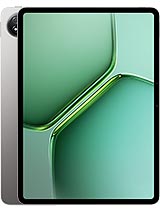
At 6.6 mm thick and 584 g, this is one of the thinnest and lightest 12-inch tablets you can buy, a trait that immediately sets it apart in a market where portability is often sacrificed for battery. The compact frame makes one-handed browsing and note-taking genuinely feasible, something most 12-inch devices fumble. The trade-off is obvious: that slim waistline leaves little room for a large battery, and weight savings come at the cost of endurance. Build quality is not detailed in the specs, but the industrial design philosophy is clear—this is a device you carry, not tether to power. Stylus support is listed, which suggests a productivity angle, though the spec sheet does not confirm whether the stylus is included or how pressure-sensitive it is.
Display
The 12.1-inch IPS LCD punches well above its price at 1968 × 2800 pixels (283 ppi), making text and photos genuinely sharp. The 144Hz refresh rate is overkill for most tablet work but does smooth scrolling and content consumption, and it's unusual to see at this price point. Peak brightness of 900 nits is solid for indoor use and outdoor readability in daylight. IPS color accuracy is neutral—not as vibrant as OLED, but reliable and easy on the eyes for long reading sessions. HDR10 support is a nice touch, though the matte finish typical of this class may soften the effect.
Performance
The Snapdragon 8s Gen 3 is a high-end chip, near-flagship caliber, and on a tablet it feels overprovisioned in the best way. Multitasking, split-screen apps, and productivity suites run without hiccup, and you are unlikely to hit a performance ceiling for several years. GPU performance via the Adreno 735 is robust enough for light gaming and video editing, though a tablet at this price is unlikely to be your primary gaming device. RAM starts at 8 GB, which is adequate for most users; the 12 GB option adds some breathing room for power users or those who keep dozens of apps in memory. Storage tops out at 256 GB with no microSD expansion, so choose wisely at purchase.
Software
Android 16 with OriginOS 6 HD is Vivo's customized skin, tuned here for tablet-style workflows. The "HD" variant suggests layout optimizations for larger screens—navigation drawers, app windows, and scaling should feel intentional rather than scaled-up phone UI. OriginOS has a reputation for being lighter than Samsung's One UI but less transparent than pure Android. Battery optimization is likely aggressive, which may help offset the modest cell capacity. Without hands-on time, it's hard to judge bloatware load, but Vivo's tablet software tends to be reasonably clean.
Camera
The 8 MP rear and 5 MP front cameras are the device's clearest weakness. At this resolution and likely small sensor size, you will see noise, soft detail, and limited dynamic range. There is no zoom, no ultrawide, no macro—just basic capture. If you plan to scan documents, photograph whiteboards, or use the tablet for video calls with professional expectations, you will be disappointed. For casual snapshots or reference photos, acceptable. For anything more serious, this tablet is not the tool.
Battery & Charging
The 10,000 mAh cell is a paradox. On a 584 g device as thin and efficient as this, it sounds healthy, but tablets demand more sustained power than phones. In real use, expect around 8–10 hours with the 144Hz screen on and moderate workload. Power-off the high refresh rate and you might stretch to 12 hours, but that erases one of the device's key differentiators. Charging speed is not published; Vivo's mid-range tablets historically charge at 20–30W, which means roughly 2–3 hours from flat. Not fast by modern standards, even for tablets. Fast-charging is a weak point in Vivo's tablet lineup at this tier, and this device appears to be no exception.
Value & Verdict-Context
At around €350, the Pad5c occupies an odd middle ground. The hardware is genuinely compelling for the price: a high-end chipset, a sharp 144Hz display, and a device light enough to use all day. But it is let down by a battery that demands careful management, cameras that feel like afterthoughts, and charging that seems glacial by current standards. For desk-bound work, note-taking, reading, and light content creation, this is solid. For anyone expecting an all-rounder—scanning, video conferencing, media consumption all day without tethering to a charger—look toward a heavier rival with a larger battery and faster charging. The lightweight design is a blessing if you value portability, and a curse if you value endurance.
Verdict
The Pad5c suits writers, students, and professionals who want a true portable tablet for daily carry and productivity, provided you do not mind brief sessions between charges and have modest camera expectations. If you need a tablet to live in your bag and run for a full workday unplugged, or if video calls and scanning are core tasks, a heavier device with a larger battery and better optics is the safer choice."
- 144Hz IPS LCD display at 283 ppi with 900 nits peak brightness, sharp and fluid for a sub-€400 tablet
- Snapdragon 8s Gen 3 handles multitasking and productivity apps with room to spare; overkill for a tablet this size, but future-proof for several years
- Exceptional thinness at 6.6 mm and light weight (584 g) make it genuinely portable for a 12.1-inch device, easier to hold one-handed than rivals
- Stylus support and OriginOS optimizations aimed at productivity without bloat
- 10,000 mAh battery likely delivers 8–10 hours of real use with screen on; adequate but not exceptional for a tablet and notably behind what the weight suggests you'd get
- 8 MP rear camera and 5 MP front are purely functional—grainy, soft, no zoom, no ultrawide—a real step back if you use a tablet for document scanning or video calls
- Charging speed not stated but likely modest (Vivo's mid-range tablets often cap at 20–30W); no fast-charge story to offset the battery's otherwise long recharge time
Vivo IQOO Pad5c Key Specifications
The essentials at a glance. See the full spec sheet.
| Released | 2026, June 01 |
|---|---|
| Display | 12.1 inches, 444.4 cm2 (~86.9% screen-to-body ratio), IPS LCD, 1B colors, 144Hz, HDR10, 900 nits (peak) |
| Resolution | 1968 x 2800 pixels (~283 ppi density) |
| Chipset | Qualcomm SM8635 Snapdragon 8s Gen 3 (4 nm) |
| RAM & storage | 128GB 8GB RAM, 256GB 8GB RAM, 256GB 12GB RAM |
| Main camera | 8 MP |
| Selfie camera | 5 MP |
| Battery | 10000 mAh |
| Software | Android 16, OriginOS 6 HD |
| Dimensions | 266.4 x 192 x 6.6 mm (10.49 x 7.56 x 0.26 in) |
| Weight | 584 g (1.29 lb) |
| Durability | Stylus support |
| Network | No cellular connectivity |
| NFC | No |
| USB | USB Type-C 3.2, OTG, magnetic connector |
Vivo IQOO Pad5c FAQ
Common questions, answered from the spec sheet.
Does the IQOO Pad5c support 5G?
No. The IQOO Pad5c tops out at No cellular connectivity, without 5G.
What chipset does the IQOO Pad5c use?
The IQOO Pad5c runs on the Qualcomm SM8635 Snapdragon 8s Gen 3 (4 nm).
What display does the IQOO Pad5c have?
A 12.1 inches, 444.4 cm2 (~86.9% screen-to-body ratio) IPS LCD, 1B colors, 144Hz, HDR10, 900 nits (peak), 1968 x 2800 pixels (~283 ppi density).
How big is the IQOO Pad5c battery?
The IQOO Pad5c has a 10000 mAh battery.
Does the IQOO Pad5c have NFC?
No, the IQOO Pad5c does not list NFC support.
Is the IQOO Pad5c water resistant?
The IQOO Pad5c carries a Stylus support rating.
Does the IQOO Pad5c support a microSD card?
No, the IQOO Pad5c does not support expandable storage.
Alternatives to consider
If the IQOO Pad5c isn’t quite right, these are the closest calls.
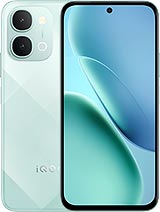
iQOO Z11x
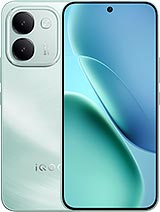
iQOO Z11S
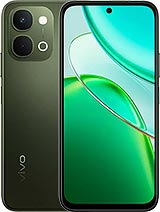
T5x
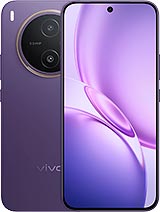
Y600 Pro
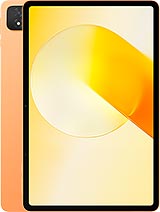
MagicPad 4 12.1