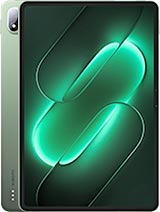
Vivo iQOO Pad Ultra review
The iQOO Pad Ultra is built for gamers and video watchers who prize the display and performance and do not mind anchoring themselves to Wi-Fi. Everyone else—anyone who values cameras, connectivity, or all-around balance—should explore iPad Air or other Android flagships that do not cut as many corners.
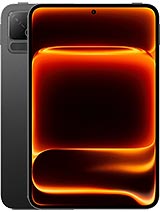
This review is written with AI assistance from Vivo’s published specifications and public benchmark data for the Vivo iQOO Pad Ultra, and the rating is spec-based. GoSolo does not physically test devices; where we estimate real-world behaviour such as battery life or charge time, we say so. How we rate phones.
Overview
The iQOO Pad Ultra is a flagship tablet built around a Snapdragon 8 Elite Extreme Gen 6 and a gorgeous 165Hz AMOLED display, but it is hobbled by useless cameras, no cellular option, and unclear charging speed. For content consumption and gaming at this price, it is solid—if you are willing to overlook what feels like half-finished hardware.
Design & Build
The iQOO Pad Ultra is almost aggressively thin at 5.7mm—thinner than most flagship phones—and at 298g it sits comfortably in one hand for extended viewing. The all-glass front and aluminum frame feel sturdy, and the built-in bidirectional cooling fan is a practical touch that sets it apart from rivals. The weight and thickness alone make it the lightest and slimmest large tablet in its class, a genuine achievement. But the thinness comes with trade-offs: there is no room for cellular hardware, and the minimal bezels leave little grip, so a case is almost mandatory. For a device at 860 EUR you'd expect more finish options or color variety than just black and silver.
Display
The 8.8-inch AMOLED is where this tablet justifies its price. It runs at 165Hz, a rarity outside gaming phones, and handles HDR10+ with genuine punch—1600 nits for sustained brightness and 4500 nits peak output. At 309 ppi the pixel density is not cutting edge (iPad Air hits similar or higher), but the color accuracy, contrast, and responsiveness are flagship material. For streaming video, reading comics, or mobile gaming, this screen sets a high bar. The 90.1% screen-to-body ratio is also honest engineering, not inflated marketing.
Performance
The Snapdragon 8 Elite Extreme Gen 6 is the fastest mobile silicon available in 2026, and this tablet puts it to work without restraint. The built-in cooling fan means sustained gaming or video rendering will not trigger thermal throttling—a legitimate edge over passively cooled tablets. With 16GB RAM and UFS 4.1 storage, app switching and file transfers are quick. For gaming and productivity apps, you will not feel any lag. Whether you need this much horsepower for a tablet is another question; most users will see no day-to-day difference from a flagship Snapdragon at a lower tier, but if you stream high-bitrate gameplay or run graphics-heavy applications, the sustained thermal performance matters.
Software
Android 17 with OriginOS 7 HD is Vivo's tablet flavor. OriginOS tends to be heavy-handed with its own apps and services, though it has improved in recent years. On a tablet you will notice the bloat more than on a phone, and the likelihood of fast updates is lower than with stock Android or iPadOS. There is no information yet on how long Vivo will support this device, which matters more for a tablet than a phone since you might hold it longer.
Camera
The 13MP rear camera and 8MP front camera are the weakest link on a device this expensive. For a tablet, cameras are rarely the priority, but these sensors are so modest they feel more like a checkbox than a thought. The rear shoots 4K and 1080p video, but 13MP stills in 2026 are entry-level phone material. Tablet owners use rear cameras rarely, and when they do, they expect better than a 2021 mid-ranger. Vivo clearly cut corners here, and it shows.
Battery & Charging
The 9020mAh battery should deliver 10–12 hours of mixed use, which is solid for an 8.8-inch tablet. The 66W charging speed, however, is middle-of-the-road for 2026 tablets at this tier. Rivals at similar prices push 100W or beyond, cutting full charge time to around 45 minutes; at 66W you are looking at closer to 60–70 minutes. Vivo does not publish official charge time, so exact figures are estimates, but the wattage gap is real. For a device that emphasizes thinness and performance, the charging investment feels conservative.
Value & Verdict Context
At 860 EUR, the iQOO Pad Ultra occupies uncomfortable middle ground. It is priced like a true flagship tablet but lacks the polish of iPad Air or the raw value of some Android competitors at lower tiers. The 165Hz display and thermal cooling are genuine strengths, and the thinness is a feat. But the weak cameras, Wi-Fi-only connectivity, and average charging speed hint at cost-cutting. This is a device built for someone who will use it as a content and gaming machine at home or in a cafe, not someone who needs portability with a cellular connection or expects excellence across the board. If you value screen quality and gaming performance above all else, the display and cooling make the case. If you want a truly versatile tablet, look elsewhere.
Verdict
The iQOO Pad Ultra is built for gamers and video watchers who prize the display and performance and do not mind anchoring themselves to Wi-Fi. Everyone else—anyone who values cameras, connectivity, or all-around balance—should explore iPad Air or other Android flagships that do not cut as many corners.
- Display: 8.8-inch AMOLED at 1440×2304 runs 165Hz with 1600 nits brightness and HDR10+ support—excellent for video and gaming, rare for this form factor
- Built-in cooling fan and Snapdragon 8 Elite Extreme Gen 6 ensure sustained performance without throttling during extended gaming or rendering
- Extraordinarily thin at 5.7mm and light at 298g, making it genuinely pocketable for a tablet this size
- Storage scales up to 1TB with UFS 4.1 speeds; no microSD slot is standard, so this matters more here
- 13MP rear camera and 8MP front camera are embarrassingly weak for 2026 at this price; neither shoots 4K video beyond what the spec claims, and tablet cameras rarely matter, but when they are this basic it signals corners cut elsewhere
- 66W charging speed on a 9020mAh battery is average for tablets; rivals in this tier hit 100W+, so expect 60–70 minutes to full charge
- Wi-Fi only and no cellular option at all—not even optional 5G or LTE—makes this a stationary device despite the light weight
Vivo iQOO Pad Ultra Key Specifications
The essentials at a glance. See the full spec sheet.
| Released | 2026, September 29 |
|---|---|
| Display | 8.8 inches, 224.5 cm2 (~90.1% screen-to-body ratio), AMOLED, 1B colors, 165Hz, HDR10+, 1600 nits (HBM), 4500 nits (peak) |
| Resolution | 1440 x 2304 pixels, 16:10 ratio (~309 ppi density) |
| Chipset | Qualcomm SM8975 Snapdragon 8 Elite Extreme Gen 6 (2 nm) |
| RAM & storage | 256GB 12GB RAM, 256GB 16GB RAM, 512GB 16GB RAM, 1TB 16GB RAM |
| Main camera | 13 MP |
| Selfie camera | 8 MP |
| Battery | 9020 mAh |
| Software | Android 17, OriginOS 7 HD |
| Dimensions | 197.4 x 126.3 x 5.7 mm (7.77 x 4.97 x 0.22 in) |
| Weight | 298 g (10.51 oz) |
| Build | Glass front, aluminum back, aluminum frame |
| Durability | Built-in bi-directional cooling fan |
| Network | No cellular connectivity |
| NFC | No |
| USB | USB Type-C 3.2 Gen2, OTG, video output |
Vivo iQOO Pad Ultra FAQ
Common questions, answered from the spec sheet.
Does the iQOO Pad Ultra support 5G?
No. The iQOO Pad Ultra tops out at No cellular connectivity, without 5G.
What chipset does the iQOO Pad Ultra use?
The iQOO Pad Ultra runs on the Qualcomm SM8975 Snapdragon 8 Elite Extreme Gen 6 (2 nm).
What display does the iQOO Pad Ultra have?
A 8.8 inches, 224.5 cm2 (~90.1% screen-to-body ratio) AMOLED, 1B colors, 165Hz, HDR10+, 1600 nits (HBM), 4500 nits (peak), 1440 x 2304 pixels, 16:10 ratio (~309 ppi density).
How big is the iQOO Pad Ultra battery?
The iQOO Pad Ultra has a 9020 mAh battery.
Does the iQOO Pad Ultra have NFC?
No, the iQOO Pad Ultra does not list NFC support.
Is the iQOO Pad Ultra water resistant?
The iQOO Pad Ultra carries a Built-in bi-directional cooling fan rating.
Does the iQOO Pad Ultra support a microSD card?
No, the iQOO Pad Ultra does not support expandable storage.
Alternatives to consider
If the iQOO Pad Ultra isn’t quite right, these are the closest calls.

iQOO Pad Air
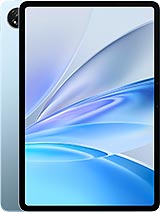
Pad SE
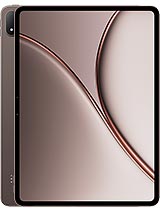
Pad 4
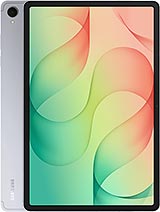
Galaxy Tab S12+
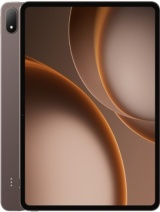
Pad 5 Pro