Vivo iQOO Neo11 Ultra review
The iQOO Neo11 Ultra is for buyers who genuinely want a large, durable phone that won't need frequent charging and aren't willing to pay flagship money—the Dimensity 9500M and bright screen justify the choice. Skip it if you need a good ultrawide camera, fast charging, or a phone that doesn't announce its weight in your pocket.

This review is written with AI assistance from Vivo’s published specifications and public benchmark data for the Vivo iQOO Neo11 Ultra, and the rating is spec-based. GoSolo does not physically test devices; where we estimate real-world behaviour such as battery life or charge time, we say so. How we rate phones.
Overview
The iQOO Neo11 Ultra is a large mid-range phone with a massive 9100 mAh battery, a bright AMOLED screen, and the newer Dimensity 9500M chip, but it's hampered by a weak ultrawide camera and no meaningful charging speed listed. For its price and size, it's a pragmatic pick for battery life and screen quality over raw performance or imaging polish.
Design & Build
The iQOO Neo11 Ultra is slim—8.6 mm is genuinely thin—but at 225–230g it's notably heavy, pulling weight toward the thick end of the scale for its size. The glass and aluminum construction feels solid, and the IP68/IP69 rating (immersible to 1.5m for half an hour) is a real differentiator; plenty of phones claim water resistance but stop short of this depth. For a mid-range device, the durability here is honest and useful. The 6.83-inch footprint is already large, and the heft makes it less comfortable for long one-handed stretches, but the build quality and resistance justify the trade-off if durability matters to you.
Display
The 6.83-inch AMOLED screen is the star of the physical package. 1440 x 3200 pixels at 514 ppi is sharp enough at that size; you won't see pixels, and text is clean. The 144Hz refresh is smooth for scrolling, and the 2160Hz PWM dimming helps reduce flicker for people sensitive to it. Brightness is where this screen excels: 1100 nits typical and 2000 nits in high-brightness mode handle daylight without washing out, and the 4500-nit peak is useful in direct sun. For this price, this much screen quality is rare—most rivals at 430 EUR settle for 60Hz or 90Hz and lower peak brightness. The size is unwieldy if you prefer compact phones, but if you want a large, bright, smooth display, this delivers.
Performance
The Dimensity 9500M is MediaTek's latest 3 nm flagship chip for this tier, and it performs. The octa-core setup with a 4.21 GHz peak clock runs Android 16 and Origin OS 6.0 without lag, handles games, and multitasks without pause. The ARM G1-Ultra GPU is a meaningful upgrade for gaming compared to older Dimensity versions. UFS 4.1 storage is current and fast. For mid-range work—social media, video, light gaming, everyday apps—this is overkill, which is fine; it means the phone will feel responsive for years. It's not a flagship chipset, but it's more than adequate for the price, and the sustained performance under load should be solid thanks to MediaTek's thermal tuning. You're not buying this for raw benchmark scores; you're buying longevity of feel.
Software
Android 16 with Vivo's Origin OS 6.0 overlay is the software stack. Origin OS has matured over the years and adds customization without drowning the interface in bloat, though Vivo phones typically ship with some pre-installed apps. For a Chinese brand sold globally, the software experience is now in line with mainstream Android—no major friction points. Updates and long-term support depend on Vivo's regional commitment; this phone is likely to see security patches for a few years, but don't expect the seven-year support cycle flagship buyers get. Origin OS also includes some water-use profiles and features that leverage the IP68 rating, which is thoughtful.
Camera
The main camera is a 50 MP f/1.9 sensor with a 23 mm focal length, 1/1.56-inch sensor, and optical image stabilization. In good light, this shoots detailed, well-exposed photos, and OIS helps handheld video stay smooth. The color spectrum sensor is a Vivo trademark and can help color accuracy in mixed lighting. In low light, the f/1.9 aperture and OIS do their job, though a 50 MP sensor isn't inherently sharper than a well-tuned 48 MP setup, so don't expect miracles. The real weakness is the 8 MP ultrawide at f/2.2. That's sparse for 2026: the aperture is slow, the sensor is cramped, and ultrawide video and low-light performance will suffer compared to rivals that dedicate 12–13 MP with f/2.0 glass at this price. The 16 MP selfie is adequate for video calls and social media. This phone is usable for casual photography but not a strength.
Battery & Charging
The 9100 mAh battery is the real draw. For context, most 6.8-inch phones in 2026 carry 5000–6500 mAh; this is 40 percent larger. You should comfortably hit two to three days of moderate use or a full day of heavy use without hunting for a charger. That scale of endurance is a genuine advantage for travel or remote work. The glaring omission is charging speed: the spec sheet lists the battery capacity and chemistry (Si/C Li-Ion) but not the wattage. Vivo's iQOO series typically supports fast charging, and omitting it here is peculiar—if it's only 65W or 80W, that's a meaningful disadvantage for a 9100 mAh pack, as it would take hours to refill. This gap needs clarity before purchase.
Value & Verdict
At 430 EUR, the iQOO Neo11 Ultra is positioned as a large, durable, battery-focused phone for people who value screen quality and staying off the charger over camera refinement or the tiniest footprint. The Dimensity 9500M ensures it won't feel sluggish, and the build quality is solid. However, the ultrawide camera is genuinely disappointing for the era, and the lack of charging speed in the marketing signals either that it's not competitive or Vivo is downplaying a real weakness. The size and weight also exclude anyone who values compactness. This is not a flagship, nor is it trying to be; it's a phone for endurance, durability, and bright-screen work. If you spend long hours away from power and want a large, rugged phone without paying flagship prices, this makes sense. If camera versatility or charging speed are priorities, look elsewhere.
Verdict
The iQOO Neo11 Ultra is for buyers who genuinely want a large, durable phone that won't need frequent charging and aren't willing to pay flagship money—the Dimensity 9500M and bright screen justify the choice. Skip it if you need a good ultrawide camera, fast charging, or a phone that doesn't announce its weight in your pocket.
- 9100 mAh battery is genuinely large for the class—expect real endurance across heavy use without reaching for the charger daily.
- 6.83-inch AMOLED display hits 1440p with 144Hz refresh and substantial peak brightness (4500 nits), useful in direct sunlight and for sustained scrolling without flicker.
- Dimensity 9500M is current-gen and handles Android 16 and gaming without hesitation; the GPU is a step up for this tier.
- IP68/IP69 rating with immersion to 1.5m gives real water-resistance peace of mind that some rivals skip entirely.
- 8 MP ultrawide is weak for 2026—a 50 MP sensor with poor zoom and only f/2.2 aperture means ultrawide shots lag behind rivals at similar prices.
- Charging speed is absent from the spec sheet; the battery is large enough that slow charging would be a genuine inconvenience, leaving a critical gap in the pitch.
- 225–230g is heavy for a 6.83-inch phone, pushing toward unwieldy for one-handed use despite the slim 8.6 mm thickness.
Vivo iQOO Neo11 Ultra Key Specifications
The essentials at a glance. See the full spec sheet.
| Released | 2026, August 18 |
|---|---|
| Display | 6.83 inches, 112.6 cm2 (~90.8% screen-to-body ratio), AMOLED, 1B colors, 144Hz, 2160Hz PWM, 1100 nits (typ), 2000 nits (HBM), 4500 nits (peak) |
| Resolution | 1440 x 3200 pixels, 20:9 ratio (~514 ppi density) |
| Chipset | MediaTek Dimensity 9500M (3 nm) |
| RAM & storage | 256GB 12GB RAM, 256GB 16GB RAM, 512GB 12GB RAM, 512GB 16GB RAM |
| Main camera | 50 MP, f/1.9, 23mm (wide), 1/1.56", 1.0µm, PDAF, OIS 8 MP, f/2.2, (ultrawide) |
| Selfie camera | 16 MP, f/2.5, (wide) |
| Battery | 9100 mAh |
| Software | Android 16, Origin OS 6.0 |
| Dimensions | 163.4 x 75.9 x 8.6 mm (6.43 x 2.99 x 0.34 in) |
| Weight | 225 g or 230 g (7.94 oz) |
| Build | Glass front, aluminum frame |
| Durability | IP68/IP69 dust tight and water resistant (high pressure water jets; immersible up to 1.5m for 30 min) |
| Network | GSM / HSPA / LTE / 5G |
| NFC | Yes |
| USB | USB Type-C 2.0, OTG |
Vivo iQOO Neo11 Ultra FAQ
Common questions, answered from the spec sheet.
Does the iQOO Neo11 Ultra support 5G?
Yes. The iQOO Neo11 Ultra supports 5G networks.
What chipset does the iQOO Neo11 Ultra use?
The iQOO Neo11 Ultra runs on the MediaTek Dimensity 9500M (3 nm).
What display does the iQOO Neo11 Ultra have?
A 6.83 inches, 112.6 cm2 (~90.8% screen-to-body ratio) AMOLED, 1B colors, 144Hz, 2160Hz PWM, 1100 nits (typ), 2000 nits (HBM), 4500 nits (peak), 1440 x 3200 pixels, 20:9 ratio (~514 ppi density).
How big is the iQOO Neo11 Ultra battery?
The iQOO Neo11 Ultra has a 9100 mAh battery.
Does the iQOO Neo11 Ultra have NFC?
Yes, the iQOO Neo11 Ultra has NFC.
Is the iQOO Neo11 Ultra water resistant?
The iQOO Neo11 Ultra carries a IP68/IP69 dust tight and water resistant (high pressure water jets; immersible up to 1.5m for 30 min) rating.
Does the iQOO Neo11 Ultra support a microSD card?
No, the iQOO Neo11 Ultra does not support expandable storage.
Alternatives to consider
If the iQOO Neo11 Ultra isn’t quite right, these are the closest calls.
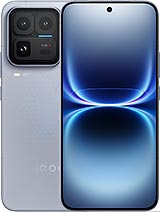
iQOO 15 Ultra
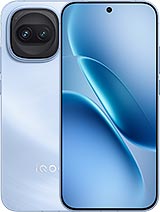
iQOO Z11 Turbo
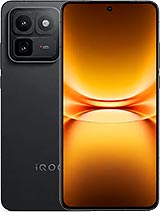
iQOO 15T

iQOO 15R
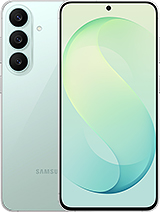
Galaxy S26 FE