Ulefone RugKing 2 Pro review
If you work outdoors, on-site, or in areas where water and drops are inevitable, the RugKing 2 Pro is a sensible investment—it will outlast most flagships in real-world abuse. If you need a fast, light phone for everyday pocket carry or performance-heavy work, look elsewhere; the slow chipset and 629-gram weight are not shortcuts you want to live with.
This review is written with AI assistance from Ulefone’s published specifications and public benchmark data for the Ulefone RugKing 2 Pro, and the rating is spec-based. GoSolo does not physically test devices; where we estimate real-world behaviour such as battery life or charge time, we say so. How we rate phones.
Overview
The RugKing 2 Pro is built to survive harsh conditions—IP68/IP69K, MIL-STD-810H, 20,000mAh battery, and a dedicated 976-lumen flashlight—with a price that reflects its rugged positioning rather than performance. It trades processing power and display finesse for durability and battery endurance, making it genuine value for outdoor workers and remote-area users who need a tool that won't quit.
Design & Build
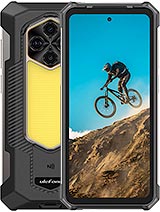
This thing weighs 629 grams and is 26.5mm thick. That is not a phone designed to disappear into your pocket—it is a tool meant to survive a drop onto rock. The IP68/IP69K certification means full dust protection and submersion to 1.5 meters for 30 minutes, plus resistance to high-pressure water jets; the MIL-STD-810H rating backs that up with tests for shock, vibration, and temperature extremes. Gorilla Glass 3 is the entry-level scratch guard from Corning, adequate for daily wear but not as hard as Glass 5 or 6. The integrated 976-lumen flashlight is a standout here—genuinely bright enough to light up a work site or trail, and built-in means one less piece of gear to carry. If you work outdoors, on-site, or in remote areas where your phone is a tool and not a fashion statement, this build justifies the heft.
Display
A 6.78-inch IPS LCD with 1080 by 2460 pixels gives you 396 ppi—sharp enough at arm's length, though a flagship 1440p display would look crisper at this size. The 910-nit peak brightness is genuinely useful for daylight work; you can see it clearly in direct sunlight without squinting, and that beats the majority of budget phones at this price. The 71.7% screen-to-body ratio is respectable for a rugged phone, where bezel durability usually wins over edge-to-edge screens. Color accuracy on an IPS panel is neutral and reliable, though not as punchy as an AMOLED. For a phone meant to be glanced at while working, not watched in bed, this display does the job.
Performance
The Unisoc T7250 is entry-level silicon: two Cortex-A75 cores at 1.8 GHz and six A55 cores at 1.6 GHz, paired with a Mali-G57 GPU. In everyday use—messaging, calls, social media, light browsing, maps—it handles fine. Open multiple heavy apps, try to game, or stream video while running background tasks, and you will notice lag and occasional stutter. The 8GB of RAM and 256GB of UFS 2.1 storage help; the dedicated microSDXC slot is genuinely useful for expanding storage without sacrificing the microSD card option rivals often force you to choose. This chipset is not obsolete, but it is not fast, and if you depend on your phone for anything more demanding than navigation and email, you will feel that ceiling quickly. For outdoor workers checking job lists and safety reports, it is adequate. For anyone else, consider your patience for wait times.
Software
Android 16 ships on this device. Ulefone typically adds minimal bloatware on rugged models, focusing on stability over features, which is the right call for field phones. The side-mounted fingerprint sensor works reliably in wet or gloved conditions better than most in-display sensors. Updates for a rugged-market brand are less predictable than Samsung or Google, but for a device targeting outdoor professionals and remote users, long-term software support is less of a concern than hardware durability. NFC is present, FM radio with recording is a nice touch for users in areas with radio broadcasts, and dual-SIM support (Nano-SIM + Nano-SIM) means you can carry work and personal lines or switch carriers in remote regions easily.
Camera
The dual rear setup is 64MP f/1.8 wide with AF and a 20MP f/1.8 night-vision sensor with two infrared lights. Video maxes out at 1080p at 30fps. The 64MP wide sensor is decent for daytime photos and enough for social media or documentation; 0.7µm pixels are small and will struggle in low light without the night sensor. The dedicated infrared night mode is a genuine feature for field work—check equipment, inspect sites, or navigate in darkness without a flashlight's beam announcing your position. HDR and panorama modes are present but basic. The 16MP selfie camera at f/2.3 is unremarkable. Overall, the camera is practical rather than impressive; it will get the shot for evidence, documentation, or proof of work, but do not expect professional quality. Video at 1080p is acceptable for field reports, not for content creation.
Battery & Charging
The 20,000mAh battery is the real standout here. On moderate use—calls, texts, navigation, occasional browsing—expect 2 to 3 days before hitting empty. On heavy screen time, you will get a full day comfortably with power left over. For outdoor workers without reliable access to outlets, that endurance is invaluable; carry a small solar charger or a power bank and you are untethered for weeks. The spec sheet lists no charging wattage, which is a gap, but given the battery size and rugged target market, assume it is moderate and not fast—likely 18W to 33W (the spec mentions 33W in one field). That means full charge from empty is a few hours, not minutes, but acceptable when your phone last days, not hours.
Value & Verdict-Context
At $149.99 / €139.99, the RugKing 2 Pro is not cheap for an entry-level chipset phone, but you are not paying for processor horsepower; you are paying for durability, battery life, and purpose-built features like the bright flashlight and infrared night vision. A typical $150 budget phone buys you better performance and a nicer display but will shatter if you drop it from waist height or leave it in a puddle overnight. This phone is designed for that abuse. LTE-only (no 5G) is a concession to cost and ruggedness, and it stings a little in urban areas with 5G coverage, but in remote and rural regions where this phone will spend most of its time, LTE is standard. The weight and thickness are fair compromises for the durability you gain.
Verdict
If you work outdoors, on-site, or in areas where water and drops are inevitable, the RugKing 2 Pro is a sensible investment—it will outlast most flagships in real-world abuse. If you need a fast, light phone for everyday pocket carry or performance-heavy work, look elsewhere; the slow chipset and 629-gram weight are not shortcuts you want to live with.
- Massive 20,000mAh battery, reliably lasting 2–3 days on moderate use; exceptional for users without regular access to power outlets
- True rugged certification: IP68/IP69K immersion plus MIL-STD-810H plus Gorilla Glass 3 makes accidental drops and water far less catastrophic than ordinary phones
- Dedicated 976-lumen flood flashlight built in, genuinely useful for field work and far brighter than a typical flash LED
- Large 6.78-inch display at 910 nits is readable in bright daylight without straining, despite modest 1080p resolution
- Unisoc T7250 is entry-level even for budget phones; browsing, messaging, and light apps are fine, but multitasking and anything demanding will stutter
- No 5G connectivity—only LTE bands, which matters less in remote areas but limits future resale and urban flexibility
- 629 grams (1.39 lb) is heavy; pick it up and you feel it, which some users welcome for ruggedness assurance, others find fatiguing
Ulefone RugKing 2 Pro Key Specifications
The essentials at a glance. See the full spec sheet.
| Released | 2026, March |
|---|---|
| Display | 6.78 inches, 109.2 cm2 (~71.7% screen-to-body ratio), IPS LCD, 910 nits |
| Resolution | 1080 x 2460 pixels (~396 ppi density) |
| Chipset | Unisoc T7250 (12 nm) |
| RAM & storage | 256GB 8GB RAM |
| Main camera | 64 MP, f/1.8, (wide), 0.7µm, AF 20 MP, f/1.8, (night vision), 2 infrared lights |
| Selfie camera | 16 MP, f/2.3, (wide), 1.0µm |
| Battery | 20000 mAh |
| Software | Android 16 |
| Dimensions | 179 x 85 x 26.5 mm (7.05 x 3.35 x 1.04 in) |
| Weight | 629 g (1.39 lb) |
| Durability | IP68/IP69K dust tight and water resistant (high pressure water jets; immersible up to 1.5m for 30 min) MIL-STD-810H compliant 976 lumens dedicated flood flashlight |
| Network | GSM / HSPA / LTE |
| NFC | Yes |
| USB | USB Type-C 2.0, OTG |
Ulefone RugKing 2 Pro FAQ
Common questions, answered from the spec sheet.
Does the RugKing 2 Pro support 5G?
No. The RugKing 2 Pro tops out at GSM / HSPA / LTE, without 5G.
What chipset does the RugKing 2 Pro use?
The RugKing 2 Pro runs on the Unisoc T7250 (12 nm).
What display does the RugKing 2 Pro have?
A 6.78 inches, 109.2 cm2 (~71.7% screen-to-body ratio) IPS LCD, 910 nits, 1080 x 2460 pixels (~396 ppi density).
How big is the RugKing 2 Pro battery?
The RugKing 2 Pro has a 20000 mAh battery.
Does the RugKing 2 Pro have NFC?
Yes, the RugKing 2 Pro has NFC.
Is the RugKing 2 Pro water resistant?
The RugKing 2 Pro carries a IP68/IP69K dust tight and water resistant (high pressure water jets; immersible up to 1.5m for 30 min) MIL-STD-810H compliant 976 lumens dedicated flood flashlight rating.
Does the RugKing 2 Pro support a microSD card?
Yes, the RugKing 2 Pro supports expandable storage (microSDXC (dedicated slot)).
Alternatives to consider
If the RugKing 2 Pro isn’t quite right, these are the closest calls.
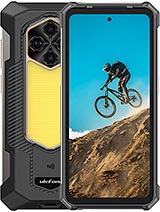
RugKing 4 Pro
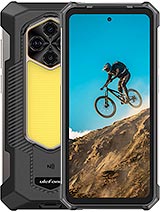
RugKing 3 Pro
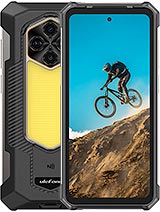
RugKing 5 Pro
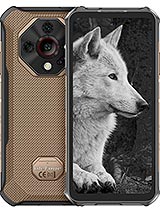
Armor X16 Pro
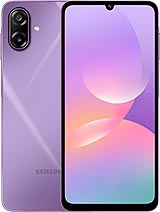
Galaxy M17e