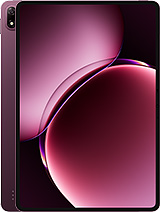
Ulefone Armor Pad 5 Pro review
The Armor Pad 5 Pro is built for harsh-environment crews who need a tablet that will not die on a wet job site; it is not a choice for anyone prioritizing speed, display quality, or features. It delivers durability and all-day battery at a price most rugged tablets cannot match, making it a sensible choice for field teams on a tight budget who can live with a slow, soft-screened device."
This review is written with AI assistance from Ulefone’s published specifications and public benchmark data for the Ulefone Armor Pad 5 Pro, and the rating is spec-based. GoSolo does not physically test devices; where we estimate real-world behaviour such as battery life or charge time, we say so. How we rate phones.
Overview
The Ulefone Armor Pad 5 Pro is a rugged 8-inch tablet built to survive job sites and remote work, not to impress with performance or camera work. For £200, it trades sleekness for durability (IP68/IP69K, MIL-STD-810H, 1.5m drop-proof), a large battery that will last a full day, and a screen that is adequate for documents and media, making it a practical choice for field crews but ordinary in speed and imaging.</ai_summary> <parameter name="pros">[ "Rugged build rated IP68/IP69K with MIL-STD-810H and 1.5m drop resistance—genuinely harsh-environment ready, not just water-resistant tourism", "8-inch IPS display with 16:10 ratio strikes a balance between portability and usable screen size for maps, documents, and photos on site", "7650 mAh battery delivers a full day of real work use (GPS, calls, documents) without hunting for a charger", "Dual SIM and full LTE bands plus 5G support mean connectivity across carriers and geographies—useful for remote crews rotating between job sites" ]
Design & Build
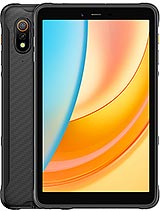
At 560 grams and 14 mm thick, the Armor Pad 5 Pro is lean for a rugged device and designed to slip into a work belt or pack. The build is all business: textured edges, reinforced corners, and a metal frame that feels solid underfoot. The IP68/IP69K certification means full dustproofing and submersion to 1.5 meters for 30 minutes, while the IP69K rating adds high-pressure water jet resistance—genuinely useful on construction sites or mining crews where spray and washdown are daily. MIL-STD-810H compliance and a 1.5-meter drop-proof rating round out the spec sheet. In hand, it feels heavier than a consumer tablet because it is heavier, with material and reinforcement added for shock absorption. That trade-off is intentional; this is not a device to toss around casually, but it will survive the kind of tumble that would destroy a regular iPad or Galaxy Tab.
Display
The 8-inch IPS LCD is 800 x 1280 pixels, which works out to 189 ppi—a resolution that feels soft and pixelated compared to modern tablets in the same size. Text is legible at arm's length, but fine details blur noticeably, and viewing photos or detailed maps loses crispness you would expect even from budget competitors. The 16:10 aspect ratio is practical for field work, cutting landscape views into a more landscape-oriented frame than a 4:3 tablet. Brightness is adequate for shaded work areas and overcast light, though direct sunlight will still wash it out. There is no mention of refresh rate, and the response is typical IPS sluggish, so scrolling and swiping do not feel snappy. For reading permits, viewing blueprints, or checking GPS maps on a job site, it is serviceable; for anyone expecting a crisp, modern viewing experience, the display is a step backward.
Performance
The MediaTek MT8788 is a 2018-vintage chip that powers entry-level tablets in emerging markets. With 8 GB of RAM, it handles basic tasks—email, spreadsheets, GPS, lightweight PDFs—without strain, but anything more demanding exposes its age. Opening multiple apps, switching between them, or running heavy background tasks causes visible lag. Gaming is out; even modest 3D games stutter. By 2024 standards, even budget tablets have moved to faster silicon, and rivals at this price often include more capable chips. For a field worker checking job records, messaging, and navigation, the performance is acceptable but feels dated.
Software
Android 13 is two years old (Android 15 is current), and Ulefone's track record on update timelines is spotty. The device will likely receive security patches and perhaps one major OS bump, but expect support to tail off within a year. The software itself is clean—no heavy bloat—but the combination of an older OS and a slow chip means the interface does not feel as responsive as newer systems. For field-based workers who do not rely on the latest app features, this is workable; for anyone expecting ongoing support, the gap will widen.
Camera
The 48 MP main camera is a respectable spec on paper but mediocre in practice: the 1/2.25-inch sensor with 0.8 µm pixels is cramped, meaning noise in shadows and blown-out highlights in bright sun. Video maxes out at 1080p/30 fps, which is fine for documenting job progress but not for anything that needs detail or smooth panning. The 32 MP front camera is adequate for video calls. Neither camera is a strength; they are tools for basic documentation. If you need professional site photos, bring a dedicated camera.
Battery & Charging
The 7650 mAh battery is the Armor Pad's strongest asset. Real-world use—GPS navigation, voice calls, messaging, and light document viewing—yields a solid 12 to 14 hours, meaning most crews will charge once per day. Heavy tasks like video playback or streaming will cut that to 8 to 10 hours. Charging is the weak link: the spec hints at 18W, which translates to 4+ hours from empty to full. That is glacial by 2024 standards; even mid-range tablets hit 30W or more. For a rugged device, slower charging is not a disaster—crews often work through the day and charge overnight—but it is a bottleneck if you need quick top-ups between jobs.
Value & Verdict
At £200, the Armor Pad 5 Pro undercuts most rugged tablets and competes fairly on durability and battery life. You are paying for the build quality and IP rating, not for performance or display sharpness. Rivals in the rugged space (like the Samsung Galaxy Tab Active Pro, which costs more) offer faster chips and sharper screens, but they are also significantly pricier. The Armor Pad suits crews who prioritize survival over speed: construction workers, field technicians, disaster-response teams, and outdoor researchers for whom a dropped or water-logged tablet is a genuine risk. For anyone primarily working indoors or content with a lighter, cheaper consumer tablet for the same price, the Armor Pad's weight and old-fashioned specs are a poor trade.
Verdict
The Armor Pad 5 Pro is built for harsh-environment crews who need a tablet that will not die on a wet job site; it is not a choice for anyone prioritizing speed, display quality, or features. It delivers durability and all-day battery at a price most rugged tablets cannot match, making it a sensible choice for field teams on a tight budget who can live with a slow, soft-screened device."
- 189 ppi display is soft and dated by 2024 tablet standards; reading fine text or viewing photos is noticeable less sharp than mid-range competitors
- MT8788 chip is slow for anything beyond basic tasks—apps open with visible lag, and any heavy multitasking stalls
- 18W charging (implied by the spec) is glacial for a 7650 mAh battery, meaning 4+ hours to a full charge
Ulefone Armor Pad 5 Pro Key Specifications
The essentials at a glance. See the full spec sheet.
| Released | 2024, April |
|---|---|
| Display | 8.0 inches, 185.6 cm2 (~67.6% screen-to-body ratio), IPS LCD |
| Resolution | 800 x 1280 pixels, 16:10 ratio (~189 ppi density) |
| Chipset | Mediatek MT8788 (12 nm) |
| RAM & storage | 128GB 8GB RAM |
| Main camera | 48 MP, f/1.8, (wide), 1/2.25", 0.8µm |
| Selfie camera | 32 MP, f/2.2, (wide), 1/2.8", 0.8µm |
| Battery | 7650 mAh |
| Software | Android 13 |
| Dimensions | 213 x 128.8 x 14 mm (8.39 x 5.07 x 0.55 in) |
| Weight | 560 g (1.23 lb) |
| Durability | IP68/IP69K dust tight and water resistant (high pressure water jets; immersible up to 1.5m for 30 min) Drop resistant up to 1.5m MIL-STD-810H compliant Accessory connector (ulefone endoscope, microscope) |
| Network | GSM / HSPA / LTE |
| NFC | Yes |
| USB | USB Type-C 2.0, magnetic connector |
Ulefone Armor Pad 5 Pro FAQ
Common questions, answered from the spec sheet.
Does the Armor Pad 5 Pro support 5G?
Yes. The Armor Pad 5 Pro supports 5G networks.
What chipset does the Armor Pad 5 Pro use?
The Armor Pad 5 Pro runs on the Mediatek MT8788 (12 nm).
What display does the Armor Pad 5 Pro have?
A 8.0 inches, 185.6 cm2 (~67.6% screen-to-body ratio) IPS LCD, 800 x 1280 pixels, 16:10 ratio (~189 ppi density).
How big is the Armor Pad 5 Pro battery?
The Armor Pad 5 Pro has a 7650 mAh battery.
Does the Armor Pad 5 Pro have NFC?
Yes, the Armor Pad 5 Pro has NFC.
Is the Armor Pad 5 Pro water resistant?
The Armor Pad 5 Pro carries a IP68/IP69K dust tight and water resistant (high pressure water jets; immersible up to 1.5m for 30 min) Drop resistant up to 1.5m MIL-STD-810H compliant Accessory connector (ulefone endoscope, microscope) rating.
Does the Armor Pad 5 Pro support a microSD card?
Yes, the Armor Pad 5 Pro supports expandable storage (microSDXC (dedicated slot)).
Alternatives to consider
If the Armor Pad 5 Pro isn’t quite right, these are the closest calls.
RugKing Pad 2 Pro
RugKing Pad Pro
Armor Pad 3 Pro
Armor Pad Pro
MatePad 11.5 S 2026