Tecno Pova 7 Neo review
This phone is for people who prioritize a full extra day of battery life and can accept a sluggish experience in exchange. If you need speed, sharpness, or responsive gaming, look at competitors in the same price range; they offer better performance and resolution at the cost of slightly smaller batteries and more frequent charging.
This review is written with AI assistance from Tecno’s published specifications and public benchmark data for the Tecno Pova 7 Neo, and the rating is spec-based. GoSolo does not physically test devices; where we estimate real-world behaviour such as battery life or charge time, we say so. How we rate phones.
Overview
The Tecno Pova 7 Neo is a 2021 budget phone that trades sharpness and grunt for a massive 6000 mAh battery and a 6.8-inch screen, landing it squarely in the "charge it less often, accept lower performance" bracket. At roughly €160, it is honest about what it is: basic Android that will survive a day of typical use, but do not expect responsive gaming or processing speed.
Design and build
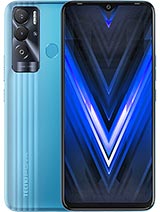
The Pova 7 Neo is slim at 9.1 mm and uses a mixed material approach: glass front, plastic frame, and plastic back. That composition will feel cheaper than all-metal rivals, but the design itself is clean and the splash resistance a small bonus. At 6.75 inches wide, it sits on the edge of one-handed use; people with smaller hands will feel the width. The glass front means screen durability is a real concern on a budget phone, and Tecno has not added Gorilla Glass or a toughening layer here, so a fall could crack it. Nothing revolutionary, but acceptable for the price and class.
Display
The 6.8-inch IPS LCD is the phone's biggest draw. Brightness tops out at 480 nits, which is adequate for indoor use and serviceable outdoors without direct sunlight. The problem is resolution: 720 x 1640 pixels at this size yields only 263 ppi, a notably soft picture compared to the 1080p standard competitors offer in the same bracket. Text in emails and web pages has visible pixellation if you look closely, and the gap becomes obvious when you scroll through social media feeds. For basic messaging and video, it is fine; for sustained reading or photo editing, you will notice the fuzz. The screen-to-body ratio of 82.9% is respectable, and there is no mention of a notch or punch-hole, so bezels are likely visible but reasonable.
Performance
The Helio G25 is a 2019-class chipset paired with either 4 GB or 6 GB of RAM. It handles routine tasks—messaging, light browsing, social apps—without stutter, but anything heavier exposes its age. Expect sluggish app launches, long load times in games, and noticeable slowdown when juggling multiple apps in the background. The 6 GB variant offers slightly more breathing room for multitasking, but the core bottleneck is the chip, not RAM. For a phone released in December 2021, this was already behind; by 2026 standards, it feels archaic. If you primarily text, call, and consume media at a slow pace, you will muddle through. Anything beyond that and you will spend time watching loading screens.
Software
Android 11 with Tecno's HIOS 7.6 skin is lightweight and does not add much bloat, which helps the modest hardware. Android 11 is now several versions old, and Tecno's budget track record on updates is poor; do not expect timely security patches or upgrades to Android 12 or later. The software is functional but offers no standout features, and the aging OS combined with the weak CPU means this phone will feel increasingly sluggish as you install newer app versions over time.
Camera
The 13 MP rear camera with f/1.8 aperture and autofocus is passable in good light, where HDR and the quad-LED flash help. Output is soft and lacks detail compared to modern rivals, partly due to the small sensor and partly due to the aging Helio G25's image processing. The 8 MP front camera is adequate for video calls and casual selfies; the dual-LED flash is nice for low-light situations. Video maxes out at 1080p 30 fps, which is standard for this tier but feels choppy compared to 60 fps phones. Do not buy this phone expecting photography; it is a basic capture device.
Battery and charging
The 6000 mAh battery is the Pova 7 Neo's strongest point. On light use—email, messaging, occasional web browsing—you can expect about two days between charges. Heavy use (video streaming, gaming, constant screen-on) will drain it in a day, but that is still competitive for the price. The charging speed is not specified in available specs, but Tecno's typical 18W rate would mean roughly four to five hours from empty to full, which is slow by modern standards but acceptable if you charge overnight. For a buyer willing to trade speed and responsiveness for fewer daily charge cycles, this is a genuine advantage.
Value and verdict
At €160, the Tecno Pova 7 Neo occupies a niche: people who value battery longevity and screen size over processing speed and display quality. It competes with basic Samsung Galaxy A models and Redmi budget lines, most of which offer sharper screens and faster chips at similar prices. However, the battery is genuinely larger than most rivals at this cost, and that matters if you are away from a charger regularly. The 2021 release date is a red flag in 2026; the hardware and software are visibly dated, and you should not expect this phone to feel responsive or modern. The Pova 7 Neo makes sense only for someone who needs long battery life, does not game, and can tolerate slow performance and soft visuals.
Verdict
This phone is for people who prioritize a full extra day of battery life and can accept a sluggish experience in exchange. If you need speed, sharpness, or responsive gaming, look at competitors in the same price range; they offer better performance and resolution at the cost of slightly smaller batteries and more frequent charging.
- 6000 mAh battery will push two days on light use, meaningfully fewer daily charges than rivals at this price
- Large 6.8-inch display with decent brightness (480 nits) makes media and reading pleasant on a budget
- Dedicated microSDXC slot for storage expansion without sacrificing a SIM
- Splash resistance on a phone under €170 is practical overkill against spills and dust
- 720p resolution on a 6.8-inch screen leaves text and icons noticeably soft compared to standard 1080p at this size
- Helio G25 chipset is dated even for 2021 and struggles with any app that demands sustained CPU work
- Charging speed not listed in specs, but 18W typical for this tier means four-plus hours to full from empty
Tecno Pova 7 Neo Key Specifications
The essentials at a glance. See the full spec sheet.
| Released | 2021, December 09 |
|---|---|
| Display | 6.8 inches, 109.8 cm2 (~82.9% screen-to-body ratio), IPS LCD, 480 nits |
| Resolution | 720 x 1640 pixels (~263 ppi density) |
| Chipset | Mediatek MT6762G Helio G25 (12 nm) |
| RAM & storage | 64GB 4GB RAM, 128GB 6GB RAM |
| Main camera | 13 MP, f/1.8, (wide), AF Secondary unknown camera |
| Selfie camera | 8 MP, f/2.0 |
| Battery | 6000 mAh |
| Software | Android 11, HIOS 7.6 |
| Dimensions | 171.4 x 77.3 x 9.1 mm (6.75 x 3.04 x 0.36 in) |
| Build | Glass front, plastic frame, plastic back |
| Durability | Splash resistant |
| Network | GSM / HSPA / LTE |
| NFC | No |
| USB | microUSB 2.0, OTG |
Tecno Pova 7 Neo FAQ
Common questions, answered from the spec sheet.
Does the Pova 7 Neo support 5G?
No. The Pova 7 Neo tops out at GSM / HSPA / LTE, without 5G.
What chipset does the Pova 7 Neo use?
The Pova 7 Neo runs on the Mediatek MT6762G Helio G25 (12 nm).
What display does the Pova 7 Neo have?
A 6.8 inches, 109.8 cm2 (~82.9% screen-to-body ratio) IPS LCD, 480 nits, 720 x 1640 pixels (~263 ppi density).
How big is the Pova 7 Neo battery?
The Pova 7 Neo has a 6000 mAh battery.
Does the Pova 7 Neo have NFC?
No, the Pova 7 Neo does not list NFC support.
Is the Pova 7 Neo water resistant?
The Pova 7 Neo carries a Splash resistant rating.
Does the Pova 7 Neo support a microSD card?
Yes, the Pova 7 Neo supports expandable storage (microSDXC (dedicated slot)).
Alternatives to consider
If the Pova 7 Neo isn’t quite right, these are the closest calls.
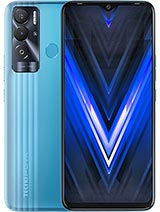
Pova Neo 3

Spark 40C

Spark 20C
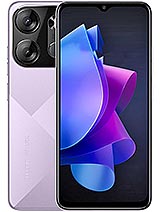
Pop 7 Pro

Play20A