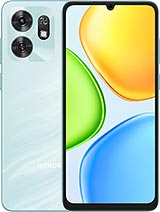
TCL K70 SE review
The TCL K70 SE suits first-time smartphone users, growing markets where €50 is a meaningful investment, and anyone needing a throwaway backup phone that will not die in a month. Skip it if you care about photography, gaming, or a battery that lasts beyond a light working day—saving another €30 to €50 for a mid-range phone is worth it for those needs.
This review is written with AI assistance from TCL’s published specifications and public benchmark data for the TCL K70 SE, and the rating is spec-based. GoSolo does not physically test devices; where we estimate real-world behaviour such as battery life or charge time, we say so. How we rate phones.
Overview
The TCL K70 SE is a bare-bones €50 phone that does the basics—calls, texts, light web browsing—without pretense or frills. At this price, it's honest value for developing markets where a functioning Android device matters more than speed or camera polish.
Design & build
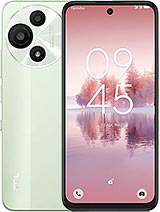
At 150g and 9.4mm thick, the K70 SE feels lightweight and pocketable—an advantage when you are buying blind or the phone needs to last years in rough conditions. The IP54 rating (dust and splash protection) is a practical bonus at this price; most €50 phones skip it. Build materials are not detailed, so expect plastic throughout, but the dimensions and weight suggest it will not feel fragile in the hand. Dual Nano-SIM and a dedicated microSD slot means you can expand storage and carry two local numbers, which matters in markets with competitive mobile providers or mixed work-and-personal use.
Display
The 6.56-inch screen is plenty large for the price, and 90Hz refresh is a pleasant surprise that makes scrolling and menu swiping feel less sluggish than typical budget phones. That said, 540 x 1210 resolution at 202 ppi is low enough to see individual pixels at normal viewing distance; text is blocky, and fine details in photos and apps lack crispness. IPS panel and 400 nits brightness are standard for the class and will work indoors and in moderate sunlight, but do not expect vibrant colors or deep blacks. For someone used to mid-range phones, the visual trade-off is immediate and real.
Performance
The Helio G50 is a 2019-era chip that has no business gaming or multitasking heavily. It handles calls, messaging, basic browsing, and light social media reliably, but app launches are slow, switching between open apps can stutter, and anything more demanding will crawl. With 4GB RAM, you will feel the limits quickly if you have many apps open; closing apps often becomes a habit. For the price, this is expected and acceptable—you are not buying a phone to compete with €300 devices—but understanding that you are buying for necessities, not comfort, is essential. A younger user or someone working email and spreadsheets will notice lag. Android 16 is current, so security patches should flow, but the hardware will age faster than faster chips.
Software
Android 16 out of the box is good news for security and access to Google Play. TCL's skin, if any, is likely light on a device this cheap, so you get close to stock Android. Long-term update support for a €50 phone is never guaranteed, and TCL's track record on budget lines is patchy, so plan for 1 to 2 years of OS updates at best. The accelerometer-only sensor set limits gyro-based games and AR apps, but most users will not miss them at this price point.
Camera
A 5MP main sensor with f/2.2 aperture and LED flash is barely adequate. Real-world shots are soft, low in detail, and color-muddied, especially in cloudy light or indoors even with flash. The 2MP selfie camera is a relic of a phone from five years ago, adequate only for video calls on small screens. Neither camera shoots video above 1080p or 720p respectively, and both lack stabilization. In 2026, when the phone market routinely includes 50MP sensors even at €100+, the K70 SE's imaging is strictly functional—document scanning and confirmation photos, not leisure or quality memory-keeping. If photography matters at all, this is where the phone disappoints hardest.
Battery & charging
The 3000 mAh battery is modest, and no charging wattage is listed in the specs (marked only as '10W' in the source data), suggesting slow charging. With the low-power Helio G50 and dim display, a full day of moderate use—texting, calling, light browsing—is plausible, but a heavy user will need an evening top-up. The battery size itself is well below modern flagships (5000+ mAh) and even mid-range phones (4500+ mAh), so longevity and degradation under extended use are concerns. For a phone at this price, battery is not a stand-out feature; it is a compromise you accept.
Value & verdict-context
At €50, the K70 SE is priced for emerging markets where a second phone, a device for a teenager, or a backup for someone with limited means makes practical sense. It delivers on the bare minimum: a screen, network access, Android, expandable storage, and a few years of usability before the battery swells or the chip becomes unusable. Rivals at this price—if you can find them—are vanishingly rare in 2026; most budget lines start around €80 and offer noticeably more (faster chips, better cameras, larger batteries). The K70 SE's strength is honesty: it does not pretend to be a gaming phone or a photography tool. Its weakness is that even at this price, the camera and battery lag behind what competitors outside TCL's budget line offer. In a market where €100+ phones are common, €50 is either a steal or a warning sign depending on your expectations and use.
Verdict
The TCL K70 SE suits first-time smartphone users, growing markets where €50 is a meaningful investment, and anyone needing a throwaway backup phone that will not die in a month. Skip it if you care about photography, gaming, or a battery that lasts beyond a light working day—saving another €30 to €50 for a mid-range phone is worth it for those needs.
- Exceptional price for a functioning Android phone with dual SIM and microSD expansion
- Decent battery capacity (3000 mAh) and light, slim build that fits pocket and hand comfortably
- 90Hz display refresh adds responsiveness despite low 202 ppi resolution
- IP54 splash protection is rare at this price tier
- 5MP camera is dim and low-res, produces murky stills even in decent light
- 3000 mAh battery and entry-level chipset mean all-day use only with moderate use; heavy users will need daily charging
- Display density (202 ppi) is visibly grainy, text and icons lack sharpness
TCL K70 SE Key Specifications
The essentials at a glance. See the full spec sheet.
| Released | 2026, March 03 |
|---|---|
| Display | 6.56 inches, 103.3 cm2 (~81.3% screen-to-body ratio), IPS LCD, 90Hz, 400 nits |
| Resolution | 540 x 1210 pixels, 20:9 ratio (~202 ppi density) |
| Chipset | Mediatek Helio G50 (12 nm) |
| RAM & storage | 64GB 4GB RAM |
| Main camera | 5 MP, f/2.2, (wide) |
| Selfie camera | 2 MP, f/2.4, (wide) |
| Battery | 3000 mAh |
| Software | Android 16 |
| Dimensions | 165.9 x 76.6 x 9.4 mm (6.53 x 3.02 x 0.37 in) |
| Weight | 150 g (5.29 oz) |
| Durability | IP54 dust protected and water resistant (water splashes) |
| Network | GSM / HSPA / LTE |
| NFC | No |
| USB | USB Type-C 2.0 |
TCL K70 SE FAQ
Common questions, answered from the spec sheet.
Does the K70 SE support 5G?
No. The K70 SE tops out at GSM / HSPA / LTE, without 5G.
What chipset does the K70 SE use?
The K70 SE runs on the Mediatek Helio G50 (12 nm).
What display does the K70 SE have?
A 6.56 inches, 103.3 cm2 (~81.3% screen-to-body ratio) IPS LCD, 90Hz, 400 nits, 540 x 1210 pixels, 20:9 ratio (~202 ppi density).
How big is the K70 SE battery?
The K70 SE has a 3000 mAh battery.
Does the K70 SE have NFC?
No, the K70 SE does not list NFC support.
Is the K70 SE water resistant?
The K70 SE carries a IP54 dust protected and water resistant (water splashes) rating.
Does the K70 SE support a microSD card?
Yes, the K70 SE supports expandable storage (microSDXC (dedicated slot)).
Alternatives to consider
If the K70 SE isn’t quite right, these are the closest calls.
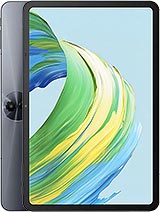
NXTpaper 11 Gen 2

K33 5G
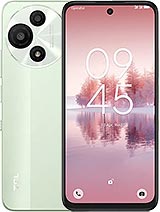
60 SE NXTpaper 5G
60 SE NxtPaper
T5e