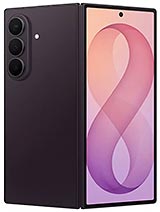
Samsung Galaxy Z Fold8 Ultra review
This phone suits those who actually use the unfolded screen for work or creativity, not novelty shoppers. Skip it if you are chasing the best charging, weight, or durability for the money; a flagship slab remains the smarter choice for most people at this price."
This review is written with AI assistance from Samsung’s published specifications and public benchmark data for the Samsung Galaxy Z Fold8 Ultra, and the rating is spec-based. GoSolo does not physically test devices; where we estimate real-world behaviour such as battery life or charge time, we say so. How we rate phones.
Overview
The Galaxy Z Fold8 Ultra is the mature foldable: a 8-inch inner screen, latest flagship chip, and capable camera array that justify the €1,849 ticket for those who live in the unfolded mode. It is genuinely useful, not a novelty, though the weight and charging speed lag ambitions at this price.
Design & build
The Fold8 Ultra weighs 215 grams and sits at 8.9mm folded—that is heft. Pick it up and you feel the engineering, the dual-hinge architecture, the reinforced frame. The aluminum is now Advanced Armor spec, which is marketing, but the phone survives the typical fumbles; IP48 means it handles dust better than before and can sit submerged for half an hour. The outer screen is still plastic (not glass), so scratches accumulate if you are heavy-handed. The inner glass is Gorilla Glass Victus Ceramic 3. Neither surface is fragile, but neither feels as refined as a flagship slab at this price. The real trade is always the crease: it is visible at certain angles, and you will run your thumb across it. By 2026, people accept that as the cost of the form factor, but acceptance is not invisibility.
Display
The inner 8-inch foldable LTPO AMOLED runs at 2256 x 2504 pixels (422 ppi), 120Hz, and peaks at 3000 nits. That is bright enough for outdoor use. The 90.1% screen-to-body ratio means almost all the folded-out real estate is usable, and the aspect ratio is closer to square than a phone, which is odd at first but becomes the whole point once you are reading, drawing, or bouncing between apps side by side. The outer 6.5-inch cover display runs the same tech at 1080 x 2520 resolution. Both refresh dynamically, so battery drain is not gratuitous. The crease remains visible in bright light if you are looking for it, but in normal use most people stop noticing within days. The foldable tech here is mature: colours are rich, blacks are deep, no flicker.
Performance
Snapdragon 8 Elite Gen 5 is the current generation flagship silicon. AnTuTu scores it at 2.16 million (version 10), which is flagship-class performance. Apps launch instantly, games run maxed out, and multitasking across two windows on that huge inner screen happens without stutter. The Adreno 840 GPU handles 8K video recording at 30fps smoothly. For a foldable, the thermal dissipation is solid; sustained performance does not throttle noticeably during long sessions. If you are comparing this to last year's flagship phones, it trades blows on single-thread speed but is quick enough that everyday differences are academic.
Software
Android 17 ships with One UI 9 layered on top. Samsung promises seven major Android version upgrades, which matches Google's guarantee and is reassuring for a device at this price point. One UI is feature-rich but sometimes busy; Samsung DeX support lets you dock this and run a pseudo-desktop environment, which sounds clever but remains a niche feature. The real win is continuity: apps resize and snap to foldable layouts reasonably well, and Samsung has had years to tune this. Security patches are monthly. No bloat surprises here, just Samsung's familiar (sometimes intrusive) suite of apps that most people delete half of.
Camera
The main camera is a 200MP f/1.7 sensor with OIS, joined by a 10MP 3x telephoto (f/2.4, OIS) and a 50MP ultrawide (f/1.9, 120 degrees). Video shoots 8K at 30fps, 4K at up to 120fps, with 10-bit HDR and gyro-EIS. On paper that is generous. In practice, the 200MP sensor produces sharp, detailed stills in good light, and the tele offers genuine reach without resorting to digital zoom nonsense. The ultrawide is standard for a flagship—not weak, not spectacular. Night mode is competent thanks to the large sensor and OIS. The inner-screen and cover-screen selfie cameras are modest (10MP each), adequate for video calls but nothing more. This is a capable camera array that does not embarrass itself, though the 200MP headline masks the fact that it performs roughly in line with what you would expect at this price tier and no better.
Battery & charging
The 5000 mAh battery charges at 45W, which feels dated for a €1,849 device in 2026. Rivals at similar prices now deliver 100W+ wired charging; waiting 45 minutes to top up (roughly) feels slow by comparison. Battery life stretches to about 13 hours of active use according to Samsung's testing, which is respectable for a foldable with all that screen real estate, though real-world mileage varies by use case. If you are unfolded and multitasking all day, expect a recharge by evening. The 5000 mAh figure is reasonable for the form factor—a larger cell would bloat the device further—but the slow charging speed is the clearer frustration.
Value & verdict
At €1,849 (or $2,099), the Fold8 Ultra is a luxury foldable for people committed to the form factor, not a device chasing general appeal. It does what it promises: a usable tablet-size screen that folds into your pocket (sort of), a competent camera, flagship performance, and Samsung's software support. The crease exists, the weight is real, the charging speed is underwhelming for the price, and the outer plastic screen will scratch. None of those are dealbreakers for someone who actually wants a foldable; they are trade-offs baked into the category. If you are fence-sitting between this and a traditional flagship slab at half the price, the slab wins on battery, charging, durability, and everyday ease. But if the inner-screen real estate is something you actively want—for creative work, reading, multitasking—this is the best-executed version Samsung has shipped.
Verdict
This phone suits those who actually use the unfolded screen for work or creativity, not novelty shoppers. Skip it if you are chasing the best charging, weight, or durability for the money; a flagship slab remains the smarter choice for most people at this price."
- Inner display is large and genuinely usable—8 inches with 90.1% screen-to-body ratio and 120Hz LTPO make this feel like a real second screen, not a cramped compromise.
- Snapdragon 8 Elite Gen 5 is the current flagship processor; multitasking, gaming, and heavy work run without strain.
- Camera system is versatile: 200MP wide with OIS, 3x tele, and 50MP ultrawide cover most shots without reaching for a second device.
- Seven major OS upgrades and long software support in a foldable that actually holds up to daily folding: that reliability premium matters when you are spending this much.
- 45W charging is slow for the price and weight class—rivals at similar cost now routinely hit 100W or beyond, making refueling a chore.
- 215 grams and 8.9mm folded thickness is noticeably heavy and bulky compared to a slab phone; pocket feel is industrial, not pocket-ready.
- The inner display crease is still visible, and the outer display is plastic; neither flaw has vanished despite the price, and it shows.
Samsung Galaxy Z Fold8 Ultra Key Specifications
The essentials at a glance. See the full spec sheet.
| Released | 2026, July 22 |
|---|---|
| Display | 8.0 inches, 204.4 cm2 (~90.1% screen-to-body ratio), Foldable Dynamic LTPO AMOLED 2X, 120Hz, HDR10+, 3000 nits (peak) |
| Resolution | 2256 x 2504 pixels (~422 ppi density) |
| Chipset | Qualcomm SM8850-1-AD Snapdragon 8 Elite Gen 5 (3 nm) |
| RAM & storage | 256GB 12GB RAM, 512GB 12GB RAM, 512GB 16GB RAM, 1TB 16GB RAM |
| Main camera | 200 MP, f/1.7, 24mm (wide), 1/1.3", 0.6µm, multi-directional PDAF, OIS 10 MP, f/2.4, 67mm (telephoto), 1/3.94", 1.0µm, PDAF, OIS, 3x optical zoom 50 MP, f/1.9, 120˚ (ultrawide), 1/2.5", 0.7µm, multi-directional PDAF |
| Selfie camera | 10 MP, f/2.2, 18mm (ultrawide), 1/3.52", 1.12µm Cover camera: 10 MP, f/2.2, 24mm (wide), 1/3.52", 1.12µm |
| Battery | 5000 mAh |
| Software | Android 17, up to 7 major Android upgrades, One UI 9 |
| Dimensions | Unfolded: 158.4 x 143.2 x 4.1 mmFolded: 158.4 x 72.8 x 8.9 mm |
| Weight | 215 g (7.58 oz) |
| Build | Glass front (Gorilla Glass Victus Ceramic 3) (folded), plastic front (unfolded), glass back (Gorilla Glass Victus 2), aluminum frame |
| Durability | IP48 dust and water resistant (dust > 1mm; immersible up to 1.5m for 30 min) Advanced Armor aluminum frame |
| Network | GSM / HSPA / LTE / 5G |
| NFC | Yes |
| USB | USB Type-C 3.2, OTG |
Samsung Galaxy Z Fold8 Ultra FAQ
Common questions, answered from the spec sheet.
Does the Galaxy Z Fold8 Ultra support 5G?
Yes. The Galaxy Z Fold8 Ultra supports 5G networks.
What chipset does the Galaxy Z Fold8 Ultra use?
The Galaxy Z Fold8 Ultra runs on the Qualcomm SM8850-1-AD Snapdragon 8 Elite Gen 5 (3 nm).
What display does the Galaxy Z Fold8 Ultra have?
A 8.0 inches, 204.4 cm2 (~90.1% screen-to-body ratio) Foldable Dynamic LTPO AMOLED 2X, 120Hz, HDR10+, 3000 nits (peak), 2256 x 2504 pixels (~422 ppi density).
How big is the Galaxy Z Fold8 Ultra battery?
The Galaxy Z Fold8 Ultra has a 5000 mAh battery.
Does the Galaxy Z Fold8 Ultra have NFC?
Yes, the Galaxy Z Fold8 Ultra has NFC.
Is the Galaxy Z Fold8 Ultra water resistant?
The Galaxy Z Fold8 Ultra carries a IP48 dust and water resistant (dust > 1mm; immersible up to 1.5m for 30 min) Advanced Armor aluminum frame rating.
Does the Galaxy Z Fold8 Ultra support a microSD card?
No, the Galaxy Z Fold8 Ultra does not support expandable storage.
Alternatives to consider
If the Galaxy Z Fold8 Ultra isn’t quite right, these are the closest calls.
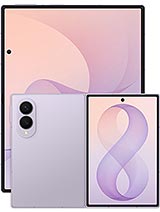
Galaxy Z Fold8
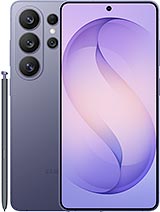
Galaxy S26 Ultra
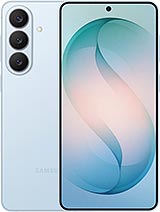
Galaxy S26+
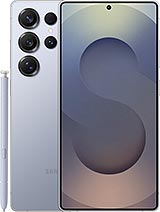
Galaxy S25 Ultra
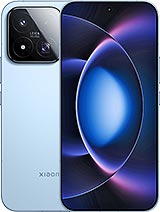
17 Max