Samsung Galaxy Z Flip7 review
The Z Flip7 is for people who value a compact footprint with a large unfolded screen and do not mind carrying a charger or managing battery carefully. Those who need all-day endurance or deeper dust/water sealing should consider a conventional flagship instead."

This review is written with AI assistance from Samsung’s published specifications and public benchmark data for the Samsung Galaxy Z Flip7, and the rating is spec-based. GoSolo does not physically test devices; where we estimate real-world behaviour such as battery life or charge time, we say so. How we rate phones.
Overview
The Z Flip7 proves foldable phones have matured: a 6.9-inch unfolded screen with 120Hz fluidity and a serious camera set make it genuinely useful, though the 4300 mAh battery and IP48 durability rating remind you this form factor still asks for compromise.
Design & build
The Z Flip7 weighs 188 grams and unfolds to 166.7 × 75.2 × 6.5 mm, folding down to under half that footprint. That portability is the entire point. The unfolded front is plastic rather than glass, which saves weight and cost but telegraphs durability trade-offs—scratches accumulate and the fingerprint-repellent coating dulls faster than Gorilla Glass. The back is Gorilla Glass Victus 2 on an aluminum frame, both solid, and the IP48 rating means water immersion to 1.5 meters for 30 minutes and dust rejection for particles over 1mm. That is meaningful protection, but it lags the IP67/68 you get on unfoldables from rivals, which tolerate full dust sealing and deeper submersion. The 4.1-inch cover screen is useful—bright at 2600 nits peak, 120Hz, and roomy enough to reply to messages without unfolding—but it is still secondary for real work.
Display
The main 6.9-inch unfolded panel is Foldable Dynamic LTPO AMOLED 2X, 120Hz, HDR10+, with 2600 nits peak brightness. The 1080 × 2520 resolution at 397 ppi is modest for the size—not sharp enough to see individual pixels but noticeably less crisp than 500+ ppi flat flagships. The 21:9 ratio, though, makes it feel taller and narrower than a typical 6.7-inch slab, so less unwieldy to hold one-handed. The 120Hz refresh is smooth for scrolling and gaming, and the brightness handles sunlight well. The Mohs level 1 plastic front is the trade-off: it is softer than glass, so handle it carefully. The cover display complements the experience without stealing functionality.
Performance
The Exynos 2500 is a 10-core flagship chip at 3 nm with a Cortex-X5 prime core and Xclipse 950 GPU. In practice, it runs 3D games at high settings, handles 4K video editing, and multitasks without hiccups. AnTuTu scores of around 1.51 million place it at the top of the mobile SoC heap for 2025. Versus the Snapdragon 8 Elite, it trades absolute sustained multi-core performance for lower peak power draw—a reasonable choice for a thin device with limited thermal headroom. Day-to-day, you will not notice the gap; only intensive benchmarking or competitive gaming frame-locking shows daylight. One UI 8 runs clean with minimal bloat, and Samsung's promise of 7 major Android upgrades (through 2032) means this phone stays current longer than most.
Camera
The rear dual setup is 50MP f/1.8 wide with 1.0µm pixels, dual-pixel PDAF, and OIS, plus a 12MP f/2.2 ultrawide at 123 degrees. The wide camera captures detail in good light and handles low-light shots with minimal noise, thanks to the OIS and pixel binning. The ultrawide's 123-degree field is genuinely expansive—wider than most rivals—and useful for landscapes and group photos, though edge distortion is visible on demand. The 10MP cover-screen selfie is basic but adequate for video calls. There is no telephoto; the 50MP main sensor crops for zoom, and quality drops noticeably past 2x. Video maxes at 4K/60fps with HDR10+, which is solid for social content. For its class and price, this camera setup punches above expectations, especially the main sensor's OIS and aperture.
Battery & charging
The 4300 mAh battery is the tightest constraint. Unfolded, the screen burns power, and mixed daily use—messages, email, light browsing—will see most users reaching a low-battery warning by evening. Heavy video or gaming cuts that to midday. The active use score of 11:52 hours is real-world and sobering. Wired charging at 25W reaches 50 percent in 30 minutes, then slows for the final half—plan on 60–75 minutes to full. That is not fast by 2025 standards; rivals at this price hit 65–120W. Wireless at 15W is available but impractical if you are chasing charge. The battery is the biggest reason to keep a power bank nearby.
Software & connectivity
One UI 8 on Android 16 is polished and responsive. Samsung includes DeX support for desktop-like experiences via USB-C. The 5G radio covers sub-6 bands 1, 2, 3, 5, 7, 8, 12, 20, 25, 26, 28, 38, 39, 40, 41, 66, 71, 77, 78 (and mmWave variants in the USA), ensuring wide carrier coverage. Wi-Fi 7 tri-band is faster than 6E, and dual eSIM plus one nano-SIM allows easy carrier switching. The fingerprint sensor is side-mounted and responsive. NFC is present for contactless payments.
Value & verdict
The Z Flip7 sits at €703 / £491.54 / ₹109,999—not cheap, but reasonable for a current flagship that folds. It is best for people who value portability and a large screen without the bulk, and who can stomach the battery life as a deliberate trade-off. The cameras and performance are first-rate, and 7 years of OS updates is generous. The plastic front and IP48 rating ask you to be slightly more careful than with a slab, and the 4300 mAh battery is the daily compromise. If you need an all-day phone that rarely sees a charger, or if you are in dusty environments, look elsewhere. If you prioritize pocket-friendliness, an unfolded 6.9-inch screen, and flagship speed, this is a thoughtful answer.
Verdict
The Z Flip7 is for people who value a compact footprint with a large unfolded screen and do not mind carrying a charger or managing battery carefully. Those who need all-day endurance or deeper dust/water sealing should consider a conventional flagship instead."
- 6.9-inch AMOLED unfolded display with 120Hz and 2600 nits peak brightness—sharp and visible outdoors despite modest 397 ppi, and the 21:9 ratio suits everyday tasks without the bulk of a traditional slab
- 50MP main camera with f/1.8, OIS, and dual-pixel PDAF holds its own in daylight and low light; the 12MP ultrawide at 123 degrees is genuinely wide, not a shallow gimmick
- Exynos 2500 is current-gen flagship silicon that handles gaming and multitasking without strain; One UI 8 gets 7 major Android upgrades, so you are covered through 2032
- Folds to a compact pocket size (85.5 × 75.2 × 13.7 mm when closed) with a 4.1-inch cover screen that is actually usable, not a gimmick for notifications
- 4300 mAh battery feels tight for a 6.9-inch phone—expect a full charge by evening on typical days, sooner if you shoot video or play games
- IP48 rating is less protective than the IP67/68 rivals offer; dust over 1mm is kept out, but not the fine particle exposure a typical smartphone endures
- Plastic front layer on the unfolded display scratches more easily than glass and loses oleophobic coating faster
Samsung Galaxy Z Flip7 Key Specifications
The essentials at a glance. See the full spec sheet.
| Released | 2025, July 09 |
|---|---|
| Display | 6.9 inches, 111.2 cm2 (~88.7% screen-to-body ratio), Foldable Dynamic LTPO AMOLED 2X, 120Hz, HDR10+, 2600 nits (peak) |
| Resolution | 1080 x 2520 pixels, 21:9 ratio (~397 ppi density) |
| Chipset | Exynos 2500 (3 nm) |
| RAM & storage | 256GB 12GB RAM, 512GB 12GB RAM |
| Main camera | 50 MP, f/1.8, 23mm (wide), 1/1.57", 1.0µm, dual pixel PDAF, OIS 12 MP, f/2.2, 13mm, 123˚ (ultrawide), 1/3.2", 1.12µm |
| Selfie camera | 10 MP, f/2.2, 23mm (wide), 1/3.0", 1.22µm |
| Battery | 4300 mAh |
| Charging | 25W wired, QC2.0, 50% in 30 min15W wireless4.5W reverse wireless |
| Software | Android 16, up to 7 major Android upgrades, One UI 8 |
| Dimensions | Unfolded: 166.7 x 75.2 x 6.5 mmFolded: 85.5 x 75.2 x 13.7 mm |
| Weight | 188 g (6.63 oz) |
| Build | Plastic front (unfolded), glass back (Gorilla Glass Victus 2), aluminum frame |
| Durability | IP48 dust and water resistant (dust > 1mm; immersible up to 1.5m for 30 min) Armor aluminum frame |
| Network | GSM / CDMA / HSPA / EVDO / LTE / 5G |
| NFC | Yes |
| USB | USB Type-C 3.2, OTG |
Samsung Galaxy Z Flip7 FAQ
Common questions, answered from the spec sheet.
Does the Galaxy Z Flip7 support 5G?
Yes. The Galaxy Z Flip7 supports 5G networks.
What chipset does the Galaxy Z Flip7 use?
The Galaxy Z Flip7 runs on the Exynos 2500 (3 nm).
What display does the Galaxy Z Flip7 have?
A 6.9 inches, 111.2 cm2 (~88.7% screen-to-body ratio) Foldable Dynamic LTPO AMOLED 2X, 120Hz, HDR10+, 2600 nits (peak), 1080 x 2520 pixels, 21:9 ratio (~397 ppi density).
How big is the Galaxy Z Flip7 battery?
The Galaxy Z Flip7 has a 4300 mAh battery. Charging is rated at 25W wired, QC2.0, 50% in 30 min15W wireless4.5W reverse wireless.
Does the Galaxy Z Flip7 have NFC?
Yes, the Galaxy Z Flip7 has NFC.
Is the Galaxy Z Flip7 water resistant?
The Galaxy Z Flip7 carries a IP48 dust and water resistant (dust > 1mm; immersible up to 1.5m for 30 min) Armor aluminum frame rating.
Does the Galaxy Z Flip7 support a microSD card?
No, the Galaxy Z Flip7 does not support expandable storage.
Does the Galaxy Z Flip7 have a headphone jack?
No, the Galaxy Z Flip7 does not have a 3.5mm headphone jack.
Alternatives to consider
If the Galaxy Z Flip7 isn’t quite right, these are the closest calls.
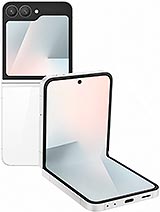
Galaxy Z Flip7 FE
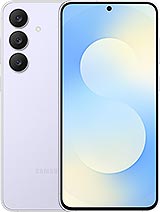
Galaxy S25 FE
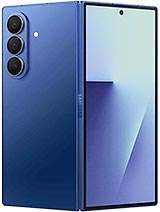
Galaxy Z Fold7
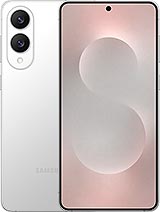
Galaxy S25 Edge

iPhone 17