Samsung Galaxy XCover 7 Pro review
This phone suits field workers, construction crews, and outdoor professionals who need durability and a removable battery more than they need speed or polish. Anyone who wants a responsive daily driver or plans to keep this phone beyond 2–3 years should look at a newer rugged alternative instead.
This review is written with AI assistance from Samsung’s published specifications and public benchmark data for the Samsung Galaxy XCover 7 Pro, and the rating is spec-based. GoSolo does not physically test devices; where we estimate real-world behaviour such as battery life or charge time, we say so. How we rate phones.
Overview
The XCover 7 Pro is a rugged work phone built to survive hard knocks and water with a removable battery, but six years on it is underpowered for today and the lack of charging specs is telling. It suits field workers and outdoor crews who need durability over performance, not smartphone enthusiasts.
Design & durability
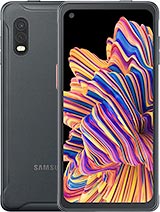
At 218 grams and 10 mm thick, the XCover 7 Pro does not hide what it is: built for fieldwork, not pockets. The IP68 rating (immersible to 1.5 m for 35 minutes), 1.5 m drop resistance, and MIL-STD-810G compliance are genuine protective layers that distinguish it from a regular phone with a rubber case. The removable battery is a rarity that matters in remote or off-grid jobs where charging is scarce and you cannot simply wait by a socket. Side-mounted fingerprint and larger physical buttons work better with gloved hands and in wet conditions than modern in-display sensors. If you spend your day on a building site, in a quarry, or in the field, this design philosophy pays off. For anyone else, it is simply overkill and uncomfortable.
Display
The 6.3-inch IPS LCD panel runs at 1080 × 2340 pixels (about 409 ppi), which is fine for readability at arm's length but noticeably grainy if you hold it close. IPS tech means colors drift if you view from an angle, a limitation that did not matter much in 2020 but feels dated now that 1440p and OLED have become standard even on budget phones. The 79.4% screen-to-body ratio is decent but unimpressive for its size. Gorilla Glass 5 is protective enough for rough use, though rivals now pair rugged chassis with more durable modern glass. The display does its job in bright daylight without washing out, a plus for outdoor work, but this is not a phone you buy for media or gaming pleasure.
Performance
The Exynos 9611 launched in 2019 and shows its age. Paired with 4GB RAM, it struggles with basic multitasking—switching between three apps or a video call on WhatsApp alongside another task brings noticeable lag. Games and heavy apps that rely on GPU grunt will stutter or crash. For field workers logging data, checking maps, and sending photos, it is passable on a good day, but do not expect smooth scrolling or quick app loads. By 2026 standards, mid-range rivals offer at least double the CPU and GPU performance for similar money. This phone predates the generational leaps in efficiency that made 2024–2026 chipsets so much snappier, so everyday frustration is the real cost of ownership.
Software
It ships with Android 10 and reaches Android 13 with One UI 5, which is a respectable two-generation upgrade path. One UI is stable and familiar, but security patches for a six-year-old phone are now sporadic at best. If you buy this phone new today (2026), you are inheriting software that is already out of its support window, which is a genuine risk for any work tool handling sensitive data or job-site photos. The long-term usability here is uncertain.
Camera
The 25 MP primary camera with f/1.7 aperture and PDAF is serviceable for job-site documentation in good light. The 8 MP ultrawide (123 degrees) is useful for capturing wide shots of a site or layout, though the 1/4" sensor is small and details blur in low light. Both cameras are limited to 1080p video at 30 fps, which is fine for clips but not for professional video work. The 13 MP selfie camera is ordinary. Overall, the camera is not a selling point; it exists to document work, not to wow. For this price and durability tier, the camera sits below what modern rivals offer, but unless you are selling this phone on image quality, it is secondary to durability.
Battery & charging
The 4050 mAh removable battery is the standout here. It lasts about a day of moderate field work (calls, messages, GPS, site photos), and the ability to swap in a spare without tools is invaluable if you work far from power. The spec sheet does not list charging wattage, a red flag that almost certainly means a legacy 5W or 10W charger, not the 20W–65W norm now. Expect 2–3 hours to a full charge from empty, which is slow by modern standards but acceptable if you are charging overnight. The practical edge goes to the removable battery; the charging speed is a real sore spot.
Value & verdict
At about 120 EUR, the XCover 7 Pro undercuts many modern rugged phones, but it is also a 2020 phone selling in 2026. You are paying for proven durability and a removable battery, not for performance, camera quality, or software support. For a worker in a harsh environment who needs a phone that survives and can run basic productivity apps, it is practical and cheap. For anyone else—or for a field worker who also wants responsive multitasking and future-proof software—a newer rugged alternative (such as a modern CAT phone or a hardened variant of a current flagship) is a wiser investment. The question is not whether the XCover 7 Pro is good for a mid-range phone; it is whether you value raw durability and battery swappability over everything else that a smartphone in 2026 has learned to do better.
Verdict
This phone suits field workers, construction crews, and outdoor professionals who need durability and a removable battery more than they need speed or polish. Anyone who wants a responsive daily driver or plans to keep this phone beyond 2–3 years should look at a newer rugged alternative instead.
- IP68 durability plus 1.5m drop resistance and MIL-STD-810G compliance mean it genuinely survives jobsites and deep water immersion
- Removable 4050 mAh battery is rare now and practical for field workers who swap spares or work off-grid
- Dedicated microSDXC slot gives expandable storage without paying for a bigger base model, useful for job photos and media
- Side-mounted fingerprint and physical buttons are easier to use with gloves and in wet conditions
- Exynos 9611 from 2020 is now severely underpowered; everyday apps stutter and multitasking feels sluggish by 2026 standards
- No charging wattage listed in specs, but a 4050 mAh battery with USB 2.0 suggests slow trickle charging, not the 20W minimum rivals offer
- 218 g and 10 mm thick makes it heavy and unwieldy compared to modern rugged phones, and the hefty build trades comfort for marginal durability gains
Samsung Galaxy XCover 7 Pro Key Specifications
The essentials at a glance. See the full spec sheet.
| Released | 2020, January |
|---|---|
| Display | 6.3 inches, 97.4 cm2 (~79.4% screen-to-body ratio), IPS LCD |
| Resolution | 1080 x 2340 pixels, 19.5:9 ratio (~409 ppi density) |
| Chipset | Exynos 9611 (10 nm) |
| RAM & storage | 64GB 4GB RAM |
| Main camera | 25 MP, f/1.7, 26mm (wide), PDAF 8 MP, f/2.2, 123˚ (ultrawide), 1/4.0", 1.12µm |
| Selfie camera | 13 MP, f/2.0, (wide), 1/3.1", 1.12µm |
| Battery | 4050 mAh |
| Software | Android 10, upgradable to Android 13, One UI 5 |
| Dimensions | 159.9 x 76.7 x 10 mm (6.30 x 3.02 x 0.39 in) |
| Weight | 218 g (7.69 oz) |
| Durability | IP68 dust tight and water resistant (immersible up to 1.5m for 35 min) Drop resistant up to 1.5m MIL-STD-810G compliant* *does not guarantee ruggedness or use in extreme conditions |
| Network | GSM / HSPA / LTE |
| NFC | Yes |
| USB | USB Type-C 2.0 |
Samsung Galaxy XCover 7 Pro FAQ
Common questions, answered from the spec sheet.
Does the Galaxy XCover 7 Pro support 5G?
No. The Galaxy XCover 7 Pro tops out at GSM / HSPA / LTE, without 5G.
What chipset does the Galaxy XCover 7 Pro use?
The Galaxy XCover 7 Pro runs on the Exynos 9611 (10 nm).
What display does the Galaxy XCover 7 Pro have?
A 6.3 inches, 97.4 cm2 (~79.4% screen-to-body ratio) IPS LCD, 1080 x 2340 pixels, 19.5:9 ratio (~409 ppi density).
How big is the Galaxy XCover 7 Pro battery?
The Galaxy XCover 7 Pro has a 4050 mAh battery.
Does the Galaxy XCover 7 Pro have NFC?
Yes, the Galaxy XCover 7 Pro has NFC.
Is the Galaxy XCover 7 Pro water resistant?
The Galaxy XCover 7 Pro carries a IP68 dust tight and water resistant (immersible up to 1.5m for 35 min) Drop resistant up to 1.5m MIL-STD-810G compliant* *does not guarantee ruggedness or use in extreme conditions rating.
Does the Galaxy XCover 7 Pro support a microSD card?
Yes, the Galaxy XCover 7 Pro supports expandable storage (microSDXC (dedicated slot)).
Alternatives to consider
If the Galaxy XCover 7 Pro isn’t quite right, these are the closest calls.
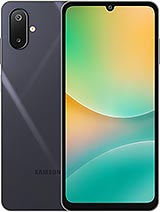
Galaxy M06 5G
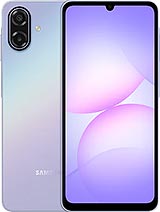
Galaxy A07
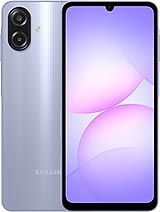
Galaxy A07 4G
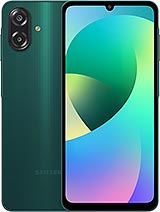
Galaxy F07
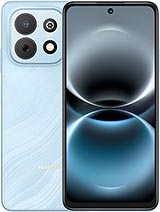
nova Y74