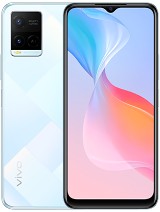
Samsung Galaxy XCover 5 review
This phone makes sense for workers who drop things and get rained on, and for anyone who genuinely values a removable battery in a pocket-friendly body. Anyone else should look elsewhere—a standard budget phone offers better performance and brightness for the same money, and serious rugged phones cost more but do not compromise on chipset or display quality.
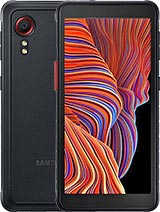
This review is written with AI assistance from Samsung’s published specifications and public benchmark data for the Samsung Galaxy XCover 5, and the rating is spec-based. GoSolo does not physically test devices; where we estimate real-world behaviour such as battery life or charge time, we say so. How we rate phones.
Overview
The XCover 5 is a rugged workhorse phone built for job sites and outdoor abuse, with IP68 and MIL-STD-810H durability that rivals do not match at this price. It sacrifices screen brightness, processing power, and battery capacity for a tough body and a genuinely removable battery—practical trade-offs if you need a phone that survives drops and water, less so if you want a general-purpose daily driver.
Design & build
The XCover 5 is a compact brick designed for abuse. At 172 grams and 9.2 millimetres thick, it sits comfortably in one hand and feels lighter than rivals built around the same durability charter. The real story is the IP68 rating and MIL-STD-810H compliance—it survives submersion to 1.5 metres for half an hour and endures the kind of drops and shock tests that separate toys from actual work tools. Most budget phones skip military certification entirely; rugged phones that do carry it typically cost twice as much. Samsung's bet here is that someone repairing equipment in the rain or carrying a phone on a construction site will value survival over sleekness. The removable battery is an artifact from an earlier smartphone era, but in 2021 it was already a rarity, and it matters for anyone working far from a power outlet.
Display
The 5.3-inch PLS LCD is adequate for calling and maps, but not much more. At 720 by 1480 pixels and 311 ppi, it sits below the threshold where fine detail becomes invisible—you will see individual pixels in photographs and notice jagged edges on text if you're looking for them. The lack of brightness is the bigger issue; an LCD panel designed for outdoor durability means it often dims under sunlight compared to the bright screens rivals now ship at this price. Reading a map in full sun or catching detail in a dark warehouse is harder here than on a mainstream budget phone. For a device marketed at work environments, a brighter or higher-resolution display would have been sensible, but that would have cost power and raised the price.
Performance
The Exynos 850 is an eight-core Cortex-A55 chip from 2020, designed for efficiency over speed. It handles email, web browsing, navigation, and messaging without lag, and the 4 GB of RAM keeps multiple apps alive. The moment you ask it for anything heavier—a 3D game, heavy photo editing, or sustained multitasking—it stutters and throttles. This is not a limitation in practice for a phone intended as a field tool; you are not gaming on a site surveyor's phone. What it does mean is that the XCover 5 feels behind the curve compared to even budget rivals from 2021 onwards, and it has not aged well by 2024 or 2025. The One UI 6.1 interface runs smoothly enough on the hardware, but the chip's age shows in any task that demands real computational grunt.
Software
One UI 6.1 and Android 14 elevate this phone far above its chipset. Samsung has committed to keeping it reasonably current, and the software experience is the same polished layer you get on flagship Galaxy models. The interface is intuitive, the bundled apps are useful, and the update path is solid for a device in this class. That said, One UI can be heavy on older hardware, and the XCover 5's modest processor means animations sometimes pause or stutter during transitions. For a work phone that needs reliability and clarity, the software support is a genuine strength; you are not trapped on Android 11 or saddled with bloatware that tanks performance.
Camera
The 16 MP main camera with an f/1.8 aperture and phase-detect autofocus is competent in daylight and bright outdoor work settings, where it captures sharp, well-exposed shots. The dual LED flash helps in dimly lit spaces. Video tops out at 1080p at 30 frames per second, which is fine for documentation but not smooth for action or fast-paced scenes. The 5 MP front-facer is basic and suffers in low light, making video calls feel grainy. For a work phone, this setup is adequate—you can photograph a problem, send it to the office, and move on. Do not expect the camera sophistication or low-light performance of a mainstream 2024 phone, and do not expect digital zoom or complex processing.
Battery & charging
The 3000 mAh battery is the XCover 5's most honest compromise. In real-world light use—calls, messages, some web browsing—you will see 12 to 16 hours per charge, which forces you to plug in every evening or carry the removable spare. Video or sustained app use drains it by mid-afternoon. By 2024 standards, where budget phones routinely ship 4500 mAh or larger, this feels cramped. Charging at 15W takes roughly 2 to 2.5 hours from zero to full, which is slow compared to the 33W or faster charging that rivals offer. The removable battery partially offsets this weakness—if you have a spare and a charger, you can work an entire day without hunting for a power socket. That practicality explains the modest capacity; a bigger battery would have raised weight and power draw, defeating the purpose of a phone designed for field work where charging infrastructure is spotty.
Value & verdict
At roughly 60 EUR, the XCover 5 occupies a specific niche: someone who needs a phone that survives rough use and does not care about gaming, screen brightness, or processing power. For field workers, delivery drivers, outdoor surveyors, and anyone working in weather, dust, or danger of dropping the device, the IP68 rating and military certification are not luxuries—they are insurance. The removable battery compounds that appeal. A mainstream budget phone at the same price will offer more speed, a brighter screen, and a bigger battery, but it will shatter on its first drop into concrete or rain onto the speaker. Conversely, if you want ruggedness without the low-end processor and dim screen, genuine alternatives exist at 150–200 EUR. The XCover 5 is the rational choice when durability is the primary concern and you accept the performance and display trade-off as the cost of that durability.
Verdict
This phone makes sense for workers who drop things and get rained on, and for anyone who genuinely values a removable battery in a pocket-friendly body. Anyone else should look elsewhere—a standard budget phone offers better performance and brightness for the same money, and serious rugged phones cost more but do not compromise on chipset or display quality.
- IP68 rating plus MIL-STD-810H certification means it genuinely survives submersion to 1.5 meters and drops without the premium price of comparable rugged phones
- Removable 3000 mAh battery lets you carry a spare and swap it in the field, a practical advantage most modern phones killed off
- Runs Android 14 via One UI 6.1, so it receives the same software treatment as flagship Galaxy models despite the budget hardware
- Compact at 172g and 9.2mm, light enough for a rugged phone and easier to pocket than heavier industrial alternatives
- 3000 mAh battery yields only around 12–16 hours on light use and drops to a single afternoon on moderate browsing or calls; rivals at this price now offer 4500+ mAh
- Exynos 850 is 2020-era entry-level silicon that struggles with any app heavier than email or maps, making it feel dated even for 2021
- 720p display is dim and low-resolution at 311 ppi, turning fine text and photos into a pixelated squint without a brighter screen to compensate
Samsung Galaxy XCover 5 Key Specifications
The essentials at a glance. See the full spec sheet.
| Released | 2021, March 04 |
|---|---|
| Display | 5.3 inches, 71.3 cm2 (~67.7% screen-to-body ratio), PLS LCD |
| Resolution | 720 x 1480 pixels, 18.5:9 ratio (~311 ppi density) |
| Chipset | Exynos 850 (8 nm) |
| RAM & storage | 64GB 4GB RAM |
| Main camera | 16 MP, f/1.8, PDAF |
| Selfie camera | 5 MP, f/2.2 |
| Battery | 3000 mAh |
| Charging | 15W wired |
| Software | Android 11, upgradable to Android 14, One UI 6.1 |
| Dimensions | 147.1 x 71.6 x 9.2 mm (5.79 x 2.82 x 0.36 in) |
| Weight | 172 g (6.07 oz) |
| Durability | IP68 dust tight and water resistant (immersible up to 1.5m for 30 min) MIL-STD-810H compliant |
| Network | GSM / HSPA / LTE |
| NFC | Yes |
| USB | USB Type-C 2.0, charging connector pins |
Samsung Galaxy XCover 5 FAQ
Common questions, answered from the spec sheet.
Does the Galaxy XCover 5 support 5G?
No. The Galaxy XCover 5 tops out at GSM / HSPA / LTE, without 5G.
What chipset does the Galaxy XCover 5 use?
The Galaxy XCover 5 runs on the Exynos 850 (8 nm).
What display does the Galaxy XCover 5 have?
A 5.3 inches, 71.3 cm2 (~67.7% screen-to-body ratio) PLS LCD, 720 x 1480 pixels, 18.5:9 ratio (~311 ppi density).
How big is the Galaxy XCover 5 battery?
The Galaxy XCover 5 has a 3000 mAh battery. Charging is rated at 15W wired.
Does the Galaxy XCover 5 have NFC?
Yes, the Galaxy XCover 5 has NFC.
Is the Galaxy XCover 5 water resistant?
The Galaxy XCover 5 carries a IP68 dust tight and water resistant (immersible up to 1.5m for 30 min) MIL-STD-810H compliant rating.
Does the Galaxy XCover 5 support a microSD card?
Yes, the Galaxy XCover 5 supports expandable storage (microSDXC (dedicated slot)).
Does the Galaxy XCover 5 have a headphone jack?
Yes, the Galaxy XCover 5 has a 3.5mm headphone jack.
Alternatives to consider
If the Galaxy XCover 5 isn’t quite right, these are the closest calls.

Galaxy XCover 5 Enterprise Edition
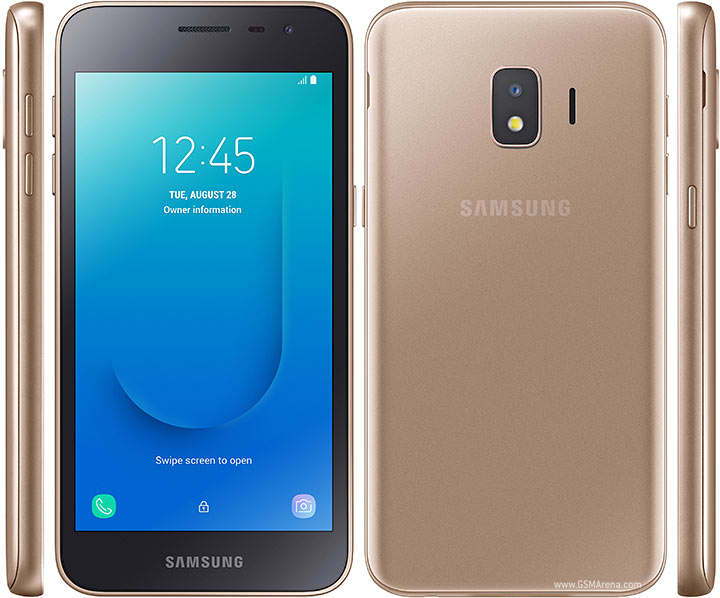
Galaxy M12 Dual SIM

Galaxy A12 Nacho Dual SIM
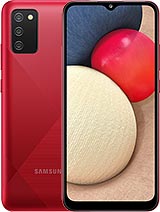
Galaxy A02s
A17