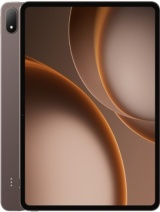
Samsung Galaxy Tab S11 Ultra review
The Tab S11 Ultra suits anyone who lives in a large-screen Android ecosystem and values brightness, durability, and smooth performance for video, multitasking, or stylus work. Skip it if you need portability, a real camera, or ecosystem lock-in to Apple or Windows; a MacBook or iPad Pro is a sharper choice for creative work, and a smaller, cheaper Android tablet handles casual use just fine.
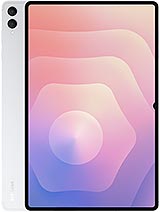
This review is written with AI assistance from Samsung’s published specifications and public benchmark data for the Samsung Galaxy Tab S11 Ultra, and the rating is spec-based. GoSolo does not physically test devices; where we estimate real-world behaviour such as battery life or charge time, we say so. How we rate phones.
Overview
The Galaxy Tab S11 Ultra is a 14.6-inch slate that reads like a convertible workstation: the 1600-nit AMOLED screen and Dimensity 9400+ chipset excel at video and productivity, but the camera setup and 45W charging feel like tablet afterthoughts in a $1,087 package. It's a compelling large-screen device for media and stylus work, not quite a laptop replacement and not trying to be.
Design & build
At 326 x 209 mm and just over half a kilogram, the Tab S11 Ultra is more slab than tablet: it looks and feels intentionally flat, with glass front, aluminum frame, and back that announce a device meant for a desk or lap, not a one-handed commute. The 5.1 mm thickness is impressively thin for this size, though it amplifies the rigidity you feel when you grip it. IP68 sealing is genuine—immersible to 1.5 meters for 30 minutes—a real differentiator for a large slate at this price. The Mohs 5 glass scratches more easily than Gorilla Glass Armor on flagship phones, so a protector is practical, not paranoid. Stylus support is positioned and effective, making this an obvious tool for sketching, annotation, or note-taking; the magnetic connector and pressure sensitivity are what you expect from Samsung at this tier.
Display
This is the device's spine. The 14.6-inch Dynamic AMOLED 2X screen spans 617.8 cm² at a 16:10 ratio, with 1848 x 2960 pixels resolving to 239 ppi—dense enough that text and icons remain sharp at arm's length. The 1600-nit peak brightness is the spec to quote: it keeps video legible in direct sunlight without squinting, a genuine advantage over typical tablets that fade to a muddy glare outdoors. HDR10+ support pairs with that brightness to make color grading and film work look intentional rather than washed. The 120Hz refresh at this size doesn't feel like a gimmick; scrolling through long documents, browsing, or swiping between apps registers as noticeably smoother than 60 Hz. For anyone spending half a day staring at a screen—video editing, reading, or multitasking—this is a tier above mid-range tablets.
Performance
The Mediatek Dimensity 9400+ is flagship silicon for Android in 2025, and it shows: demanding games like Genshin Impact run on high settings without dropping frames on the enormous screen, multitasking between four or five apps rarely stutters, and file operations feel instantaneous. The octa-core CPU and Immortalis-G925 GPU are built to handle the workload of a 1848 x 2960 display without choking. For video editing, photo batch processing, or running multiple Android apps simultaneously (via Samsung DeX), this tablet keeps pace without apology. RAM scales sensibly: the 1TB model bundles 16GB, while base configs ship with 12GB. For a 2025 tablet, this is the correct choice—overkill for media consumption alone, but essential if you are doing real work on this screen.
Software
Android 16 with One UI 8.5 brings Samsung's tablet-specific tweaks: multi-window layouts are sensible, the stylus integration is deep, and DeX (both wired and wireless) lets you dock this as a secondary monitor or quasi-desktop. The experience is polished and stable, though it still feels like Android wearing a tablet suit rather than purpose-built software. App scaling can be uneven—some apps ignore the large screen and shrink to a letterbox—but that is endemic to Android, not a Samsung failure. Software updates are promised for years, which matters for a device at this price.
Camera
The cameras are the tablet's weakest flank. The 13 MP main at f/2.0 and 8 MP ultrawide are modest specs that struggle indoors: low-light shots look soft, processing is sluggish, and there is no computational sharpening to paper over the lack of a fast lens. 4K at 30 fps is adequate but unambitious for 2025. This is not a surprise—tablets are not photography devices—but it is worth naming: if you need video or stills, a phone in your pocket outclasses this hardware decisively. The 12 MP selfie with a 120-degree field of view is useful for video calls and group shots, little more. Do not buy this for the camera.
Battery & charging
The 11600 mAh battery pairs with a conservative power draw to deliver about 12 to 14 hours of screen time on moderate to heavy use—video streaming, document editing, light gaming—enough to last from morning through evening without a charge. Heavy multitasking or high-brightness gaming will cut into that, but not drastically. The real limitation is 45W charging: a full cycle takes roughly 45 to 60 minutes, and there is no wireless charging. Rivals in the high-end tablet space now offer 80 to 100 watts, so this feels like a deliberate constraint to keep the device thin and thin-walled. For travel or daily use, that is a mild frustration, not a dealbreaker.
Value & verdict-context
At $1,087, the Galaxy Tab S11 Ultra occupies a strange market position. It is too expensive and too large to compete with iPad Pro for creative professionals (who get macOS, better apps, and more established workflows), yet too tablet-like to replace a laptop for serious work. Its real value lies for users who want a luxurious consumption and annotation device: video watchers, digital artists using the stylus, people who multitask heavily within Android. The IP68 rating and 1600-nit screen justify the price over cheaper slates if you use the device outdoors or in demanding conditions. The Dimensity 9400+ overkill is real, but it means this tablet will age well for five or six years without lag. If your use case is desk-based productivity, media, and sketching—and you live in Android—this is the tablet to reach for. Everyone else should consider whether a MacBook and a iPad make more sense, or whether a regular Tab S11 at half the price serves the same actual need.
Verdict
The Tab S11 Ultra suits anyone who lives in a large-screen Android ecosystem and values brightness, durability, and smooth performance for video, multitasking, or stylus work. Skip it if you need portability, a real camera, or ecosystem lock-in to Apple or Windows; a MacBook or iPad Pro is a sharper choice for creative work, and a smaller, cheaper Android tablet handles casual use just fine.
- 14.6-inch 1848 x 2960 AMOLED with 1600 nits peak brightness stays sharp and legible in bright daylight; scrolling at 120Hz is noticeably fluid across that canvas
- Dimensity 9400+ runs demanding apps and multi-window work without hesitation; handles Genshin Impact on high settings at this screen size without thermal throttle
- 11600 mAh battery delivers 12–14 hours screen time on moderate to heavy use, covering a full workday without a charge
- IP68 durability plus stylus support makes this a credible portable workhorse for sketches, notes, or outdoor use without babying it
- 45W charging is ordinary for a tablet this size; rivals now hit 80–100W, so a full recharge takes roughly 45–60 minutes instead of 30
- Camera hardware is weak by 2025 standards: 13 MP main and 8 MP ultrawide shoot soft detail indoors and lack fast processing, a real step down from flagship phones
- At 1.53 pounds and 5.1 mm thin, this is a large sheet of glass and aluminum that demands a case for daily carry and heat dissipation under sustained load
Samsung Galaxy Tab S11 Ultra Key Specifications
The essentials at a glance. See the full spec sheet.
| Released | 2025, September 04 |
|---|---|
| Display | 14.6 inches, 617.8 cm2 (~90.8% screen-to-body ratio), Dynamic AMOLED 2X, 120Hz, HDR10+, 1000 nits (typ), 1600 nits (peak) |
| Resolution | 1848 x 2960 pixels, 16:10 ratio (~239 ppi density) |
| Chipset | Mediatek Dimensity 9400+ (3 nm) |
| RAM & storage | 128GB 12GB RAM, 256GB 12GB RAM, 512GB 12GB RAM, 1TB 16GB RAM |
| Main camera | 13 MP, f/2.0, 26mm (wide), 1/3.4", 1.0µm, AF 8 MP, f/2.2, (ultrawide) |
| Selfie camera | 12 MP, f/2.4, 120˚ (ultrawide) |
| Battery | 11600 mAh |
| Charging | 45W wired |
| Software | Android 16, One UI 8.5 |
| Dimensions | 326.3 x 208.5 x 5.1 mm (12.85 x 8.21 x 0.20 in) |
| Weight | 692 g or 695 g (1.53 lb) |
| Build | Glass front, aluminum frame, aluminum back |
| Durability | IP68 dust tight and water resistant (immersible up to 1.5m for 30 min) Stylus support Enhanced Armor aluminum |
| Network | GSM / HSPA / LTE / 5G |
| NFC | No |
| USB | USB Type-C 3.2, magnetic connector |
Samsung Galaxy Tab S11 Ultra FAQ
Common questions, answered from the spec sheet.
Does the Galaxy Tab S11 Ultra support 5G?
Yes. The Galaxy Tab S11 Ultra supports 5G networks.
What chipset does the Galaxy Tab S11 Ultra use?
The Galaxy Tab S11 Ultra runs on the Mediatek Dimensity 9400+ (3 nm).
What display does the Galaxy Tab S11 Ultra have?
A 14.6 inches, 617.8 cm2 (~90.8% screen-to-body ratio) Dynamic AMOLED 2X, 120Hz, HDR10+, 1000 nits (typ), 1600 nits (peak), 1848 x 2960 pixels, 16:10 ratio (~239 ppi density).
How big is the Galaxy Tab S11 Ultra battery?
The Galaxy Tab S11 Ultra has a 11600 mAh battery. Charging is rated at 45W wired.
Does the Galaxy Tab S11 Ultra have NFC?
No, the Galaxy Tab S11 Ultra does not list NFC support.
Is the Galaxy Tab S11 Ultra water resistant?
The Galaxy Tab S11 Ultra carries a IP68 dust tight and water resistant (immersible up to 1.5m for 30 min) Stylus support Enhanced Armor aluminum rating.
Does the Galaxy Tab S11 Ultra support a microSD card?
Yes, the Galaxy Tab S11 Ultra supports expandable storage (microSDXC (dedicated slot)).
Does the Galaxy Tab S11 Ultra have a headphone jack?
No, the Galaxy Tab S11 Ultra does not have a 3.5mm headphone jack.
Alternatives to consider
If the Galaxy Tab S11 Ultra isn’t quite right, these are the closest calls.
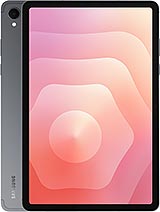
Galaxy Tab S11
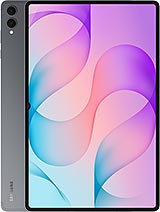
Galaxy Tab S12 Ultra
Galaxy Tab S12+
Galaxy Tab S10 Ultra
Pad 2 Pro