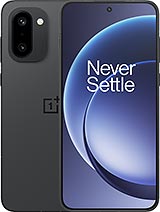
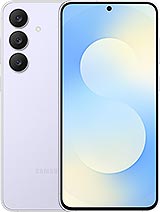
Samsung Galaxy S25 FE review
The S25 FE suits Android buyers who prioritize a bright, smooth screen and long software support over the sharpest text or fastest charging. Anyone cross-shopping rival mid-rangers should know: you are paying for durability and update longevity more than outright performance, and the 1080p screen is a real clarity cut—not catastrophic, but worth weighing if reading or gaming on-screen are regular habits.
This review is written with AI assistance from Samsung’s published specifications and public benchmark data for the Samsung Galaxy S25 FE, and the rating is spec-based. GoSolo does not physically test devices; where we estimate real-world behaviour such as battery life or charge time, we say so. How we rate phones.
Overview
The Galaxy S25 FE wraps flagship Samsung DNA—a 120Hz AMOLED, IP68 durability, and the current-gen Exynos chip—into a large, bright phone at a mid-range price that undercuts Samsung's own flagships. The key catch is 1080p density on a 6.7-inch screen, which most won't notice day-to-day, but text clarity trails 1440p rivals; whether that trade-off suits you depends on how close you hold your phone.
Design & build
At 190g and 7.4mm, this is a comfortable large phone—lighter than many 6.7-inch rivals and thin enough to pocket without bulk. Gorilla Glass Victus+ on both sides and an enhanced armor aluminum frame feel genuinely robust, and IP68 water resistance to 1.5m for 30 minutes means accidental pool dunks and beach sand are not phone-enders. The design borrows from Samsung's flagship playbook without the flagship weight penalty; it looks premium without requiring constant case paranoia.
Display
A 6.7-inch Dynamic LTPO AMOLED with 120Hz refresh, HDR10+, and a claimed 1900-nit peak brightness is the real story here. In sunlight, 1900 nits keeps text legible where 1000-nit screens wash out, and 120Hz scrolling feels smooth. The downside: 1080p resolution at 385 ppi on a screen this large means fine print and small UI elements show visible pixelation compared to 1440p panels typical in flagships. For scrolling social feeds and watching video, you won't care; if you read dense text often or study images close-up, the softness will eventually nag. It is not broken, just a deliberate cost-cut that lands harder on big screens than it would on a 6.1-incher.
Performance
The Exynos 2400 is this year's flagship silicon—a 10-core 4nm chip that handles everyday apps, browsing, and even moderate gaming (Genshin Impact at mid settings, Fortnite at high frames) without stutter or lag. Demanding 3D titles may throttle under sustained load, and the AnTuTu score of 1.52 million places it at the high end of mid-range performance, but not quite matching Snapdragon 8 Gen 3 flagships in raw grunt. For most people, this is enough; power users chasing top frame rates in graphically brutal titles will notice the ceiling, though it is higher than you would expect at this price.
Software
Android 16 with One UI 8 ships clean and responsive, and Samsung promises seven major Android upgrades—a competitive pledge that keeps the phone current longer than most mid-rangers. One UI remains bloat-prone by Android standards, but Samsung has been pruning pre-loaded apps; the optical under-display fingerprint sensor is reliable, and Samsung DeX adds desktop productivity chops if you dock the phone to a monitor. Security updates will likely arrive on schedule, though no phone vendor matches Apple's consistency here.
Camera
The 50MP f/1.8 wide with OIS captures sharp, color-accurate shots in daylight, and the 8MP 3x optical telephoto means you can frame distant subjects without resorting to lossy crops. The 12MP 123-degree ultrawide grabs group photos and landscapes legibly, though corner distortion is present. Low-light performance is ordinary: the f/1.8 wide and decent processing keep night shots from being dark soup, but noise creeps in faster than in flagship rivals, and shadow detail is muddy. The lack of a 5x or 10x telephoto limits reach, which is a real trade-off against higher-tier Samsungs. Video records up to 8K at 24/30fps, which is more headline than utility; 4K at 60fps is where the real work happens, and it performs competently with HDR10+ and gyro stabilization.
Battery & charging
The 4900mAh battery delivers roughly 6 to 8 hours of screen-on time depending on brightness and task load, which translates to a full day with moderate use or an evening drain with heavy streaming and gaming. Hitting 65 percent in 30 minutes via 45W wired charging is respectable—not industry-leading, but fast enough for a quick half-day top-up before leaving home. 15W wireless charging and reverse wireless charging are present but unremarkable. The battery is not removable, so degradation over three to four years will eventually chip at endurance; Samsung's battery recalibration in software helps, but physics wins in the end.
Value & verdict-context
At roughly €469–£390, the S25 FE slots between entry-level Android and full flagship pricing, and the spec sheet justifies the landing: a flagship-grade display (minus resolution), this-year flagship silicon, IP68 durability, and a proven update track record. Rivals in this band—Motorola's Edge Pro, OnePlus Nord, even last year's Snapdragon-based mid-rangers—offer 1440p panels or faster charging, but few pack both a 1900-nit AMOLED, the latest chipset, and seven years of updates in one box. The camera does not blitz rivals, and the 1080p softness is a genuine trade-off, not a flaw. This works if you value screen brightness, long update support, and Samsung's polish over bleeding-edge specs; it is overkill if you never use 5G or wireless charging, and it is undershooting if you demand the sharpest text or fastest charging.
Verdict
The S25 FE suits Android buyers who prioritize a bright, smooth screen and long software support over the sharpest text or fastest charging. Anyone cross-shopping rival mid-rangers should know: you are paying for durability and update longevity more than outright performance, and the 1080p screen is a real clarity cut—not catastrophic, but worth weighing if reading or gaming on-screen are regular habits.
- 1900-nit AMOLED with 120Hz on a large screen makes scrolling smooth and sunlight readability effortless, rare at this price tier
- Flagship Exynos 2400 chipset handles demanding apps and mid-tier gaming without choking, with seven years of Android updates
- IP68 durability with Gorilla Glass Victus+ and armor aluminum frame means genuinely rugged design, not marketing theater, at this price point
- 3x optical telephoto with OIS avoids the crop-and-zoom compromise many mid-rangers force
- 385 ppi density on a 6.7-inch 1080p screen leaves fine text and UI elements visibly soft compared to 1440p rivals
- 45W charging is solid but trails 100W+ speeds now standard in competitors at this price
- Low-light camera performance is ordinary; noise and shadow detail fall short of flagship rivals
Samsung Galaxy S25 FE Key Specifications
The essentials at a glance. See the full spec sheet.
| Released | 2025, September 04 |
|---|---|
| Display | 6.7 inches, 110.2 cm2 (~89.2% screen-to-body ratio), Dynamic LTPO AMOLED 2X, 120Hz, HDR10+, 1900 nits (peak) |
| Resolution | 1080 x 2340 pixels, 19.5:9 ratio (~385 ppi density) |
| Chipset | Exynos 2400 (4 nm) |
| RAM & storage | 128GB 8GB RAM, 256GB 8GB RAM, 512GB 8GB RAM |
| Main camera | 50 MP, f/1.8, 24mm (wide), 1/1.57", 1.0µm, dual pixel PDAF, OIS 8 MP, f/2.4, 75mm (telephoto), 1/4.4", 1.0µm, PDAF, OIS, 3x optical zoom 12 MP, f/2.2, 13mm, 123˚ (ultrawide), 1/3.0", 1.12µm |
| Selfie camera | 12 MP, f/2.2, 26mm (wide), 1/3.2", 1.12µm |
| Battery | 4900 mAh |
| Charging | 45W wired, PD, QC2, 65% in 30 min15W wireless, Qi2 compatibleReverse wireless |
| Software | Android 16, up to 7 major Android upgrades, One UI 8 |
| Dimensions | 161.3 x 76.6 x 7.4 mm (6.35 x 3.02 x 0.29 in) |
| Weight | 190 g (6.70 oz) |
| Build | Glass front (Gorilla Glass Victus+), glass back (Gorilla Glass Victus+), aluminum frame |
| Durability | IP68 dust tight and water resistant (immersible up to 1.5m for 30 min) Enhanced armor aluminum frame |
| Network | GSM / HSPA / LTE / 5G |
| NFC | Yes |
| USB | USB Type-C 3.2, OTG |
Samsung Galaxy S25 FE FAQ
Common questions, answered from the spec sheet.
Does the Galaxy S25 FE support 5G?
Yes. The Galaxy S25 FE supports 5G networks.
What chipset does the Galaxy S25 FE use?
The Galaxy S25 FE runs on the Exynos 2400 (4 nm).
What display does the Galaxy S25 FE have?
A 6.7 inches, 110.2 cm2 (~89.2% screen-to-body ratio) Dynamic LTPO AMOLED 2X, 120Hz, HDR10+, 1900 nits (peak), 1080 x 2340 pixels, 19.5:9 ratio (~385 ppi density).
How big is the Galaxy S25 FE battery?
The Galaxy S25 FE has a 4900 mAh battery. Charging is rated at 45W wired, PD, QC2, 65% in 30 min15W wireless, Qi2 compatibleReverse wireless.
Does the Galaxy S25 FE have NFC?
Yes, the Galaxy S25 FE has NFC.
Is the Galaxy S25 FE water resistant?
The Galaxy S25 FE carries a IP68 dust tight and water resistant (immersible up to 1.5m for 30 min) Enhanced armor aluminum frame rating.
Does the Galaxy S25 FE support a microSD card?
No, the Galaxy S25 FE does not support expandable storage.
Does the Galaxy S25 FE have a headphone jack?
No, the Galaxy S25 FE does not have a 3.5mm headphone jack.
Alternatives to consider
If the Galaxy S25 FE isn’t quite right, these are the closest calls.
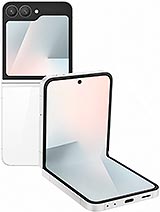
Galaxy Z Flip7 FE
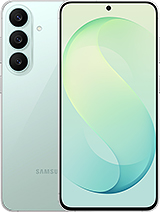
Galaxy S26 FE
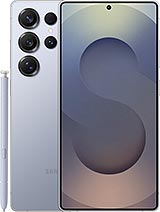
Galaxy S25 Ultra
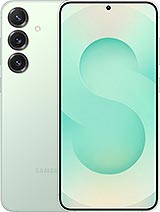
Galaxy S25+

iPhone 17