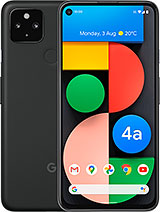
Samsung Galaxy Note10 Lite review
The Note10 Lite suits anyone who writes notes with a stylus or watches media on a large AMOLED screen and is not bothered by aging processor performance or single-day battery life. Anyone wanting speed, zoom range, or modern charging should look elsewhere.

This review is written with AI assistance from Samsung’s published specifications and public benchmark data for the Samsung Galaxy Note10 Lite, and the rating is spec-based. GoSolo does not physically test devices; where we estimate real-world behaviour such as battery life or charge time, we say so. How we rate phones.
Overview
The Galaxy Note10 Lite is a large-screen phone with a stylus aimed at people who value note-taking and reading over raw power or cameras. It delivers a serviceable phone experience for everyday tasks, but by 2020 standards the Exynos 9810 chipset was already dated, the 1080p screen looks soft at 6.7 inches, and a single day of battery life with 25W charging feels slow compared to rivals—making it a reasonable choice only if you specifically need the S Pen and do not mind modest performance.
Design & Build
The Note10 Lite feels lean at 199g and 8.7mm thin, with a proper grip thanks to the aluminum frame. The glass front is Gorilla Glass 3—adequate for everyday scratches but not cutting-edge by 2020—while the plastic back is a cost-saving move that makes the phone feel hollow compared to glass rivals. No IP rating means water splash could be an issue, and a drop on either face will likely shatter something. The S Pen is the defining feature: it slots into the body with Bluetooth integration, letting you trigger app shortcuts and use air gestures, which is genuinely convenient if you take handwritten notes or sketch. For a Note device, the absence of a real stylus nib and pressure sensitivity compared to the flagship Note10 is noticeable, but the gesture controls make up some ground.
Display
The 6.7-inch Super AMOLED screen is bright and color-accurate, with good motion handling. The problem is resolution: 1080p at this size yields 394 ppi, which means individual pixels become visible when reading text at arm's length, especially white text on dark backgrounds. By 2020, rivals at similar prices (OnePlus, Xiaomi flagships) were shipping 1440p or higher. The HDR support and fast refresh help with video playback and scrolling, but the softness in text rendering is a real trade-off for someone planning to read articles or emails on this device daily. If you mostly watch videos and browse social media, you will not notice; if you read books or documents, the pixel density will irritate.
Performance
The Exynos 9810 was respectable in 2018, but by 2020 it was noticeably behind. AnTuTu scores (258k) sit well below Snapdragon 730, 765, and even budget processors from rivals in the same year. Day-to-day tasks—messaging, email, light browsing—run smoothly, but switching between multiple heavy apps causes lag, and gaming beyond Candy Crush or light Fortnite settings will stutter. Video editing, photo batch processing, and running multiple streaming apps together expose the chip's age. For someone who checks email, reads news, and takes notes, it is adequate; for multitasking power users or anyone who plays current games, it will frustrate.
Software
The phone ships with Android 10 and One UI 5.1 (via update), giving it a clean, predictable Samsung interface. One UI is mature and includes useful extras like routines, per-app permissions, and gesture navigation, all well-integrated with the S Pen. Security patches should arrive regularly through 2021 or 2022, though Samsung's track record on long-term updates for mid-range devices is inconsistent. The software experience is stable and user-friendly, with no bloatware beyond Samsung's own apps, which most users find useful rather than burdensome.
Camera
The triple-camera setup (12MP wide, 12MP 2x tele, 12MP ultrawide) is versatile but not impressive. The wide camera has a large f/1.7 aperture and dual-pixel autofocus, which helps in daylight and marginal light, while OIS keeps handheld shots steady. The 2x optical zoom is honest and usable without dramatic crop artifacts. The ultrawide captures group shots and landscapes well. However, 12MP is entry-level for 2020; competitors were shooting 48MP and 64MP. The 1.4µm pixels mean less detail than larger sensors at the same resolution, and despite OIS, low-light shots are noisy. The 32MP selfie is overkill by any measure (software binning makes it a 16MP output anyway), but it works for video calls and group photos. Expect solid daytime shots and functional video, not compelling zoom or night mode.
Battery & Charging
The 4500 mAh battery delivers about six to seven hours of screen-on time depending on use, which means you will need to charge by evening or charge to half mid-day for a comfortable day. That is on par with other phones of this size, but rivals were introducing larger batteries (4700+) and faster charging (40W+) by 2020. The 25W wired charging takes about 1.5 to 2 hours from empty, which is respectable but not fast; there is no wireless charging. If you need a phone that lasts a full day without thinking about power, you will manage here with light use, but heavy video watching, gaming, or navigation will force a top-up. The endurance rating of 92 hours (GSMArena's metric) suggests moderate stamina overall.
Value & Verdict
At 550 EUR (2020), the Note10 Lite was a middle-ground play: cheaper than the flagship Note10 but more expensive than vanilla Galaxy A and midrange phones. The S Pen and large screen justify the premium if you actually use them for note-taking or media consumption. The Exynos chip and 1080p display were already showing their age in January 2020, though. If you value stylus integration and a big AMOLED screen over raw power and camera quality, this is a legitimate choice. If you prioritize performance, zoom range, or faster charging, rivals like the OnePlus 7T or Xiaomi Mi 10 youth (same era, similar price) will serve you better. The headphone jack and expandable storage are bonuses in a 2020 where most flagships ditched them. For students, note-takers, and media consumers willing to accept a mid-range processor, the Note10 Lite remains practical, but it is not a power user's device.
Verdict
The Note10 Lite suits anyone who writes notes with a stylus or watches media on a large AMOLED screen and is not bothered by aging processor performance or single-day battery life. Anyone wanting speed, zoom range, or modern charging should look elsewhere.
- S Pen with Bluetooth integration and gesture controls for note-taking and screen shortcuts, genuinely useful for the productivity-focused crowd
- 6.7-inch Super AMOLED screen with high refresh is vibrant and smooth despite 1080p resolution, good for video and reading
- Triple camera with 2x optical zoom and OIS covers common shots, 32MP selfie handles group photos and video calls
- Headphone jack, microSD slot, and FM radio are still here—useful if you rely on wired audio, expandable storage, or offline radio
- Exynos 9810 was aging in 2020 and struggles visibly with demanding games and heavy multitasking; AnTuTu score of 258k puts it well behind rivals at this price
- 4500 mAh battery with 25W charging yields only about one day of real use and 1.5 to 2 hours to refill, noticeably slower than competitors hitting 40W+ by this time
- 1080p on a 6.7-inch screen means text and small icons pixelate up close; rivals were already moving to 1440p or higher at this size and price
Samsung Galaxy Note10 Lite Key Specifications
The essentials at a glance. See the full spec sheet.
| Released | 2020, January 03 |
|---|---|
| Display | 6.7 inches, 107.8 cm2 (~86.6% screen-to-body ratio), Super AMOLED, HDR |
| Resolution | 1080 x 2400 pixels, 20:9 ratio (~394 ppi density) |
| Chipset | Exynos 9810 (10 nm) |
| RAM & storage | 128GB 6GB RAM, 128GB 8GB RAM |
| Main camera | 12 MP, f/1.7, 27mm (wide), 1/2.55", 1.4µm, dual pixel PDAF, OIS 12 MP, f/2.4, 52mm (telephoto), 1/3.6", 1.0µm, PDAF, OIS, 2x optical zoom 12 MP, f/2.2, 12mm (ultrawide) |
| Selfie camera | 32 MP, f/2.2, 25mm (wide), 1/2.8", 0.8µm |
| Battery | 4500 mAh |
| Charging | 25W wired |
| Software | Android 10, upgradable to Android 13, One UI 5.1 |
| Dimensions | 163.7 x 76.1 x 8.7 mm (6.44 x 3.00 x 0.34 in) |
| Weight | 199 g (7.02 oz) |
| Build | Glass front (Gorilla Glass 3), aluminum frame, plastic back |
| Durability | Stylus (Bluetooth integration, accelerometer, gyro) |
| Network | GSM / HSPA / LTE |
| NFC | Yes |
| USB | USB Type-C 2.0 |
Samsung Galaxy Note10 Lite FAQ
Common questions, answered from the spec sheet.
Does the Galaxy Note10 Lite support 5G?
No. The Galaxy Note10 Lite tops out at GSM / HSPA / LTE, without 5G.
What chipset does the Galaxy Note10 Lite use?
The Galaxy Note10 Lite runs on the Exynos 9810 (10 nm).
What display does the Galaxy Note10 Lite have?
A 6.7 inches, 107.8 cm2 (~86.6% screen-to-body ratio) Super AMOLED, HDR, 1080 x 2400 pixels, 20:9 ratio (~394 ppi density).
How big is the Galaxy Note10 Lite battery?
The Galaxy Note10 Lite has a 4500 mAh battery. Charging is rated at 25W wired.
Does the Galaxy Note10 Lite have NFC?
Yes, the Galaxy Note10 Lite has NFC.
Is the Galaxy Note10 Lite water resistant?
The Galaxy Note10 Lite carries a Stylus (Bluetooth integration, accelerometer, gyro) rating.
Does the Galaxy Note10 Lite support a microSD card?
Yes, the Galaxy Note10 Lite supports expandable storage (microSDXC (uses shared SIM slot)).
Does the Galaxy Note10 Lite have a headphone jack?
Yes, the Galaxy Note10 Lite has a 3.5mm headphone jack.
Alternatives to consider
If the Galaxy Note10 Lite isn’t quite right, these are the closest calls.
Galaxy S10 Lite

Galaxy Note 10 Lite Dual SIM
Galaxy M32

Galaxy Z Flip

Mi Note 10 Lite