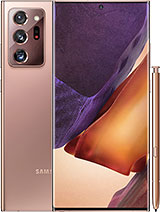
Samsung Galaxy Note 20 Ultra review
The Note 20 Ultra suits stylus users and those who prioritize zoom range and screen quality over outright speed. If you rely on the stylus for work or creativity, the fast latency and software integration justify consideration. Anyone else should look to newer phones with current processors, larger batteries, and faster charging—the performance and endurance gap will feel tangible in daily use.
This review is written with AI assistance from Samsung’s published specifications and public benchmark data for the Samsung Galaxy Note 20 Ultra, and the rating is spec-based. GoSolo does not physically test devices; where we estimate real-world behaviour such as battery life or charge time, we say so. How we rate phones.
Overview
The Note 20 Ultra is a 6.9-inch flagship that nails display smoothness and camera range but stumbles on the essentials: its 2020 processor feels dated even for 2024, and the 4500 mAh battery can't keep pace with the large screen for a full day of heavy use. If you value the stylus and screen, it still delivers; otherwise, newer phones at similar prices move faster.
Design & build
The Note 20 Ultra weighs 208g and measures 8.1mm, which felt substantial when it launched but now sits squarely in the heavy camp by modern standards. Glass and stainless steel chassis with Gorilla Glass Victus on both faces offer durability, and the IP68 rating handles fresh water immersion to 1.5 meters for 30 minutes. The inclusion of the stylus—with 9ms latency and Bluetooth integration—sets this apart from any mainstream competitor; the pen itself remains a meaningful advantage for sketch work and annotation. By 2024, the weight and thickness are hard to ignore if you cross-shop it against lighter, thinner flagships.
Display
At 6.9 inches with a 1440x3088 resolution and 496 ppi density, this Dynamic AMOLED 2X panel is sharp and color-accurate. The 120Hz refresh rate keeps scrolling and gaming smooth, and HDR10+ support enhances video. The screen-to-body ratio sits at 91.7 percent, leaving slim bezels. In practice, the size and aspect ratio (19.3:9) make one-handed use uncomfortable; this is a two-handed device. Against modern OLED panels, the brightness and color science hold up, though newer flagships have pushed peak brightness higher. For its 2020 vintage, this display remains a genuine strength, especially for watching content and productivity.
Performance
The Exynos 990 is the weakest link. This seven-nanometer processor was respectable in 2020, but by 2024 it shows its age against modern chips. Apps launch and switch fine in everyday use, but sustained gaming and video editing expose the gap: frame rates dip, rendering lags, and the phone throttles faster than newer processors under load. The Mali-G77 GPU handles mid-range games at high settings but stutters in demanding titles. The 12GB RAM variant keeps things smooth for everyday multitasking, but raw speed falls behind what current flagships and even mid-range phones offer. If you edit video, play graphically intensive games, or do heavy background processing, this chip will frustrate you.
Software
The phone shipped on Android 10 and is upgradable to Android 13 with One UI 5. By 2024, that's two major version bumps, which is respectable for a four-year-old flagship but not exceptional. One UI remains clean and feature-rich, with Samsung's tablet and desktop integration features like Samsung DeX adding utility for productivity. The software experience is polished but not ahead of current releases, and security patch cadence will taper off as the phone ages further.
Camera
The triple rear setup is diverse: 108MP wide (f/1.8, 26mm) with optical image stabilization, a 12MP periscope telephoto (f/3.0, 120mm) offering 5x optical and 50x hybrid zoom, and a 12MP ultrawide (f/2.2, 120 degrees). The 108MP sensor captures fine detail and crops well; the telephoto reach is a clear strength that bridges the gap between zoom phones and ultra-telephoto specialists. The ultrawide is functional but uninspiring. Night mode and HDR work competently, though not as aggressive as newer rivals. Video tops out at 8K 24fps, which is a spec-sheet win but yields massive files for minimal practical gain. The 10MP selfie camera handles video calls and portraits adequately. By 2024, the zoom lens remains a standout, but single-image quality has been matched and surpassed by processors with better computational photography; the camera feels like a 2020 design running on aging silicon.
Battery & charging
The 4500 mAh battery delivers roughly 16 to 18 hours on mixed use (browsing, calls, social media) before requiring a charge, and less if you enable 120Hz constantly or game heavily. For a 6.9-inch display, this capacity feels undersized compared to rivals who ship 5000+ mAh. Charging crawls at 25W wired and 15W wireless—figures that felt acceptable in 2020 but now lag 65W and 30W standards seen at comparable prices. A full wired charge takes over an hour. If you use this daily and rely on a single charge, plan for a midday top-up or carry a battery pack.
Value & verdict-context
The Note 20 Ultra launched at EUR 1250 in 2020. By 2024, this phone is available used or on clearance at a fraction of that. At today's prices, the question shifts: is the stylus, zoom range, and design worth the processor and battery compromises? Used markets make this phone a better value play than new retail, where it competes against phones that are faster, last longer on a charge, and cost less. For stylus users who edit photos or take notes regularly, the Note remains relevant; for casual users, faster processors and larger batteries elsewhere offer more practical value.
Verdict
The Note 20 Ultra suits stylus users and those who prioritize zoom range and screen quality over outright speed. If you rely on the stylus for work or creativity, the fast latency and software integration justify consideration. Anyone else should look to newer phones with current processors, larger batteries, and faster charging—the performance and endurance gap will feel tangible in daily use.
Verdict
The Note 20 Ultra suits stylus users and those who prioritize zoom range and screen quality over outright speed. If you rely on the stylus for work or creativity, the fast latency and software integration justify consideration. Anyone else should look to newer phones with current processors, larger batteries, and faster charging—the performance and endurance gap will feel tangible in daily use.
- 108MP main camera with periscope 5x optical zoom covers wide to compressed telephoto in one frame
- 6.9-inch 1440p 120Hz AMOLED display is bright and smooth for video, reading, and games
- IP68 rating and Gorilla Glass Victus survive daily damage better than most phones
- Stylus with 9ms latency remains the fastest digital pen for note-taking and drawing compared to alternatives
- Exynos 990 is a 2020 chip; by 2024 it struggles with sustained gaming and heavy multitasking compared to current mid-range processors
- 4500 mAh battery pushes only 16 to 18 hours on mixed use, even less at 120Hz or under load—rivals in 2024 routinely hit 5000+ mAh
- Charging speed (25W wired, 15W wireless) lags behind 65W+ standards now common at this price point
Samsung Galaxy Note 20 Ultra Key Specifications
The essentials at a glance. See the full spec sheet.
| Released | 2020, August 05 |
|---|---|
| Display | 6.9 inches, 116.7 cm2 (~91.7% screen-to-body ratio), Dynamic AMOLED 2X, 120Hz, HDR10+ |
| Resolution | 1440 x 3088 pixels, 19.3:9 ratio (~496 ppi density) |
| Chipset | Exynos 990 (7 nm+) - GlobalQualcomm SM8250 Snapdragon 865 5G+ (7 nm+) - USA |
| RAM & storage | 256GB 8GB RAM, 256GB 12GB RAM, 512GB 8GB RAM, 512GB 12GB RAM |
| Main camera | 108 MP, f/1.8, 26mm (wide), 1/1.33", 0.8µm, PDAF, OIS 12 MP, f/3.0, 120mm (periscope telephoto), 1.0µm, PDAF, OIS, 5x optical zoom, 50x hybrid zoom 12 MP, f/2.2, 120˚, 13mm (ultrawide), 1/2.55", 1.4µm |
| Selfie camera | 10 MP, f/2.2, 26mm (wide), 1/3.2", 1.22µm, dual pixel PDAF |
| Battery | 4500 mAh |
| Charging | Fast Charging, Wireless: WPC |
| Software | Android 10, upgradable to Android 13, One UI 5 |
| Dimensions | 164.8 x 77.2 x 8.1 mm (6.49 x 3.04 x 0.32 in) |
| Weight | 208 g (7.34 oz) |
| Build | Glass front (Gorilla Glass Victus), glass back (Gorilla Glass Victus), stainless steel frame |
| Durability | IP68 dust tight and water resistant (immersible up to 1.5m for 30 min) Stylus, 9ms latency (Bluetooth integration, accelerometer, gyro) |
| Network | GSM / CDMA / HSPA / EVDO / LTE |
| NFC | Yes |
| USB | USB Type-C 3.2, OTG |
Samsung Galaxy Note 20 Ultra FAQ
Common questions, answered from the spec sheet.
Does the Galaxy Note 20 Ultra support 5G?
Yes. The Galaxy Note 20 Ultra supports 5G networks.
What chipset does the Galaxy Note 20 Ultra use?
The Galaxy Note 20 Ultra runs on the Exynos 990 (7 nm+) - GlobalQualcomm SM8250 Snapdragon 865 5G+ (7 nm+) - USA.
What display does the Galaxy Note 20 Ultra have?
A 6.9 inches, 116.7 cm2 (~91.7% screen-to-body ratio) Dynamic AMOLED 2X, 120Hz, HDR10+, 1440 x 3088 pixels, 19.3:9 ratio (~496 ppi density).
How big is the Galaxy Note 20 Ultra battery?
The Galaxy Note 20 Ultra has a 4500 mAh battery. Charging is rated at Fast Charging, Wireless: WPC.
Does the Galaxy Note 20 Ultra have NFC?
Yes, the Galaxy Note 20 Ultra has NFC.
Is the Galaxy Note 20 Ultra water resistant?
The Galaxy Note 20 Ultra carries a IP68 dust tight and water resistant (immersible up to 1.5m for 30 min) Stylus, 9ms latency (Bluetooth integration, accelerometer, gyro) rating.
Does the Galaxy Note 20 Ultra support a microSD card?
Yes, the Galaxy Note 20 Ultra supports expandable storage (microSDXC (uses shared SIM slot)).
Alternatives to consider
If the Galaxy Note 20 Ultra isn’t quite right, these are the closest calls.
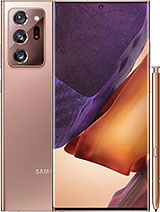
Galaxy Note20 Ultra
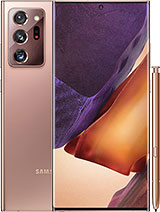
Galaxy Note20 Ultra 5G
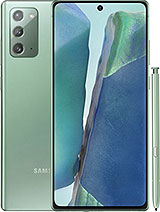
Galaxy Note20 5G
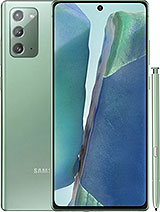
Galaxy Note20

iPhone 12 Pro Max