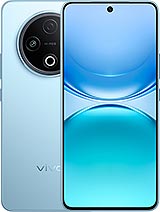
Samsung Galaxy M17 review
The M17 suits budget buyers in emerging markets who prioritize all-day battery and outdoor visibility—the 5000mAh and 1100-nit AMOLED are genuine strengths at this price. Skip it if gaming, fast charging, or ambitious photography matter to you; those need a different €120–150 phone or a larger budget.
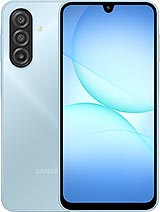
This review is written with AI assistance from Samsung’s published specifications and public benchmark data for the Samsung Galaxy M17, and the rating is spec-based. GoSolo does not physically test devices; where we estimate real-world behaviour such as battery life or charge time, we say so. How we rate phones.
Overview
The Galaxy M17 is a straightforward entry-budget phone built around a large, bright AMOLED screen and a 5000mAh battery that easily outlasts a day. The Exynos 1330 and 25W charging fall well short of what rivals offer at this price, but the IP54 durability and clean Android experience justify the €120 ask for emerging-market buyers who prioritize battery life and daytime visibility.
Design & build
At 192g and 7.5mm, the M17 sits between thin and portable—light enough for daily carry but not featherweight. Gorilla Glass Victus on the front is a legitimate upgrade over older budget glass, and the plastic back keeps weight down; the frame is plastic too, a cost-cut that does not hurt durability much at this price. The real standout here is IP54: water splashes and light dust won't kill the phone, a spec that vanishes below €150 in most markets. Side-mounted fingerprint is quick and reliable, though cramped hands might fumble it.
Display
The 6.7-inch Super AMOLED screen is the phone's actual identity. 1100 nits peak brightness (HBM mode) is genuinely useful in sunlight—reading and navigation remain legible without squinting, a rarity at budget prices where LCD is still common. The 1080 x 2340 resolution works out to 385 ppi, which is fine at 6.7 inches; text is sharp enough and nothing looks jagged. 90Hz scrolling is smooth and noticeable compared to rivals still stuck at 60Hz. The only caveat: 1080p on a large canvas leaves less headroom than 1440p for pinch-zooming in photos, but for media and web browsing, it's sufficient. The screen-to-body ratio (86%) is respectable without being exceptional.
Performance
The Exynos 1330 is a mainstream midrange chip from 2024, neither new nor old in late 2025. Day-to-day use—messaging, social media, video, email—feels smooth; apps open quickly and multitasking rarely stutters with 6GB or 8GB RAM. Gaming is where limits appear: casual titles run fine, but anything with demanding 3D rendering (Genshin Impact, Call of Duty Mobile) will lower graphics and still drop frames. Heavy editing and rendering tasks are slower than phones with Snapdragon 7-series chips at the same price, a real gap if you do creative work. For most users in emerging markets buying this as a daily driver, it is adequate; power users should spend €30 more elsewhere.
Software
Android 15 with One UI 7 is clean and sensible: no bloat, straightforward settings, and a promise of 6 major Android upgrades (to Android 21) plus 4 years of security patches is genuinely strong for €120. That is 10 years of support total, which beats many midrange rivals. One UI adds polish without slowing the phone down, and feature rollouts are predictable. Nothing to complain about here; Samsung has stopped using M-series phones as garbage disposals for software.
Camera
The 50MP main sensor (f/1.8, OIS) is the workhorse and handles well-lit scenes cleanly, with optical stabilization keeping handheld shots sharp in low light. Daytime shots show good detail and color balance; the f/1.8 aperture helps indoors. The 5MP ultrawide and 2MP macro are filler—wide shots are blurry and macro focuses so close it is nearly useless for everyday moments. The 13MP selfie (f/2.0) is adequate for video calls, though its 1/3.1" sensor means poor low-light performance. Video maxes out at 1080p@30fps with gyro-EIS, acceptable but not cinematic. If photography matters, this is a step down from rivals with better ultrawide or higher-res sensor secondaries.
Battery & charging
The 5000mAh battery is genuine strength. Moderate use (browsing, messaging, some video) yields 1.5+ days comfortably, and light users may stretch it to two days. Heavy gaming or video drains it noticeably faster, but even then, you will reach evening without stress. This is rare in its class, where 4000mAh packs are still common. Charging at 25W is the sore point: full from flat takes about 60–90 minutes, versus 20–30 minutes for rivals offering 65W or 100W at the same price. Samsung is being conservative here, probably to preserve longevity, but it stings in practice. Top up before leaving the house rather than expecting quick top-ups between tasks.
Value & verdict
At €120, the M17 is a smart choice if battery endurance and outdoor screen brightness matter to you. The IP54 rating and software support are bonuses that sweeten the deal. Rivals at this price often cut corners on the screen (LCD, 60Hz) or battery (3800mAh), so the M17 avoids obvious trap doors. The slow charging and weak midrange processor are real compromises, and the camera is forgettable. If gaming or fast charging are priorities, spend the extra €20–30 and jump to a Snapdragon 6-series or a last-year flagship. But for someone in Africa, India, or Southeast Asia who wants a phone that lasts the whole day, reads in daylight, and does not break in the rain, this is a solid, honest pick.
Verdict
The M17 suits budget buyers in emerging markets who prioritize all-day battery and outdoor visibility—the 5000mAh and 1100-nit AMOLED are genuine strengths at this price. Skip it if gaming, fast charging, or ambitious photography matter to you; those need a different €120–150 phone or a larger budget.
- 5000mAh battery with 5G support comfortably reaches 1.5+ days on moderate use, a rare advantage in its price tier
- 6.7-inch Super AMOLED screen with 90Hz and 1100 nits peak brightness makes reading and video genuinely comfortable outdoors
- IP54 rating and Gorilla Glass Victus offer real durability for the price—not found in many €120 rivals
- Android 15 with One UI 7 and promise of 6 major upgrades gives predictable software support uncommon at budget prices
- Exynos 1330 and Mali-G68 struggle with demanding games and heavy multitasking, limiting it to everyday apps and video
- 25W charging is slow by 2025 standards; rivals at this price now hit 65W+, meaning full charge takes 60–90 minutes instead of 20–30
- 5MP ultrawide and 2MP macro are spec-filler; most shots come from the serviceable but unremarkable 50MP main sensor
Samsung Galaxy M17 Key Specifications
The essentials at a glance. See the full spec sheet.
| Released | 2025, October 10 |
|---|---|
| Display | 6.7 inches, 110.2 cm2 (~86.0% screen-to-body ratio), Super AMOLED, 90Hz, 1100 nits (HBM) |
| Resolution | 1080 x 2340 pixels, 19.5:9 ratio (~385 ppi density) |
| Chipset | Exynos 1330 (5 nm) |
| RAM & storage | 128GB 4GB RAM, 128GB 6GB RAM, 128GB 8GB RAM |
| Main camera | 50 MP, f/1.8, (wide), 1/2.76", 0.64µm, AF, OIS 5 MP, f/2.2, (ultrawide), 1/5.0", 1.12µm 2 MP (macro) |
| Selfie camera | 13 MP, f/2.0, (wide), 1/3.1", 1.12µm |
| Battery | 5000 mAh |
| Charging | 25W wired |
| Software | Android 15, up to 6 major Android upgrades, One UI 7 |
| Dimensions | 164.4 x 77.9 x 7.5 mm (6.47 x 3.07 x 0.30 in) |
| Weight | 192 g (6.77 oz) |
| Build | Glass front (Gorilla Glass Victus), plastic back, plastic frame |
| Durability | IP54 dust protected and water resistant (water splashes) |
| Network | GSM / HSPA / LTE / 5G |
| NFC | Yes |
| USB | USB Type-C 2.0 |
Samsung Galaxy M17 FAQ
Common questions, answered from the spec sheet.
Does the Galaxy M17 support 5G?
Yes. The Galaxy M17 supports 5G networks.
What chipset does the Galaxy M17 use?
The Galaxy M17 runs on the Exynos 1330 (5 nm).
What display does the Galaxy M17 have?
A 6.7 inches, 110.2 cm2 (~86.0% screen-to-body ratio) Super AMOLED, 90Hz, 1100 nits (HBM), 1080 x 2340 pixels, 19.5:9 ratio (~385 ppi density).
How big is the Galaxy M17 battery?
The Galaxy M17 has a 5000 mAh battery. Charging is rated at 25W wired.
Does the Galaxy M17 have NFC?
Yes, the Galaxy M17 has NFC.
Is the Galaxy M17 water resistant?
The Galaxy M17 carries a IP54 dust protected and water resistant (water splashes) rating.
Does the Galaxy M17 support a microSD card?
Yes, the Galaxy M17 supports expandable storage (microSDXC (uses shared SIM slot)).
Does the Galaxy M17 have a headphone jack?
No, the Galaxy M17 does not have a 3.5mm headphone jack.
Alternatives to consider
If the Galaxy M17 isn’t quite right, these are the closest calls.
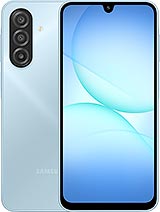
Galaxy M17 5G
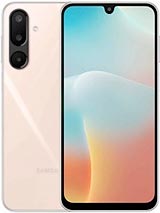
Galaxy M16 5G
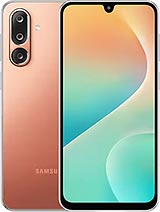
Galaxy M36 5G
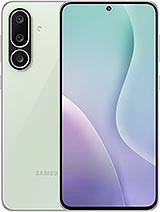
Galaxy M56 5G
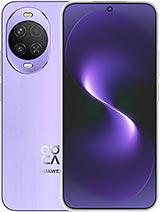
Nova 15