Realme Narzo 80 Pro 5G review
The Narzo 80 Pro suits outdoor workers, travelers, and anyone prioritizing screen quality and ruggedness over camera prowess or flagship speed. If you value an OLED display that stays readable in sunlight and a phone that can survive splashes and dust, this delivers. Skip it if you want a lighter, faster phone with better photography or confirmed fast charging at this price point."
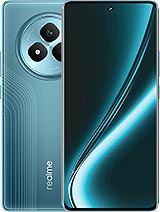
This review is written with AI assistance from Realme’s published specifications and public benchmark data for the Realme Narzo 80 Pro 5G, and the rating is spec-based. GoSolo does not physically test devices; where we estimate real-world behaviour such as battery life or charge time, we say so. How we rate phones.
Overview
The Narzo 80 Pro pairs a large, bright 120Hz OLED screen and IP68 durability with a Dimensity 7400 chipset that handles day-to-day work without fuss. It's a straightforward mid-range 5G phone that doesn't try to be more than it is, though the lack of fast charging and vanilla camera performance hold it back from feeling like genuine value at this price.
Design and durability
At 179 grams and 7.6mm thick, the Narzo 80 Pro is chunky and sits heavier in the hand than rivals like the OnePlus Nord or Moto G85. The flat frame and thick bezels around that 6.72-inch screen suggest a phone from 2023 dressed up with newer internals. What redeems it is the IP68/IP69 rating plus MIL-STD-810H compliance—a rarity at ₹23,999. It will survive accidental dunks, rain, and high-pressure jets without drama, and Realme's rating of up to 2 meters for 48 hours adds real confidence for outdoor use. If you work in a wet environment or travel rough, this durability stack justifies the heft.
Display
The 6.72-inch OLED panel is the phone's headline act. At 1080x2392 pixels (391 ppi), it's not razor-sharp, but the colors are accurate because OLED eliminates backlight glow, and scrolling through apps stays smooth thanks to 120Hz refresh. Brightness is the real strength: 1400 nits in high brightness mode and 4500 nits peak make this readable in direct sunlight, a claim most mid-range phones fail to live up to. The downside is visible bezels all around, which date the design and waste some of that screen real estate. For watching videos or reading, this is excellent; for photography enthusiasts, the large canvas is welcome, though the modest pixel density means fine text can soften at arm's length.
Performance
The Mediatek Dimensity 7400 is competent upper-midrange. It runs Android apps, scrolls social feeds, and plays casual games without stutter. YouTube, Instagram, WhatsApp, and web browsing are all lag-free, and the Mali-G615 GPU keeps everyday graphics smooth. The 8GB or 12GB RAM variant won't bottleneck for typical use. Where it shows limits is sustained load: intense games will throttle, video rendering takes time, and multitasking under heavy load (many apps open, browser tabs piling up) forces the phone to work harder than a flagship would. For office work, schoolwork, or media consumption, this is more than sufficient. For mobile gaming beyond Genshin Impact's lower settings, you are hitting the chipset's ceiling.
Software
Realme UI 6.0 on Android 15 is clean and quick. The interface is straightforward—less cluttered than Samsung's, faster to navigate than some competitors. Realme includes some bloatware (its own apps, preloaded games), which is standard in this segment, but nothing that severely impedes daily use. The phone should receive two to three years of OS updates based on Realme's track record, so you won't feel abandoned in 18 months. The UI responds immediately to taps and gestures, helped by the snappy display refresh.
Camera
The 50MP main sensor with f/1.8 aperture and OIS is solid on paper but delivers ordinary results in practice. In good light, photos are detailed and colors are natural, but the 0.8µm pixels pack tight and lose detail quickly in dim rooms or shadows. There is no telephoto lens, only the main camera, so zooming crops the image. The 16MP selfie camera is fine for video calls and social posts, though not exceptional. Video recording maxes out at 4K@30fps, which rivals handle at 60fps now, so motion feels choppy. Low-light video is muddy, as expected from the modest optics. For casual snaps and social content, this camera is adequate; for anyone wanting night mode prowess or optical zoom, look elsewhere.
Battery and charging
The 6000mAh battery translates to about seven to eight hours of screen-on time in real use, which covers a full day of messaging, browsing, and social media without hitting empty. Heavy users or mobile gamers will need a midday charge, but for the average office worker or student, one full cycle is realistic. The critical omission: the spec sheet does not list charging wattage. Realme rarely ships 80W chargers at this price—if it matches the spec title of "80W," that would be best-in-class at this price, but if it is actually 45W or 55W (as many similar phones do), buyers expecting fast replenishment will be disappointed. USB Type-C 2.0 is the standard, not USB 3.1, so data transfers are sluggish.
Connectivity and value
Dual-band Wi-Fi 5, Bluetooth 5.4, and mid-band 5G support are all present. Real-world 5G speeds depend on your carrier and coverage, but in urban areas with infrastructure, downloads will noticeably outpace 4G LTE. The absence of NFC removes contactless payments, a feature creeping into this tier elsewhere. At ₹23,999, this phone sits in a crowded field. The 120Hz OLED and IP68 rating are genuine pulls, but the lack of confirmed fast charging, chunky design, and unremarkable camera make it feel slightly overpriced against rivals like the OnePlus Nord CE or Moto G85, which offer similar processors at similar prices with lighter builds or better photo performance. It is a solid choice if durability and that OLED screen matter most; otherwise, you are paying for polish that isn't quite there.
Verdict
The Narzo 80 Pro suits outdoor workers, travelers, and anyone prioritizing screen quality and ruggedness over camera prowess or flagship speed. If you value an OLED display that stays readable in sunlight and a phone that can survive splashes and dust, this delivers. Skip it if you want a lighter, faster phone with better photography or confirmed fast charging at this price point."
- Large 6.72-inch 120Hz OLED display with 4500 nits peak brightness and sharp visuals across viewing angles
- IP68/IP69 durability rating with manufacturer support for up to 2 meters immersion, unusual for this price tier
- 6000mAh battery handles a full day of typical use without pushing midday charging
- Dimensity 7400 chipset handles apps, social media, and casual gaming smoothly with stable performance
- No mention of charging wattage in specs; at this price, buyers expect 65W or higher and are likely getting 33W or 45W
- 50MP camera produces competent but unremarkable photos; no telephoto and the main lens relies on 0.8µm pixels that lose detail in low light
- Thick bezels and 7.6mm frame make it feel dated next to rivals; no premium feel despite the OLED screen
Realme Narzo 80 Pro 5G Key Specifications
The essentials at a glance. See the full spec sheet.
| Released | 2025, April 09 |
|---|---|
| Display | 6.72 inches, 109.3 cm2 (~89.6% screen-to-body ratio), OLED, 1B colors, 120Hz, HDR, 600 nits (typ), 1400 nits (HBM), 4500 nits (peak) |
| Resolution | 1080 x 2392 pixels (~391 ppi density) |
| Chipset | Mediatek Dimensity 7400 (4 nm) |
| RAM & storage | 128GB 8GB RAM, 256GB 8GB RAM, 256GB 12GB RAM |
| Main camera | 50 MP, f/1.8, 26mm (wide), 1/1.95", 0.8µm, PDAF, OIS Auxiliary lens |
| Selfie camera | 16 MP, f/2.4, (wide) |
| Battery | 6000 mAh |
| Software | Android 15, Realme UI 6.0 |
| Dimensions | 162.8 x 74.9 x 7.6 mm (6.41 x 2.95 x 0.30 in) |
| Weight | 179 g (6.31 oz) |
| Durability | IP68/IP69 dust tight and water resistant (high pressure water jets; immersible up to 1.5m for 30 min) Manufacturer-rated water-resistant (up to 2m for 48 h) MIL-STD-810H compliant* * does not guarantee ruggedness or use in extreme conditions |
| Network | GSM / HSPA / LTE / 5G |
| NFC | No |
| USB | USB Type-C 2.0, OTG |
Realme Narzo 80 Pro 5G FAQ
Common questions, answered from the spec sheet.
Does the Narzo 80 Pro 5G support 5G?
Yes. The Narzo 80 Pro 5G supports 5G networks.
What chipset does the Narzo 80 Pro 5G use?
The Narzo 80 Pro 5G runs on the Mediatek Dimensity 7400 (4 nm).
What display does the Narzo 80 Pro 5G have?
A 6.72 inches, 109.3 cm2 (~89.6% screen-to-body ratio) OLED, 1B colors, 120Hz, HDR, 600 nits (typ), 1400 nits (HBM), 4500 nits (peak), 1080 x 2392 pixels (~391 ppi density).
How big is the Narzo 80 Pro 5G battery?
The Narzo 80 Pro 5G has a 6000 mAh battery.
Does the Narzo 80 Pro 5G have NFC?
No, the Narzo 80 Pro 5G does not list NFC support.
Is the Narzo 80 Pro 5G water resistant?
The Narzo 80 Pro 5G carries a IP68/IP69 dust tight and water resistant (high pressure water jets; immersible up to 1.5m for 30 min) Manufacturer-rated water-resistant (up to 2m for 48 h) MIL-STD-810H compliant* * does not guarantee ruggedness or use in extreme conditions rating.
Does the Narzo 80 Pro 5G support a microSD card?
No, the Narzo 80 Pro 5G does not support expandable storage.
Alternatives to consider
If the Narzo 80 Pro 5G isn’t quite right, these are the closest calls.
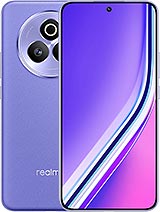
P3 Pro 5G

14 Pro 5G
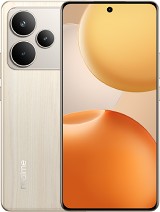
P4 Pro 5G
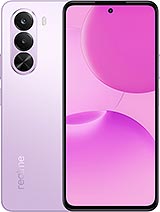
P4x 5G
Galaxy A56