Realme C100i review
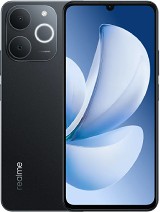
The Realme C100i is a bulky budget phone with a massive screen and battery, but the entry-level Unisoc chipset and 720p display make it feel like you're paying for size and endurance rather than smooth daily use

This review is written with AI assistance from Realme’s published specifications and public benchmark data for the Realme C100i, and the rating is spec-based. GoSolo does not physically test devices; where we estimate real-world behaviour such as battery life or charge time, we say so. How we rate phones.
Overview
The Realme C100i is a bulky budget phone with a massive screen and battery, but the entry-level Unisoc chipset and 720p display make it feel like you're paying for size and endurance rather than smooth daily use. At 110 EUR, it is honest value for someone who wants screen real estate and won't run demanding apps, but the 254 ppi density and underpowered processor confirm this is a phone for light work, not multitasking.
Design & build
At 208g and 8.4mm thick, the C100i is a slab. It is not luxurious—glass front, plastic frame and back—but the IP64 rating and MIL-STD-810H compliance give it real practical durability for drops up to 2m and dust resistance. For a 110 EUR device aimed at rough-and-tumble markets, this is sensible engineering. The 6.8-inch display and 19.5:9 aspect ratio make it a stretch to hold one-handed; your thumb will not reach the top corner without shifting. The weight is noticeable in pocket. It is not a phone that feels premium, but it feels built to survive.
Display
The 6.8-inch IPS LCD screen dominates the design and is the main draw for people who want space. At 254 ppi, however, the 720p resolution is noticeably grainy when you hold it close; text and photos do not have the clarity you expect from modern phones, even at this price. The 120Hz refresh is a welcome add, and the 86.8% screen-to-body ratio is efficient, but the low pixel density undercuts what should be a strength. Gorilla Glass or Panda protection keeps it from scratching, and brightness and color are typical for budget IPS, but this screen feels dated in 2026.
Performance
The Unisoc T7250 is entry-level silicon designed for light tasks, not games or heavy multitasking. The octa-core CPU and Mali-G57 GPU will handle email, messaging, and video playback without stalling, and 4GB or 6GB RAM variants provide breathing room for a few apps in memory. Where it stumbles is sustained load: demanding games will lag, app launches will pause, and switching between heavy apps will feel sluggish. eMMC 5.1 storage is slower than modern UFS, adding to the sluggish feeling. The microSDXC slot is genuinely useful here, since the base storage fills quickly. For a phone at this price in 2026, the T7250 is adequate for basic work but nothing more.
Software
Android 16 comes pre-installed, which is current and good. Realme's skin is usually light, and the side-mounted fingerprint sensor is convenient. Updates are the risk at this price point—budget phones often miss several months of patches, leaving you exposed. Battery is the main selling point, so Realme will likely optimize for endurance, but do not expect aggressive performance tuning or bleeding-edge security. It will do the job, but assume maintenance lags behind flagship releases.
Camera
The 8MP main camera with f/2.0 aperture is basic. It captures daylight shots adequately, with LED flash and HDR handling contrast, but the small sensor and fixed focus mean detail suffers at zoom and low light is noisy. 1080p video recording at 30fps is standard but uninspired. The 5MP selfie is serviceable for calls and social media but will disappoint anyone used to sharper self-portraits. For a 110 EUR phone, this is not the weak point—it is simply unremarkable, which is fair.
Battery & charging
The 7000 mAh battery is the headline act. That capacity will easily last a day of moderate use and stretch into a second day if you are frugal. The spec sheet lists 15W charging, which is slow by today's standard—rivals at this price now hit 30W or more—so expect a 60–80 minute charge from empty to full. Slow charging matters less on a budget phone if you plug in overnight, but it is a real lag versus competitors. The large battery compensates in value proposition, since you will rarely need to charge during the day.
Value & verdict-context
At 110 EUR, the C100i does not try to be a flagship killer. It trades performance and display clarity for battery life, screen real estate, and ruggedness. The main audience is people who spend long hours away from a charger, work outdoors or in rough environments, and do not demand snappy app performance. If you need a phone for calls, messaging, maps, and light streaming, and you value a big screen and long battery, this is sensible. If you multitask, game, or want to feel good about your hardware, save a bit more and step up; the jump to a modern mid-ranger is sharp and worth the extra cost.
Verdict
The C100i suits buyers in emerging markets who need endurance and durability over speed and sharpness. It is not recommended for anyone who works with demanding apps or expects a responsive daily experience—a slightly pricier device with a modern chipset will feel dramatically faster and justify the cost.
Verdict
- 7000 mAh battery easily lasts a day and a half with moderate use, a real advantage if you are away from power
- IP64 rating with MIL-STD-810H compliance and 2m drop resistance gives real durability for rough use
- 6.8-inch screen is genuinely spacious for reading, video, and people who value screen real estate
- Dual SIM and microSDXC expansion let you run two carriers and extend storage, practical for emerging-market workflows
- The Unisoc T7250 is too slow for multitasking or any gaming—app launches lag and demanding tasks stall noticeably
- 720p resolution at 254 ppi is grainy and visibly pixelated, a weakness that undermines the large screen
- 15W charging is significantly slower than rivals at this price, meaning hour-plus charging sessions from empty
Realme C100i Key Specifications
The essentials at a glance. See the full spec sheet.
| Released | 2026, April 30 |
|---|---|
| Display | 6.8 inches, 113.0 cm2 (~86.8% screen-to-body ratio), IPS LCD, 120Hz |
| Resolution | 720 x 1570 pixels, 19.5:9 ratio (~254 ppi density) |
| Chipset | Unisoc T7250 (12 nm) |
| RAM & storage | 64GB 4GB RAM, 128GB 4GB RAM, 128GB 6GB RAM, 256GB 4GB RAM |
| Main camera | 8 MP, f/2.0, (wide), AF |
| Selfie camera | 5 MP, f/2.2, (wide) |
| Battery | 7000 mAh |
| Software | Android 16 |
| Dimensions | 166.5 x 78.2 x 8.4 mm (6.56 x 3.08 x 0.33 in) |
| Weight | 208 g (7.34 oz) |
| Build | Glass front, plastic frame, plastic back |
| Durability | IP64 dust tight and water resistant (water splashes) Drop resistant up to 2m MIL-STD-810H compliant* * does not guarantee ruggedness or use in extreme conditions |
| Network | GSM / HSPA / LTE |
| NFC | No |
| USB | USB Type-C 2.0, OTG |
Realme C100i FAQ
Common questions, answered from the spec sheet.
Does the C100i support 5G?
No. The C100i tops out at GSM / HSPA / LTE, without 5G.
What chipset does the C100i use?
The C100i runs on the Unisoc T7250 (12 nm).
What display does the C100i have?
A 6.8 inches, 113.0 cm2 (~86.8% screen-to-body ratio) IPS LCD, 120Hz, 720 x 1570 pixels, 19.5:9 ratio (~254 ppi density).
How big is the C100i battery?
The C100i has a 7000 mAh battery.
Does the C100i have NFC?
No, the C100i does not list NFC support.
Is the C100i water resistant?
The C100i carries a IP64 dust tight and water resistant (water splashes) Drop resistant up to 2m MIL-STD-810H compliant* * does not guarantee ruggedness or use in extreme conditions rating.
Does the C100i support a microSD card?
Yes, the C100i supports expandable storage (microSDXC).
Alternatives to consider
If the C100i isn’t quite right, these are the closest calls.

C85 4G
P4 Lite 4G

Note 80

C100x

Galaxy M17e